The Cognitive Paradox: Why Wisdom Often Goes Unheeded
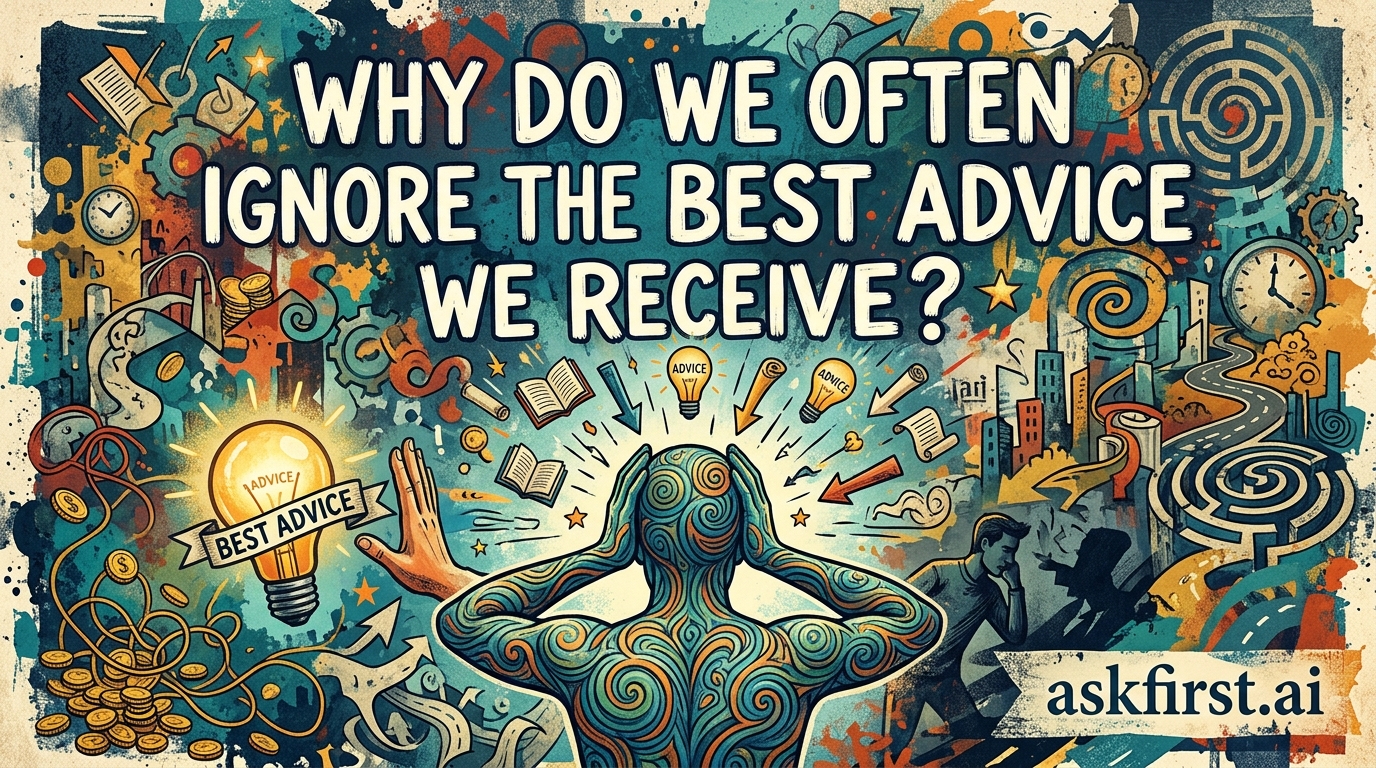
Human behavior often defies logic, particularly when it comes to the receipt of high-quality advice. Despite universal access to information and a plethora of expertise from mentors, coaches, and literature, individuals frequently choose to disregard the very guidance that could solve their problems. This phenomenon is not necessarily a reflection of stubbornness but rather a complex interplay of psychological barriers, evolutionary biology, and cognitive biases.
The Psychology of Resistance: Psychological Reactance
At the core of this behavior lies a concept known as Psychological Reactance. Developed by psychologist Jack Brehm, this theory posits that when individuals feel their freedom of choice is being threatened or restricted, they experience an unpleasant motivational state that compels them to reclaim that freedom. When someone offers strong, directive advice, the recipient may subconsciously perceive a loss of autonomy. To regain a sense of agency, the individual may impulsively reject the advice, even if it is objectively sound. This is a survival mechanism rooted in the desire for self-determination.
The Weight of Cognitive Biases
Several cognitive biases further explain why advice is often filtered through a distorted lens:
- Confirmation Bias: People tend to seek out and favor information that confirms their existing beliefs while discounting information that contradicts their established worldview. If the advice challenges a deeply held assumption, the brain instinctively labels it as 'incorrect' or 'inapplicable' to protect its mental model.
- The Dunning-Kruger Effect: Incompetence often stems from an inability to recognize one's own deficiencies. If an individual is unaware of the depth of their problem, they may erroneously believe that they are better equipped to handle the situation than the advisor. They are, in essence, 'unconsciously incompetent.'
- Sunk Cost Fallacy: Many individuals are deeply invested in a particular path or decision. Even when presented with evidence that this path is failing, the emotional and temporal investment already made creates a barrier to accepting new, corrective advice. The fear of 'wasting' previous effort makes the new, better advice seem like a threat to the efforts already expended.
The Emotional Gap: Knowing Versus Doing
There is a profound disconnect between the cognitive realization of a truth and the emotional readiness to act upon it. This is frequently referred to as the 'Knowing-Doing Gap.' Advice is almost always intellectual, but action is emotional. If a person does not have the emotional maturity or the internal resources to face the consequences of the suggested advice—such as fear of change or fear of failure—the advice will remain dormant.
The Role of Identity and Social Validation
Identity plays a massive role in how advice is processed. Many people tie their self-worth to their current circumstances. If someone gives advice that suggests that one’s current approach is flawed, it is often interpreted not as constructive criticism, but as an attack on their character or identity. Humans are social creatures who crave validation, and unsolicited advice, no matter how well-intentioned, can feel like a critique of the recipient’s competence.
How to Overcome the Barrier to Wisdom
To bridge the gap between receiving and applying advice, one must cultivate a mindset of intellectual humility. This involves:
- Separating Identity from Feedback: Recognize that advice is directed toward a behavior or a method, not toward the soul of the individual.
- The 'Third-Party' Filter: Imagine that the advice being given to oneself was actually being given to a friend. This creates psychological distance and allows for a more objective analysis of the utility of the suggestions.
- Active Engagement: Instead of passively receiving advice, ask questions that require a deep exploration of the logic behind it. Engaging with the advice helps move it from the listener's subconscious defense mechanisms to the rational, decision-making centers of the brain.
Ultimately, ignoring advice is often a protective measure of the ego. By acknowledging that the desire for control frequently outweighs the desire for progress, individuals can learn to open their minds, listen with more intentionality, and adopt the tools necessary for genuine growth. True wisdom is not just found in what is heard, but in the courage to let that heard wisdom alter the trajectory of one's actions.