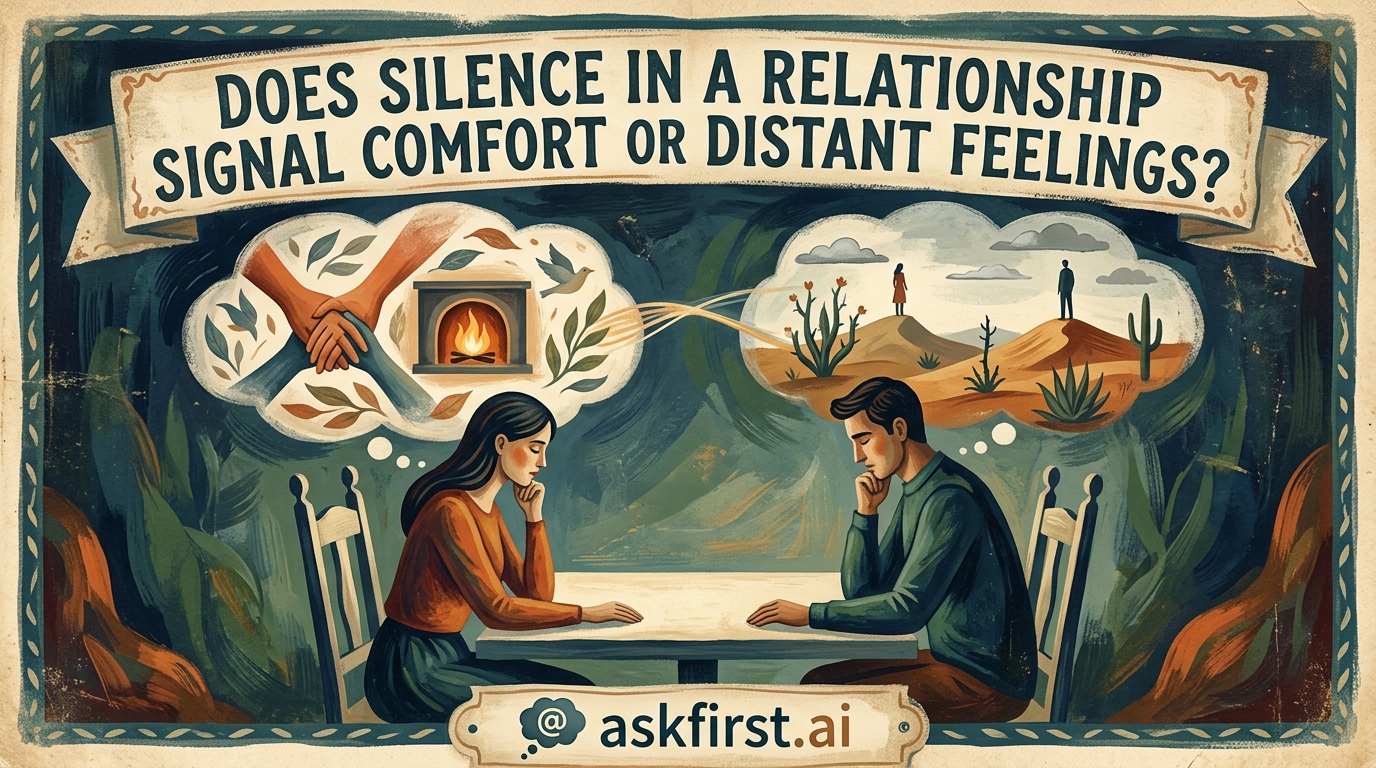
The Paradox of Silence in Human Connection
Silence in a romantic partnership is one of the most misunderstood phenomena in interpersonal psychology. Often, partners interpret a lack of conversation as a symptom of a fracturing foundation, yet clinical research suggests that silence is frequently an indicator of secure attachment and profound emotional maturity. Distinguishing between 'comfortable silence' and 'withdrawn distance' requires an understanding of communication patterns, nervous system regulation, and the nature of shared intimacy.
The Anatomy of Comfortable Silence
Comfortable silence, sometimes referred to as 'attuned presence,' occurs when two individuals feel secure enough to inhabit the same physical space without the necessity of performative verbal interaction. This state is marked by several key indicators:
- Relaxed Body Language: Partners exhibit open posture, softened facial expressions, and an absence of restless fidgeting.
- Shared Activity: Often observed when both parties are engaged in parallel tasks, such as reading, working, or cooking, with occasional brief moments of eye contact or smiling.
- Lack of Tension: There is no underlying 'heaviness' in the room. If a partner initiates a conversation, the transition back to silence feels natural rather than awkward.
From a psychological perspective, this type of silence signals that both individuals have moved beyond the need to 'prove' their interest in the other through constant dialogue. It reflects a high level of intimacy where the presence of the other is enough to satisfy the need for connection.
Recognizing the Silence of Emotional Distance
Conversely, 'withdrawn silence' serves as a defense mechanism or a byproduct of growing emotional unavailability. When silence stems from distance, the energy in the room shifts from serene to stagnant. Identifying this requires looking for specific, often subtle, red flags:
- The Wall of Avoidance: This silence is reactive. It often follows a conflict that was never fully resolved or serves as a preemptive barrier against vulnerability.
- Strained Tension: The atmosphere feels thick or 'electric' in a negative sense. One or both partners may appear hyper-vigilant, carefully avoiding topics that might trigger a confrontation.
- Lack of Micro-connections: In a healthy, comfortable silence, there are small gestures like holding hands, leaning into one another, or non-verbal acknowledgments. In distant silence, these micro-connections are noticeably absent.
- Preoccupation: One partner is physically present but mentally elsewhere, often signaled by excessive phone use or staring blankly without responding to attempts at engagement.
The Science of Attunement and Regulation
Psychologist John Gottman, known for his decades of research on relationship longevity, emphasizes the importance of 'bids for connection.' When silence is healthy, both partners feel safe enough to rest; they understand that if they make a bid—a smile, a comment, or a touch—it will be met with a positive response. When silence is problematic, the 'bids' are ignored or rejected, leading to what researchers call 'emotional distancing.'
Furthermore, the nervous system plays a critical role. When a couple is attuned, their nervous systems co-regulate. They fall into a rhythm where heart rates and breathing patterns synchronize. When distance is present, the nervous system often goes into a 'freeze' or 'avoidant' state, where an individual detaches from their own emotions to protect themselves from perceived disappointment or rejection.
How to Evaluate Your Silence
To determine the nature of silence in a relationship, individuals should conduct a self-assessment based on these guiding questions:
- Do I feel safe and relaxed when we are silent, or do I feel anxious and compelled to fill the void?
- Does the silence feel like a 'shared space' or a 'barrier' between us?
- When one of us eventually speaks, is the response warm and reciprocal, or does it feel like an interruption to the distance?
Bridging the Gap: Moving Toward Secure Connection
If the silence in a relationship feels like distance, the solution is rarely to force constant conversation. Instead, partners should focus on repairing the bond through small, consistent efforts.
- Initiate Low-Stakes Interaction: Sometimes, simply mentioning a small, non-threatening thought can break the ice of avoidance.
- Practice Active Presence: Put down digital devices and focus on just being in the same room. The goal is not to talk, but to cultivate a sense of being 'together' without the distraction of external worlds.
- Communicate About the Silence: It is perfectly acceptable to gently ask, 'Do you feel comfortable right now, or are you feeling like we have some distance between us?' Clarity is the antidote to assumptions.
Ultimately, silence is a canvas. If the relationship is strong, the silence will be filled with the warmth of companionship and the safety of being known. If the relationship is struggling, silence can act as a mirror reflecting the unaddressed walls between two people. By cultivating emotional awareness, couples can transform silent moments from a source of anxiety into a profound affirmation of their shared life.