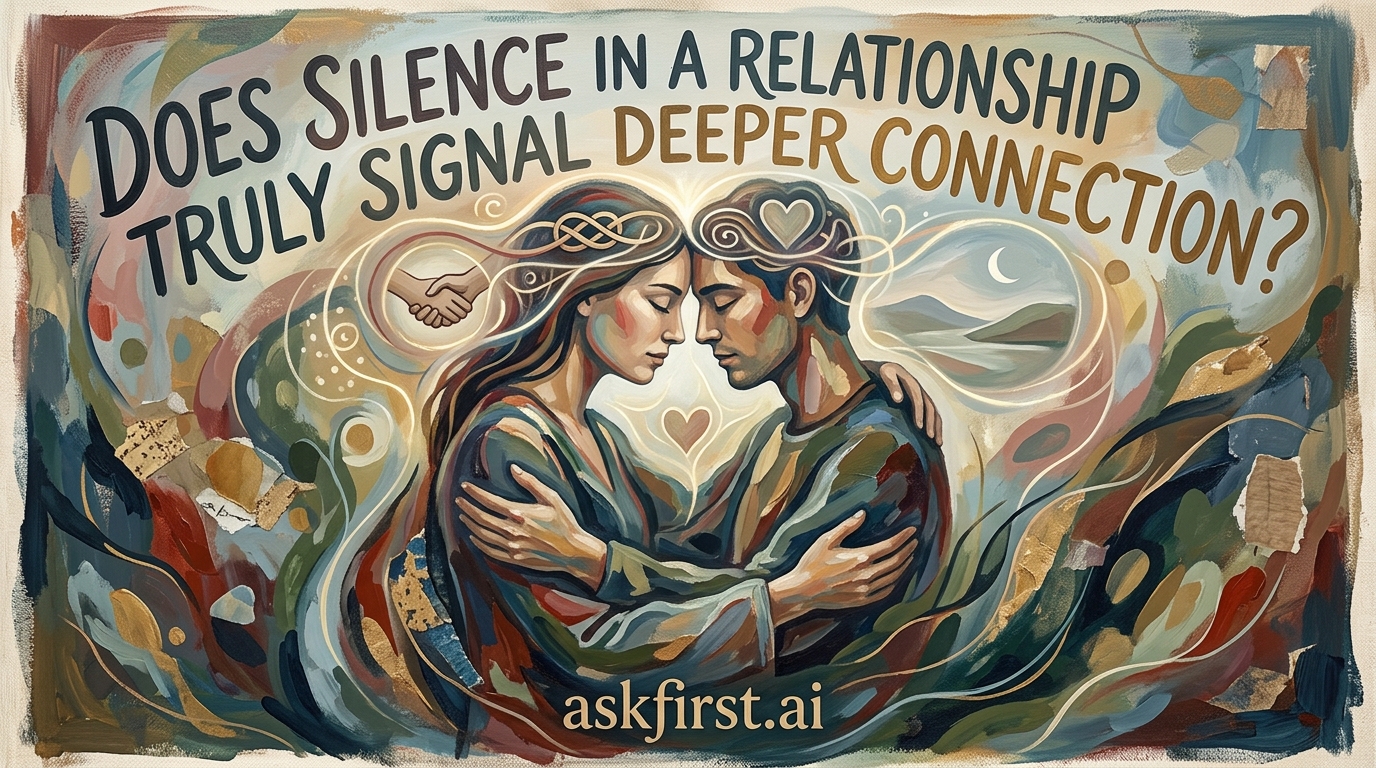
The Paradox of Shared Silence
Silence in a relationship is often misinterpreted as a void that must be filled with conversation. However, psychological research suggests that the ability to sit comfortably in silence is a primary marker of secure attachment. When individuals move beyond the need for constant verbal validation, they enter a state of intersubjectivity where internal worlds begin to synchronize. This phenomenon is often referred to as 'resonant silence,' a space where the necessity for performative social interaction dissolves, leaving behind a profound sense of mutual presence.
The Science of Attachment and Comfort
Psychologists emphasize that human intimacy is built on the foundation of regulated autonomic nervous systems. According to Polyvagal Theory, developed by Dr. Stephen Porges, safety and connection are predicated on our physiological state. When two people feel genuinely safe with each other, their heart rates often stabilize in tandem. This biological synchronization creates an environment where words are secondary to the feeling of 'being known.' Silence, in this context, is not an absence of communication; it is an active participation in a shared, low-arousal state that promotes deep emotional regulation and recovery from external stressors.
Distinguishing Constructive vs. Avoidant Silence
It is vital to distinguish between healthy silence and avoidant silence.
- Constructive Silence: Characterized by soft facial expressions, relaxed posture, and an underlying sense of warmth or curiosity. This is the silence of two people reading side-by-side or watching a sunset without feeling the urge to comment. It reinforces the 'secure base' concept in attachment theory, where partners know they can return to one another without effort.
- Avoidant Silence: Characterized by tension, averted gazes, tight muscles, or the use of silence as a weapon (the 'silent treatment'). This form of silence acts as an emotional barrier, indicating suppressed resentment or fear. Identifying the difference requires honest internal reflection on whether the silence feels expansive or constrictive.
Cultural Perspectives on Verbal Exchange
Western cultures often emphasize verbal expression as the primary metric of emotional transparency. Conversely, many Eastern traditions value the concept of Ma, or the 'space between.' In these frameworks, the silence is where the meaning resides. By broadening the perspective to include silence as a valid form of expression, individuals can alleviate the pressure to always have something interesting to say. Relationships that thrive in the quiet are often those that have built a high level of non-verbal empathy, where nuances in body language or a simple touch convey volumes of intent.
Practical Strategies for Cultivating Connection
- Practice 'Parallel Play': Engage in separate activities in the same room. This normalizes the presence of the other without requiring constant focus or intellectual energy.
- Observe the Breath: Pay attention to how breathing synchronizes over time. This mindful practice grounds both individuals in the present moment.
- Reframing Boredom: If the silence feels uncomfortable, explore that sensation as a personal challenge rather than a failure of the relationship. Often, the restlessness is an internal agitation regarding one's own productivity or self-worth.
- Prioritize Eye Contact: If silence feels heavy, offer a brief, gentle smile or a soft gaze. These small gestures re-establish connection without needing the distraction of complex sentences.
The Long-Term Benefits
When a couple masters the art of comfortable silence, they build an emotional reservoir that sustains them through periods of turbulence. Words can be misinterpreted, debated, or forgotten; however, the memory of a shared, peaceful silence is visceral. It provides a sanctuary against the noise of modern life. As digital distractions and constant connectivity grow, the ability to turn off the external world and simply exist in harmony with another person becomes an increasingly rare and valuable skill. This depth of connection is the hallmark of enduring partnerships. By embracing the quiet, individuals validate their partner's presence, not for what they do or say, but for who they are fundamentally. Silence, therefore, is not an empty space, but a canvas upon which the most profound parts of an identity are shared and celebrated.