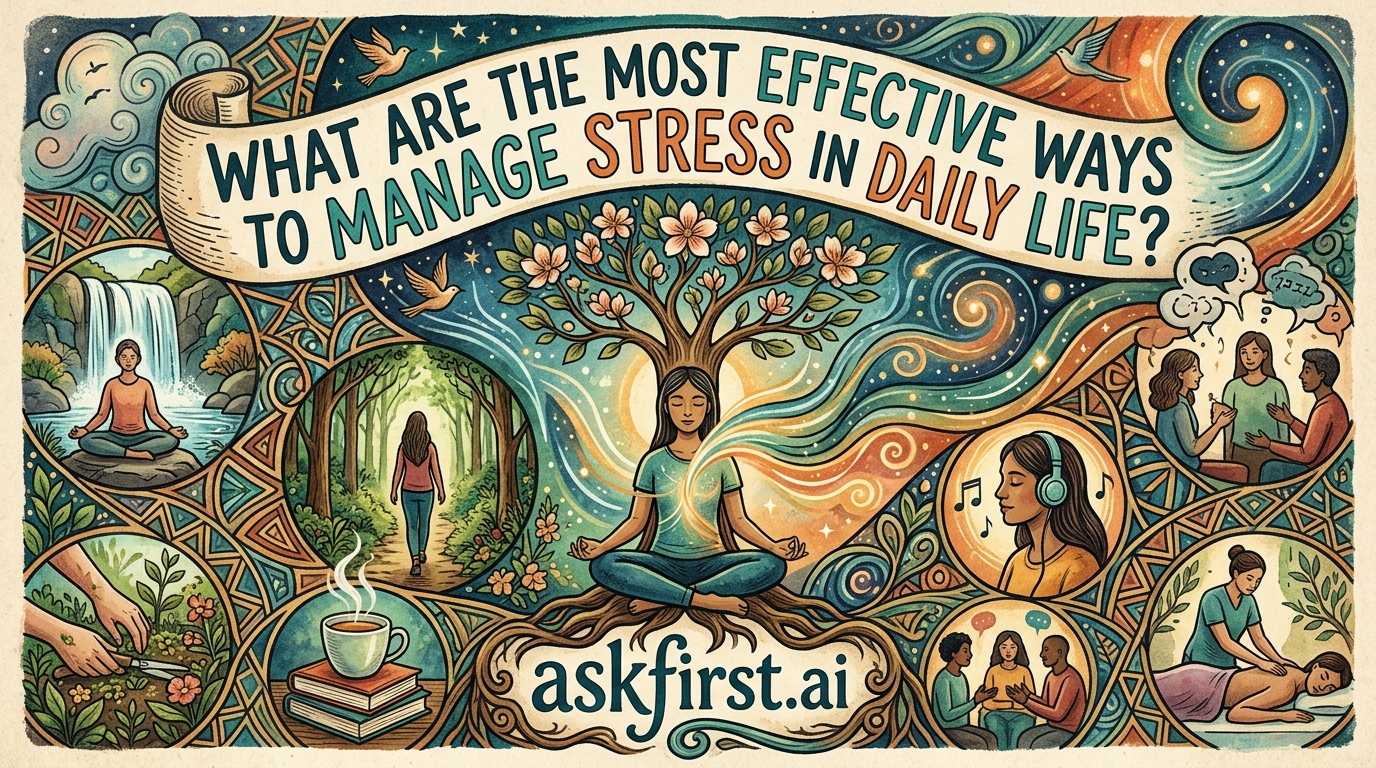
Managing stress in the modern era is less about finding a single "cure" and more about cultivating a robust, multifaceted toolkit. As the pace of professional and personal life accelerates, the physiological and psychological toll of chronic stress—often described as the "silent killer"—has become a primary concern in public health. To manage stress effectively, one must address it through three distinct pillars: physiological regulation, cognitive restructuring, and environmental management.
1. Physiological Regulation: Calming the Nervous System
The most immediate way to combat the fight-or-flight response is through the body. When you are stressed, your sympathetic nervous system is in overdrive, releasing cortisol and adrenaline. To counteract this, you must activate the parasympathetic nervous system, which governs the "rest and digest" state.
- Breathwork and Heart Rate Variability (HRV): Dr. Andrew Huberman, a neuroscientist at Stanford University School of Medicine, frequently emphasizes the "Physiological Sigh." This involves two inhalations through the nose—one long, followed by a shorter one to fully inflate the lungs—and a long, extended exhalation through the mouth. This specific pattern physically offloads carbon dioxide and rapidly slows the heart rate.
- Cold Exposure: Immersing yourself in cold water (a shower or a cold plunge) triggers a massive release of norepinephrine, which, when done in a controlled setting, helps build resilience to subsequent stressors. According to Wim Hof, known as "The Iceman," controlled cold exposure allows individuals to gain mastery over their autonomic nervous system.
- Movement as Therapy: Exercise is not merely about physical fitness; it is a metabolic necessity for stress management. Aerobic activity metabolizes the stress hormones circulating in your bloodstream. Whether it is a brisk 20-minute walk or high-intensity interval training (HIIT), the goal is to complete the "stress cycle," a concept popularized by Emily Nagoski and Amelia Nagoski in their book Burnout: The Secret to Unlocking the Stress Cycle. They argue that moving your body signals to your brain that the "threat" has passed.
2. Cognitive Restructuring: Reframing the Narrative
Stress is often a product of our perception. Cognitive Behavioral Therapy (CBT) techniques provide a framework for identifying and challenging the distorted thoughts that exacerbate stress.
- The Power of Journaling: In The Artist's Way, Julia Cameron advocates for "Morning Pages"—three pages of stream-of-consciousness writing. By offloading the "mental clutter" onto paper, you move thoughts from the emotional centers of the brain (like the amygdala) to the analytical centers (the prefrontal cortex), making them easier to manage.
- Stoic Philosophy: The ancient Stoics, such as Marcus Aurelius in his Meditations, mastered the art of the "Dichotomy of Control." This practice involves categorizing every stressor into two buckets: things you can control and things you cannot. If a client is late or a project is delayed, wasting energy on the frustration of the event is futile. By focusing exclusively on your response to these events, you reclaim your agency.
- Mindfulness and Presence: Mindfulness is not just "meditation"; it is the practice of intentional attention. Sam Harris, in his book Waking Up, explains that stress often lives in the past (regret) or the future (anxiety). By anchoring yourself in the present moment through sensory grounding—noticing five things you can see, four you can touch, and three you can hear—you interrupt the rumination loops that fuel chronic stress.
3. Environmental and Structural Management
If your environment is chaotic, your mind will be too. Effective stress management requires auditing your surroundings and your commitments.
- Digital Hygiene: Constant notifications are a form of intermittent reinforcement that keeps the brain in a state of hyper-arousal. Turning off non-essential notifications and establishing "no-tech" zones in your home (especially the bedroom) is essential for nervous system recovery. Cal Newport, in his book Digital Minimalism, argues that we must be intentional about our tech usage to prevent "attention fragmentation," which is a primary driver of modern burnout.
- The "No" Muscle: Many individuals suffer from "over-commitment syndrome." Learning to set boundaries is perhaps the most effective, albeit difficult, stress management technique. By saying "no" to secondary priorities, you preserve your bandwidth for what actually matters.
- Optimizing Sleep: Sleep is the ultimate stress buffer. During deep sleep (Slow Wave Sleep), the brain undergoes a process of glymphatic clearance, effectively washing away the metabolic waste products of a high-stress day. Matthew Walker, a professor of neuroscience at UC Berkeley and author of Why We Sleep, provides extensive evidence that sleep deprivation directly impairs the prefrontal cortex, leaving us less equipped to handle even minor stressors the following day.
Conclusion
Managing stress is not a destination but a continuous practice of maintenance. By combining the biological interventions of breathwork and movement, the psychological clarity of Stoic reframing and journaling, and the structural discipline of digital hygiene and boundary setting, you create a system that can withstand the inevitable pressures of life. Start by implementing one small change—perhaps the Physiological Sigh or a daily 10-minute walk—and observe how your baseline level of tension begins to shift. True resilience is not the absence of stress, but the capacity to return to a state of equilibrium with greater speed and efficiency.