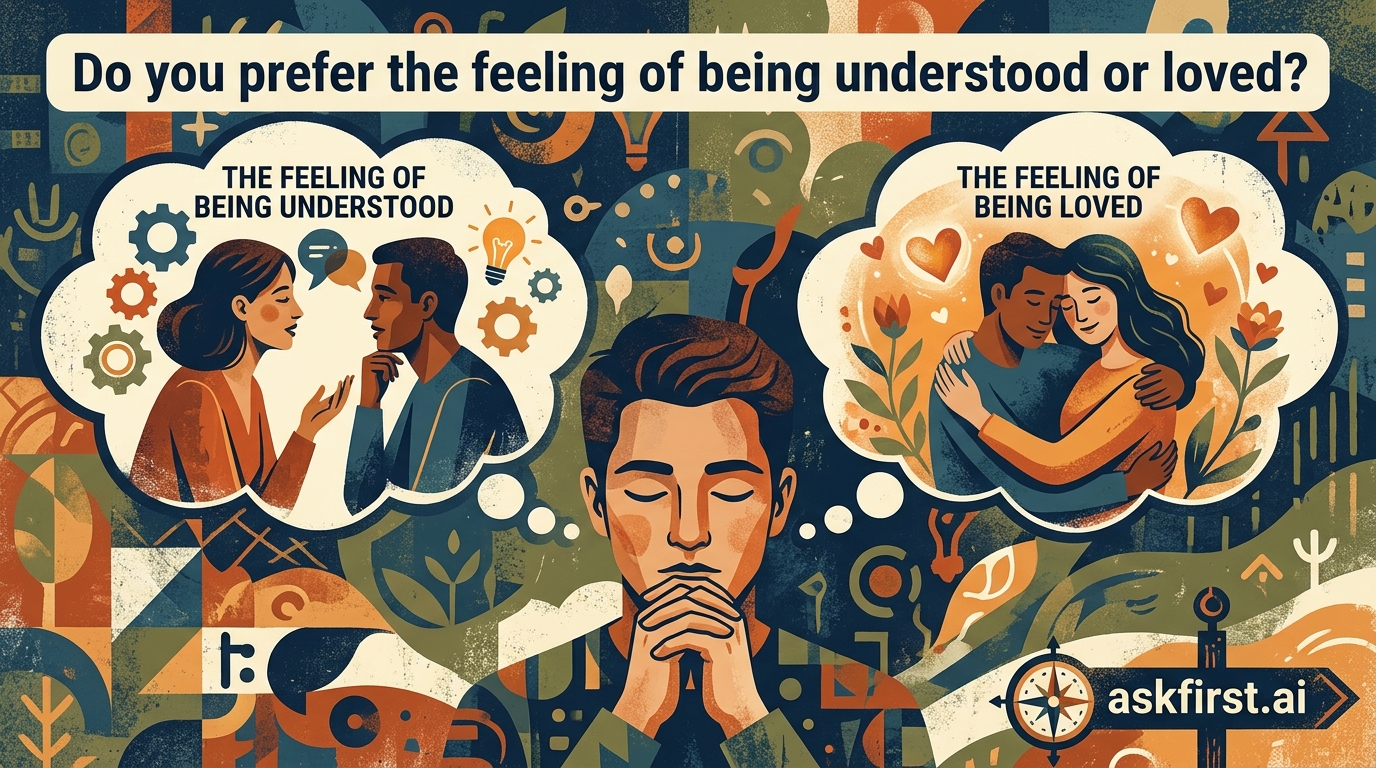
The Fundamental Human Dilemma: Connection vs. Validation
Human interaction is built upon two pillars that often appear interchangeable but serve distinct psychological functions: the need to be understood and the need to be loved. While these concepts frequently overlap in healthy relationships, they represent different cravings within the human psyche. Understanding this dynamic is crucial for fostering meaningful bonds and achieving emotional fulfillment.
The Architecture of Being Understood
Being understood is essentially a cognitive and intellectual alignment. It occurs when a peer, partner, or colleague grasps the nuances of one’s worldview, values, and reasoning. This is often linked to the psychological concept of validation. When an individual feels understood, the brain experiences a reduction in defensive mechanisms because the necessity to explain or justify one’s perspective diminishes.
- Intellectual Intimacy: Being understood creates a bridge of shared meaning. It requires active listening and the ability to project oneself into the cognitive framework of another.
- The Burden of Complexity: Many individuals carry complex thoughts or unconventional views that are rarely validated. Finding someone who truly understands these complexities is often described as an 'intellectual homecoming.'
- Psychological Safety: When comprehension is met with acceptance, it fosters an environment where an individual feels safe to express vulnerabilities without the fear of judgment.
The Architecture of Being Loved
Being loved operates on a deeper, often more primal, emotional plane. Love, in this context, is the experience of being held in high regard regardless of whether one's logic or internal processes are fully grasped. Love often transcends comprehension; one can be profoundly loved even when one's partner does not fully understand the specific reasons behind certain behaviors or emotional reactions.
- Unconditional Positive Regard: As pioneered by psychologist Carl Rogers, unconditional positive regard is the cornerstone of healthy love. It implies that worth is not contingent upon performance or intellectual clarity.
- Emotional Security: Love provides a sense of belonging. While understanding satisfies the need for coherence, love satisfies the need for attachment and security, acting as a buffer against life's stressors.
- Transcendence: Love often survives when understanding fails. In many long-term relationships, partners may not understand each other's hobbies or professional stressors perfectly, but the depth of affection maintains the structural integrity of the bond.
Comparing the Impact on Personal Development
Which is more vital? Behavioral science suggests a synergistic relationship between the two.
- Love without understanding can feel patronizing or superficial. If an individual is constantly 'loved' but never truly heard, they may feel invisible—like a child being petted but not listened to. This can lead to a sense of profound loneliness.
- Understanding without love can feel transactional or clinical. One might feel like an object of study or a puzzle to be solved. Without the warmth of emotional attachment, intellectual validation remains cold and disconnected.
The Path to Integration
To cultivate deep, lasting connections, one must strive for the integration of both. This is often achieved through Empathic Resonance.
- Practice Active Reflection: Instead of immediately offering solutions, mirror the feelings and thoughts expressed by others. This demonstrates that you are processing their perspective, which satisfies the desire to be understood.
- Communicate Acceptance: Regularly express affection and appreciation. This addresses the human need for love and ensures the recipient feels valued even when the relationship hits an intellectual roadblock.
- The Power of Curiosity: In long-term partnerships, curiosity serves as the bridge. By remaining curious about a partner’s internal state, one creates a space where understanding can grow, which in turn deepens the experience of love.
Conclusion: The Balanced Pursuit
In the final analysis, the pursuit is not to choose between these two states but to recognize them as distinct threads in the tapestry of intimacy. Understanding provides the clarity required for collaboration, while love provides the fuel required for resilience. A life characterized by both is the hallmark of emotional maturity and deep interpersonal fulfillment. Humans are wired for both visibility—being seen and understood—and for connection—being held and loved. Prioritizing one over the other is an unnecessary bifurcation; the greatest human bonds thrive precisely where these two experiences intersect, creating a sanctuary of psychological depth and emotional warmth.