The Fallacy of Educational Specialization: Why Renaissance Polymathy is the Only Sustainable Future
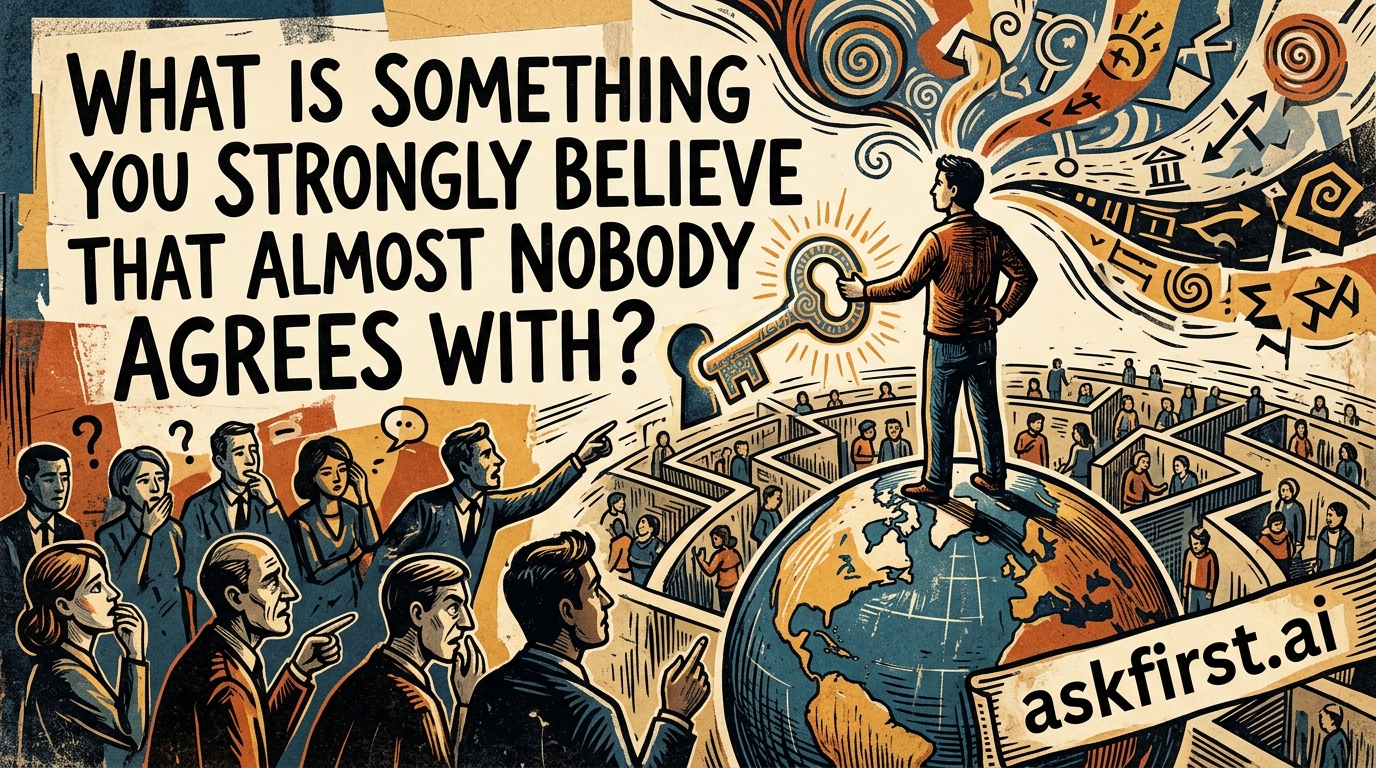
In our modern industrial and post-industrial society, we have been conditioned to believe that the pinnacle of human achievement is the "specialist." From the moment a student enters university, they are pressured to declare a major, narrow their focus, and curate a resume that screams "expert in X." We are told that the world is too complex for any one person to understand more than a tiny sliver of it. I hold a belief that stands in direct opposition to this prevailing wisdom: Hyper-specialization is a systemic vulnerability, and the return to the "Polymath" model is not merely a nostalgic ideal—it is a biological and economic necessity for human survival in the 21st century.
The Cult of the Specialist and the Fragility of Systems
The obsession with specialization, often traced back to the Taylorist principles of scientific management in the early 20th century, treats human beings like interchangeable parts on an assembly line. In Frederick Winslow Taylor’s seminal work, The Principles of Scientific Management (1911), he argued that efficiency is achieved by breaking tasks down into the smallest possible components. While this revolutionized manufacturing, we have mistakenly applied this logic to the human intellect.
By narrowing our focus, we create "epistemic silos." An engineer who knows only code cannot foresee the sociological ramifications of their algorithm; a politician who knows only law cannot grasp the ecological feedback loops of a changing climate. This is what Nassim Taleb, in his profound book Antifragile: Things That Gain from Disorder (2012), refers to as the "fragility" of modern systems. When components are so specialized that they lose touch with the "whole," the system becomes brittle. If a crisis occurs that falls outside the narrow definition of a specialist's training, the system collapses because there is no one left who understands the interconnectedness of the underlying architecture.
The Cognitive Advantage of Intellectual Cross-Pollination
The greatest breakthroughs in human history did not occur because someone stayed in their lane; they happened at the intersection of disparate fields. Consider the life of Leonardo da Vinci. He did not separate anatomy from art, or hydraulics from architecture. His understanding of the human circulatory system informed the fluidity of his brushstrokes in The Last Supper.
In Range: Why Generalists Triumph in a Specialized World (2019), author David Epstein provides compelling data suggesting that early specialization is often counterproductive. He points to research showing that the most creative scientists and inventors are those who maintain "outside interests" that seem unrelated to their primary work. These interests provide a cognitive "sandbox" where ideas from one domain are tested against the rules of another.
For instance, a musician who studies mathematics develops a unique approach to rhythm and structure that a pure music theorist might never conceive. This is not just a hobby; it is a form of cognitive cross-pollination. When we force individuals to specialize early, we are effectively lobotomizing their ability to make these vital, high-level connections. We are training people to be better at following instructions, but worse at thinking for themselves.
The Economic Case Against the "Niche Expert"
We are currently witnessing the rapid rise of Artificial Intelligence and automated cognitive labor. If your value to the economy is based on a narrow, replicable task—like basic data entry, simple legal research, or routine diagnostic analysis—your career is inherently precarious. The "specialist" is the easiest worker to replace with a machine because their knowledge base is bounded and well-defined.
The "Polymath," however, is inherently difficult to automate. A person who can synthesize philosophy, biology, and economic policy is capable of "lateral thinking"—the ability to solve problems by looking at them from entirely new angles. In my view, the future of the job market belongs to the "T-shaped" individuals who possess a broad base of knowledge across many disciplines, topped with a deep expertise in one. However, the width of that "T" must continue to expand throughout one’s life. We must abandon the idea that education ends at twenty-two. We must adopt a model of lifelong, aggressive, and eclectic learning.
The Path Toward Intellectual Renaissance
To reclaim this lost art of polymathy, we must restructure how we view intelligence. We must stop valorizing the "genius in a box" and start rewarding the "synthesizer." This requires:
- Curriculum Reform: Integrating the humanities into STEM education and vice versa, not as electives, but as core requirements.
- Institutional Incentives: Moving away from academic and corporate environments that punish "dabbling" and instead rewarding interdisciplinary collaboration.
- Personal Discipline: Cultivating a "Generalist's Library." If you are a software developer, read history. If you are a surgeon, study music theory.
The belief that we must narrow our focus to be successful is a relic of an era that valued obedience over innovation. The world is not a collection of isolated, static problems; it is a dynamic, chaotic, and deeply interconnected web. To navigate it, we must stop training ourselves to be parts of a machine and start training ourselves to be the architects of the whole. The era of the specialist is failing; the era of the polymath is the only one that can save us.