The Paradox of Connectivity: Is Technology Eroding Human Sociality?
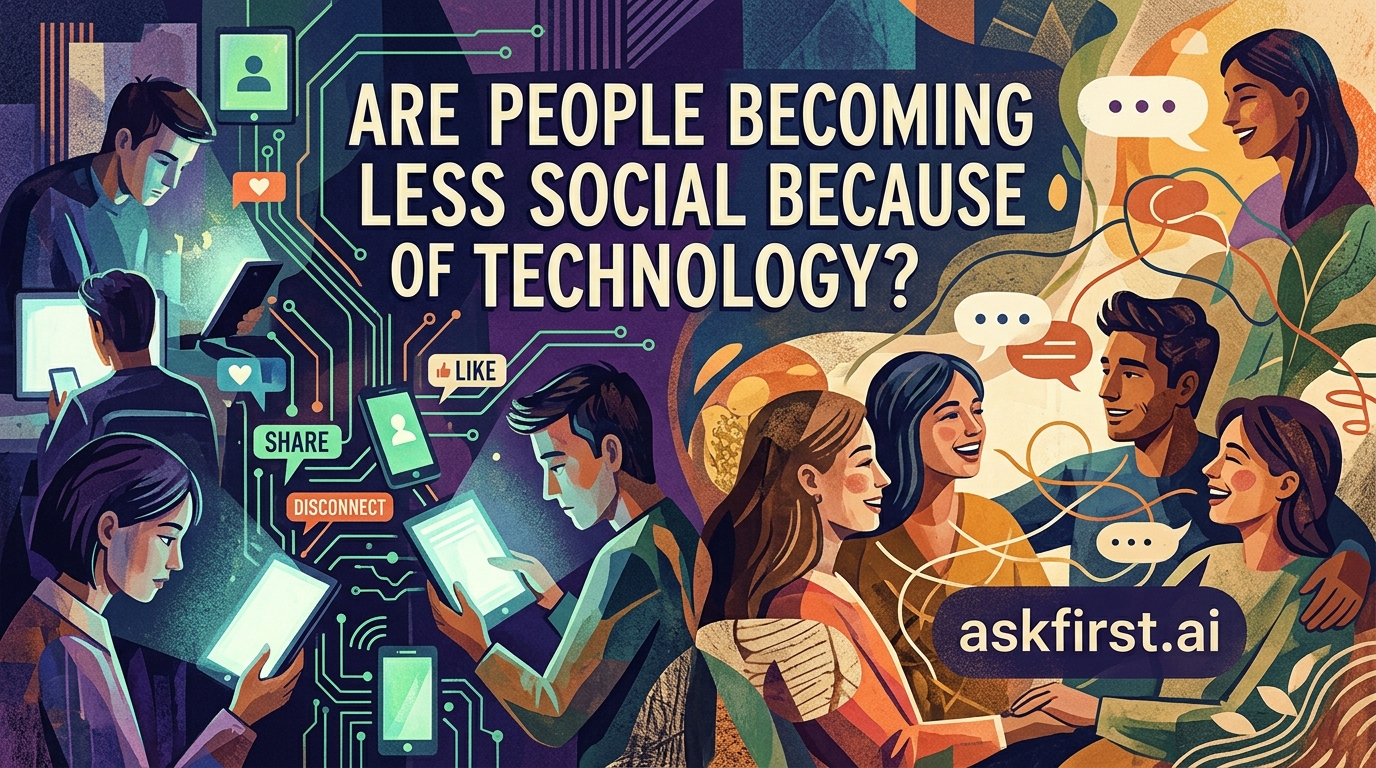
In the current era, we are more digitally connected than at any other point in human history. With a swipe or a click, we can communicate with someone on the other side of the globe in real-time. Yet, there is a growing, palpable sense of isolation permeating modern society. The question of whether technology is making us less social is not merely a matter of how many hours we spend on our devices; it is a fundamental inquiry into the quality of our relationships and the evolution of human interaction. While we possess the tools for hyper-connectivity, the psychological and societal evidence suggests that we are witnessing a shift toward "shallow" sociality, which often displaces the profound, messy, and essential nature of face-to-face interaction.
The Erosion of "Third Places" and Physical Proximity
Sociologist Ray Oldenburg, in his seminal work The Great Good Place (1989), described the necessity of "third places"—social environments separate from the home (the first place) and the workplace (the second place), such as cafes, parks, and community centers. These spaces were the bedrock of spontaneous social interaction. Today, technology has effectively digitized these spaces. When we replace a physical community center with a curated social media feed, we lose the "ambient sociability" that occurs when we share physical space with strangers or acquaintances.
The decline of these physical interactions is well-documented. In Bowling Alone: The Collapse and Revival of American Community (2000), political scientist Robert Putnam argued that civic engagement and social capital in the United States have been in a steady decline for decades. While Putnam was writing at the dawn of the internet age, his warnings have been amplified by contemporary research. When we prioritize screen-mediated communication, we bypass the physiological benefits of physical presence, such as the release of oxytocin during eye contact or physical touch—mechanisms that have evolved over millennia to foster trust and deep bonding.
The Rise of "Connected Isolation"
A central paradox of the digital age is "connected isolation." We are constantly alerted to the lives of others, yet we often feel more alone. Sherry Turkle, a professor at the Massachusetts Institute of Technology (MIT) and author of Alone Together: Why We Expect More from Technology and Less from Each Other (2011), provides a trenchant analysis of this phenomenon. Turkle argues that we are "tethered" to our devices, which creates a false sense of companionship. We use technology to edit our social lives—curating the perfect photo or crafting the ideal response—which creates a buffer zone.
This editing process removes the vulnerability required for true intimacy. Real-world conversation is unpredictable, uncomfortable, and often requires us to sit with silence. Digital communication, by contrast, is controllable. We can delete a draft, ignore a text, or block an opinion. By opting for the "safe" version of social interaction, we lose the capacity to handle the complexities of human disagreement and the raw empathy that arises from unfiltered, real-time social engagement.
Cognitive Distraction and the Quality of Presence
Beyond the psychological aspect, there is the issue of cognitive bandwidth. The concept of "phubbing" (phone snubbing)—the act of ignoring someone in your physical presence to look at your smartphone—has become a pervasive social habit. Research published in the Journal of Applied Social Psychology indicates that even the mere presence of a smartphone on a table during a conversation reduces the depth and quality of the interaction.
When we divide our attention, we are unable to engage in "active listening," a skill that requires total cognitive focus. As we become accustomed to the rapid-fire dopamine hits provided by social media algorithms, our patience for the slow, nuanced pace of deep conversation wanes. We begin to treat our friends as content providers rather than human beings, and we treat our own lives as a performance for an audience of digital spectators.
The Nuance: Technology as a Bridge, Not Just a Barrier
It would be reductionist to claim that technology is solely responsible for a decline in social health. For marginalized communities, individuals with physical disabilities, or those living in remote areas, digital platforms have been a lifeline, providing access to social support systems that would otherwise be impossible. In Networked: The New Social Operating System (2012), Lee Rainie and Barry Wellman argue that technology has allowed us to move from "tightly knit" local groups to "networked individualism." We are no longer limited by geography; we can build communities of interest that span the globe.
However, the challenge lies in balance. The danger is not technology itself, but the displacement of depth for breadth. We have optimized our social lives for reach, but we have sacrificed the intensity of local, physical connection.
Conclusion
Are we becoming less social? The answer depends on how one defines "social." If sociability is defined as the frequency of information exchange, we are more social than ever. If it is defined as the capacity for deep, empathetic, and sustained interpersonal connection, the evidence suggests a decline.
To reclaim our social nature, we must consciously re-integrate physical presence into our daily lives. This requires a deliberate shift: prioritizing "unplugged" time, fostering local community spaces, and recognizing that a digital "like" is a pale substitute for a shared, messy, and authentic human encounter. Technology should be a tool that facilitates real-world relationships, not a replacement for the profound human need to stand in the presence of another and be truly heard.