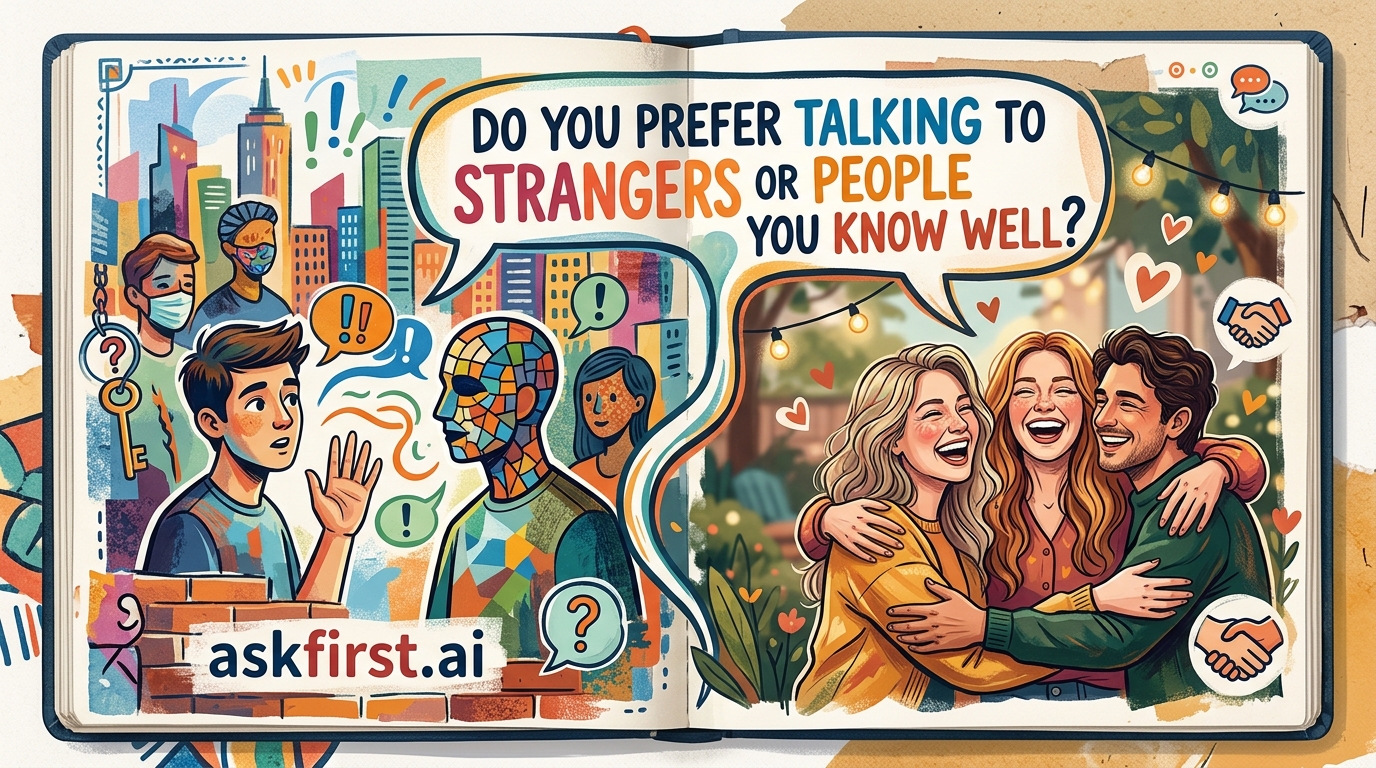
The Psychology of Social Interaction: Strangers vs. Known Connections
Human communication serves as the fundamental bedrock of civilization. While the instinct to bond with known peers provides evolutionary safety, the act of engaging with strangers stimulates neuroplasticity and cognitive expansion. Understanding the nuances between these two modes of interaction reveals why balanced social participation is essential for psychological well-being.
The Comfort of Familiarity
Interacting with people known well provides a psychological anchor. This is characterized by 'high-bandwidth' communication, where shorthand language, non-verbal cues, and shared history significantly reduce the cognitive load required to convey meaning. Studies in social psychology suggest that familiarity fosters an environment of 'psychological safety,' a concept popularized by Amy Edmondson. This safety allows for higher levels of vulnerability, which is the cornerstone of deep emotional bonding and long-term trust.
Key benefits of interacting with familiar faces include:
- Resource Exchange: Leveraging established support networks for mutual aid.
- Emotional Regulation: Utilizing shared context to process complex experiences.
- Identity Reinforcement: Receiving consistent feedback that validates an individual’s internal self-concept.
The Cognitive Spark of Strangers
Engaging with strangers, often termed 'weak-tie' interactions, serves an entirely different cognitive function. According to Mark Granovetter’s classic sociological theory, 'The Strength of Weak Ties,' individuals gain access to novel information and broader social networks through strangers rather than through close-knit cliques. These interactions act as a catalyst for innovation and creativity.
When speaking with a stranger, the brain enters a heightened state of alertness. This forces a departure from automated scripts and habits, leading to:
- Cognitive Flexibility: Practicing the ability to adapt one’s communication style to an unknown interlocutor.
- Perspective Broadening: Exposure to diverse worldviews, cultures, and belief systems that challenge existing biases.
- Social De-risking: Practicing social skills in a low-stakes environment where one’s past history is irrelevant.
The Science of Social Curiosity
Why do some find strangers daunting while others thrive in such settings? It comes down to 'social curiosity' and the management of social anxiety. Research indicates that individuals who approach strangers with an investigative mindset experience higher levels of dopamine release, effectively gamifying the interaction. The 'stranger effect' can be mitigated by framing conversations as an exploratory mission rather than a test of performance. This shift transforms potential judgment into an opportunity for discovery.
Balancing the Social Portfolio
True social intelligence is not defined by a preference for one group over the other, but by the ability to navigate both effectively. A healthy social life functions similarly to a financial portfolio; relying solely on high-yield, high-risk assets (strangers) creates volatility, while relying solely on low-risk assets (known connections) limits growth potential.
Guidelines for Optimizing Social Engagement:
Allocate Time for Diverse Interactions: Dedicate specific moments, such as professional conferences or community events, to intentionally engage with individuals outside the immediate inner circle.
Practice Active Observation: When talking to strangers, focus on identifying common ground. This acts as a bridge, transforming the unknown entity into a familiar acquaintance over time.
Audit the Environment: Recognize when current social circles have become echo chambers. A lack of dissenting viewpoints or new narratives is often a sign that it is time to expand the social circle through new, unfamiliar introductions.
Reflect on the Outcome: After engaging with a stranger, consider what was learned that would not have been possible through a conversation with a long-term peer. This conscious reflection helps solidify the neuro-pathways associated with social adaptability.
The Future of Connection
As the world becomes increasingly interconnected via digital platforms, the ability to transition smoothly between deep-context relationships and high-novelty interactions will define success. Technology offers a unique middle ground: it facilitates low-stakes interactions with strangers who possess niche expertise, effectively turning 'weak ties' into 'valuable nodes' in one’s personal information network. Embracing the mystery of the stranger while cherishing the sanctuary of the known is the ultimate mastery of the human experience. Through this synthesis, individuals not only learn more about others but also discover latent parts of their own identity that are only revealed in the presence of someone new.