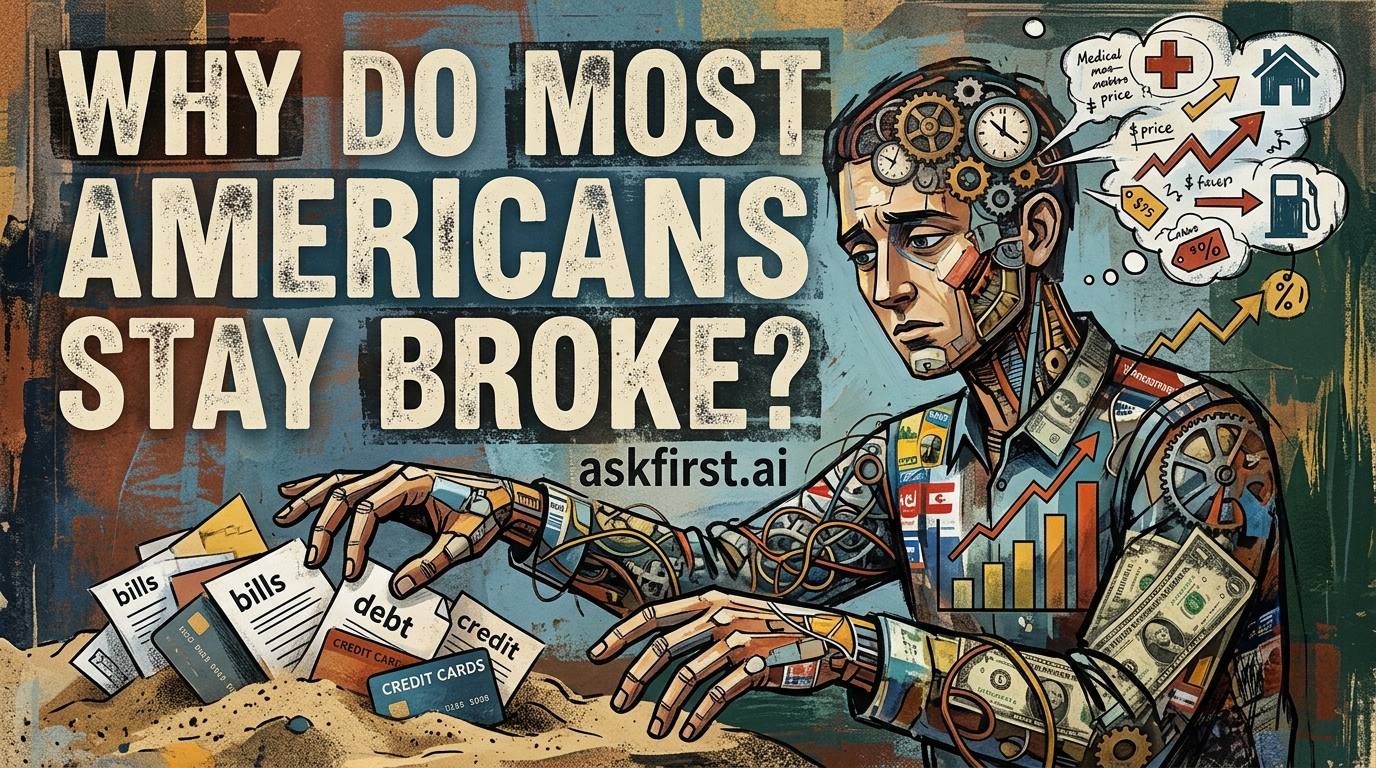
Financial instability in the United States is attributed to a confluence of systemic, economic, and behavioral factors. While individual choices play a role, structural barriers often prevent significant wealth accumulation for a large portion of the population.
Economic and Systemic Factors
- Stagnant Real Wages: While productivity has increased significantly over the last several decades, real wages for the average worker have remained largely stagnant when adjusted for inflation. This decoupling makes it difficult to save after covering essential living expenses.
- The Cost of Living Crisis: The prices of essential services—specifically housing, healthcare, and higher education—have risen at rates far exceeding the general inflation rate. These "big three" expenses consume a disproportionate share of household income, leaving little room for investment.
- Debt Dependency: The American economy is heavily reliant on consumer credit. High-interest debt, particularly from credit cards, creates a cycle where interest payments prevent the compounding of savings or investments.
- Lack of Social Safety Nets: Compared to other developed nations, the U.S. provides fewer state-subsidized protections for childcare, paid family leave, and universal healthcare. An unexpected medical emergency or a period of unemployment can lead to immediate insolvency for families without substantial emergency funds.
Behavioral and Cultural Factors
- Lifestyle Inflation: As individuals earn more, they often increase their spending proportionally to match their new income level. This prevents the "gap" between income and expenses from widening, which is necessary to build capital.
- Consumer Culture: There is significant societal pressure to maintain a specific standard of living through visible consumption. Marketing and social media often incentivize spending on depreciating assets (like luxury vehicles or electronics) rather than appreciating assets (like stocks or real estate).
- Financial Literacy Gaps: Many Americans lack formal education regarding personal finance, specifically concerning the power of compound interest, tax-advantaged retirement accounts (such as 401(k)s and IRAs), and the distinction between "good debt" and "bad debt."
The Wealth Gap and Structural Inequality
- Asset Ownership: Wealth in the United States is primarily built through the ownership of assets, such as homes and equities. Those who do not have the initial capital to enter these markets are often locked out of the primary vehicles for wealth creation.
- Intergenerational Wealth: A significant portion of American wealth is inherited. Families that lack a financial safety net or parental support often face a "starting line" disadvantage, where they must spend their early earning years paying off student loans or supporting aging relatives rather than investing for their own future.
In summary, most Americans struggle with financial stability because their income is primarily consumed by rapidly inflating essential costs, leaving insufficient capital to participate in the investment vehicles that drive long-term wealth growth.