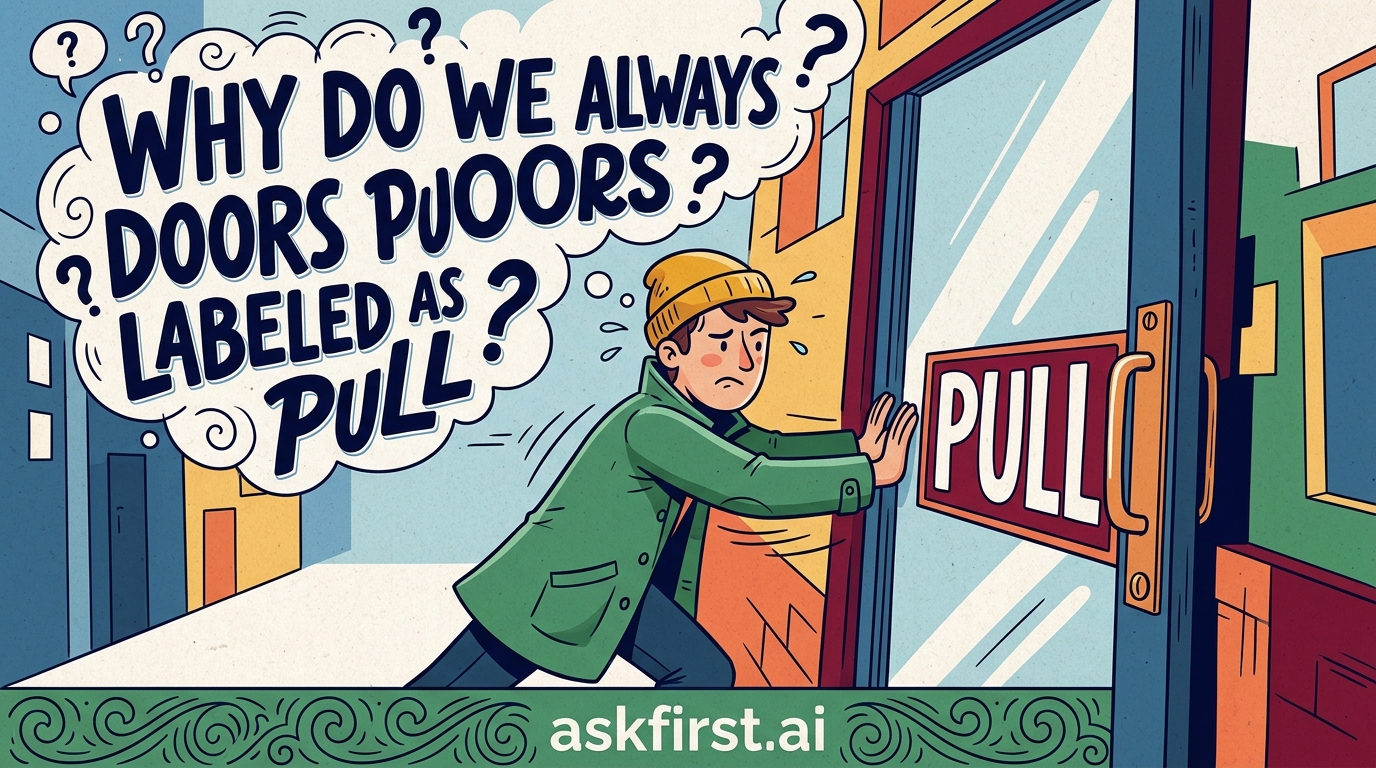
The Psychology of Design
Human interaction with doors is often dictated by Affordance Theory, which suggests that the physical structure of an object informs how a person interacts with it. If a door handle is flat or has a plate, the brain subconsciously interprets it as something meant to be pushed, regardless of the sign.
Why Mistakes Happen
- Cognitive Load: When walking through a busy space, the brain relies on "system one" thinking—a fast, instinctive, and emotional reaction that ignores secondary visual data like text.
- Prior Experience: Frequent exposure to push-plates creates a conditioned reflex that overrides reading labels.
- The Design Conflict: Designers frequently prioritize aesthetics over functionality. When a visual clue (like a flat plate) conflicts with a verbal instruction (the word pull), the physical clue almost always wins.
Improving Daily Navigation
To avoid this, look for Norman Doors, named after designer Don Norman. A well-designed door intuitively signals its operation; if a door needs pulling, it should feature a handle designed for grasping, not a flat surface. When physical design matches the label, the confusion disappears instantly.