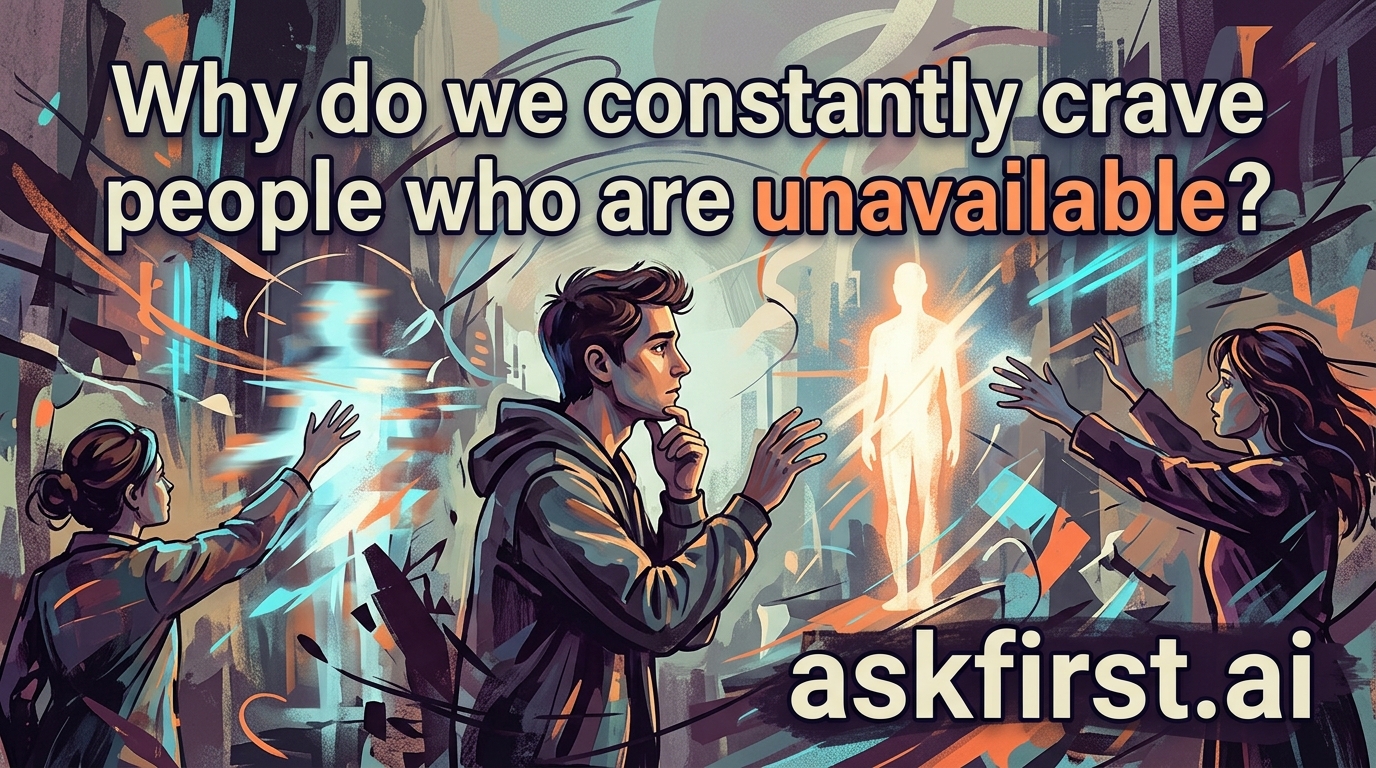
The Psychology of Attachment
The pursuit of the unavailable is deeply rooted in human biology and cognitive biases. When a potential partner is distant, the brain enters a state of heightened arousal, often triggering the 'scarcity principle', where perceived lack of availability artificially inflates a person's value.
Key Factors Driving This Behavior
- Intermittent Reinforcement: Much like a slot machine, the sporadic nature of attention from an unavailable person creates powerful dopamine loops, making the occasional connection feel immensely rewarding.
- The Challenge Reflex: Humans are wired to solve problems. Pursuing someone who is emotionally inaccessible turns love into a puzzle, triggering the Zeigarnik Effect, where unfinished tasks remain fixed in the mind longer than completed ones.
- Projection of Idealization: Because the person is not fully present, the mind fills the 'gaps' with ideal traits. This prevents the reality of a flawed human being from disrupting the fantasy.
By understanding these mechanisms, individuals can shift their focus toward secure attachments that offer consistent, mutual growth rather than chasing the fleeting intensity of the inaccessible.