The Psychology of Design
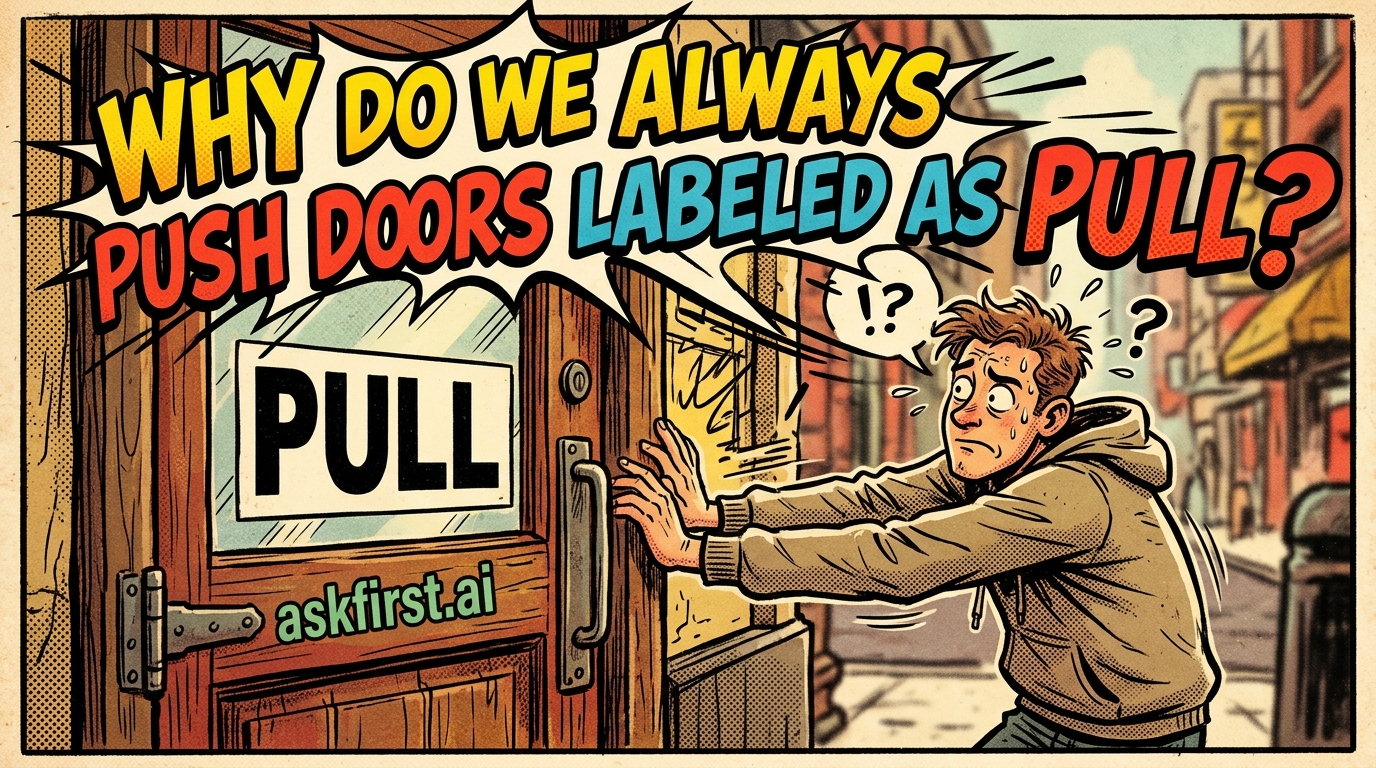
The phenomenon where people instinctively push doors despite a 'pull' label is known as a Norman Door. This occurs when the design of an object provides conflicting clues that override written instructions. Our brains prioritize visual affordances—such as a flat metal plate—over text because physical intuition is faster than linguistic processing.
Why Our Brains Fail
- Visual Affordance: A flat metal plate on a door screams 'push' to the human brain, regardless of what the sign says.
- Cognitive Efficiency: Humans rely on heuristics to save mental energy, choosing the most obvious physical action over reading.
- The Illusion of Autonomy: We often operate on autopilot, making us susceptible to environmental cues that contradict logic.
Designing for Success
To bridge the gap between design and human intuition, architects and engineers focus on User-Centered Design. When the physical hardware matches the intended function, signage becomes obsolete. For instance, replacing a flat plate with a vertical handle instantly communicates 'pull,' eliminating user frustration and creating a seamless interaction between human behavior and physical space.