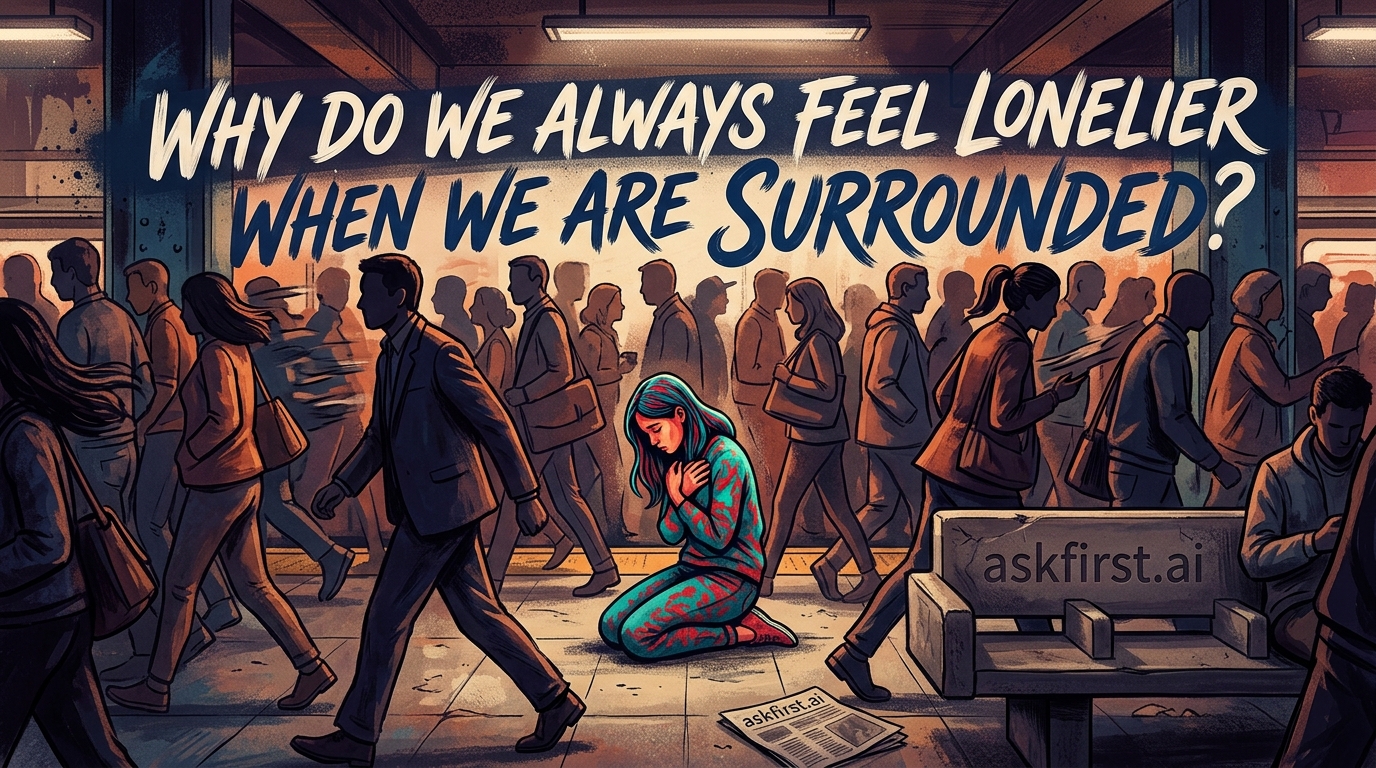
The Paradox of Social Isolation
Feeling alone in a crowded room is a universal human phenomenon. This occurs because loneliness is not the absence of people, but the absence of meaningful connection. When physical proximity is high but emotional intimacy is low, the brain registers a stark discrepancy.
Core Psychological Drivers
- The Mismatch Theory: Humans are evolutionarily wired for deep social bonds. When surrounded by strangers or superficial interactions, the brain experiences a "mismatch" between its need for tribal connection and the reality of isolation.
- Social Comparison: Being surrounded often triggers an unconscious evaluation of one's own social standing. This comparison can create a sense of inadequacy or detachment from the collective group.
- The Signal of Need: Evolutionarily, feeling lonely in a group serves as a powerful signal. It motivates the individual to seek out deeper, more valuable alliances to ensure survival and psychological stability.
Strategies for Connection
To bridge this gap, focus on vulnerability rather than just quantity. Shifting from small talk to substantive dialogue can rapidly transform a room of strangers into a space of authentic resonance. Recognizing that this sensation is a normal biological feedback loop helps in reframing the experience from a negative burden into a proactive tool for social growth.