The Psychology of Design
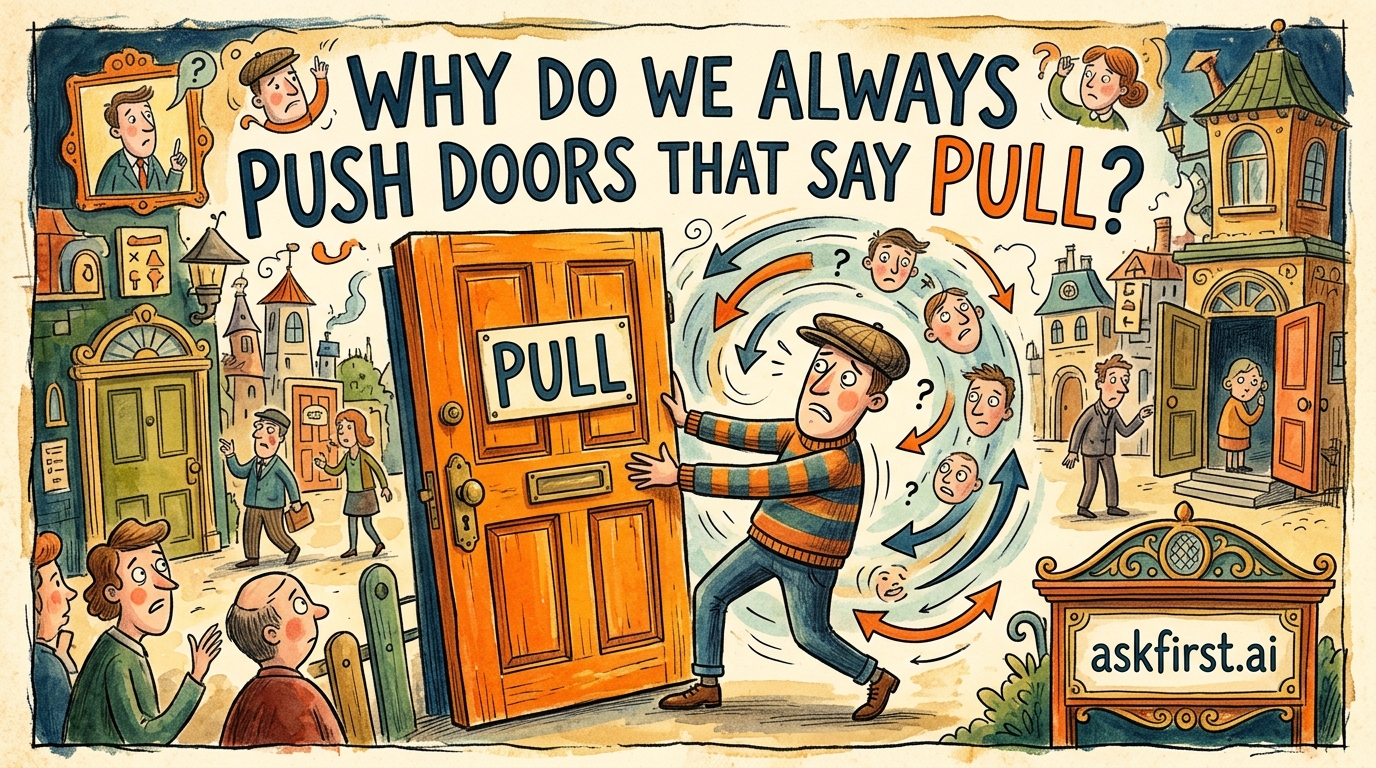
Human behavior often clashes with physical objects due to the Norman Door phenomenon. When a door provides a flat metal plate, the brain instinctively perceives it as a surface to be pushed, regardless of the instructional signage. This occurs because visual affordances—cues suggesting how an object should be used—override linguistic warnings.
Why This Error Occurs
- Cognitive Bias: The brain processes shapes and surfaces faster than it processes text instructions.
- Habit Loops: Pushing is a natural, intuitive gesture that requires less cognitive effort than pulling.
- Design Mismatch: Poor architecture often forces users to ignore text because the hardware (a plate instead of a handle) signals the wrong action.
Designing Better Experiences
To resolve this, designers must ensure that the physical form of an object matches its function. If an object requires a pull action, it should feature a vertical handle, eliminating the need for labels entirely. By aligning intuition with interaction, designers create seamless experiences that remove the potential for human error, turning frustrating daily hurdles into effortless movements.