The Psychology of Affordance
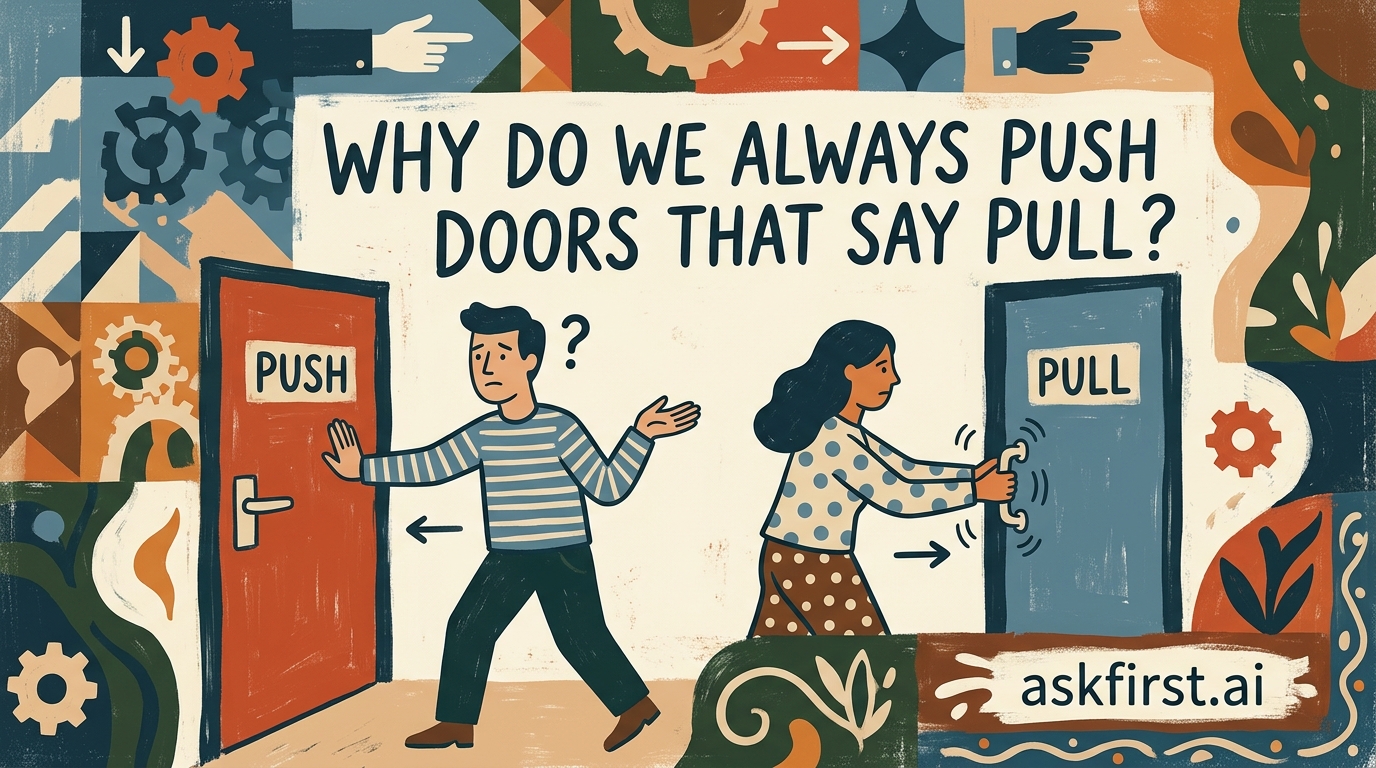
The phenomenon of pushing doors labeled 'pull' is rooted in Don Norman’s theory of affordances. When a door features a flat metal plate, the brain instinctively perceives it as a surface designed for pushing. This visual cue creates a cognitive mismatch with the actual mechanical requirements of the handle, leading to an automatic error.
Why This Occurs
- Design Bias: Vertical handles or flat plates imply interaction through force or pressure, overriding textual labels.
- Cognitive Load: Human brains prioritize visual symbols over written instructions to save mental energy in fast-paced environments.
- Learned Behavior: Repetitive interaction with 'push' doors creates a muscle memory loop that ignores situational exceptions.
Expert Insight
To bridge this gap, designers now utilize Norman Doors, which strictly align hardware with function—using horizontal bars for pushing and vertical pulls only where pulling is necessary. Understanding these design flaws explains why human error is often a consequence of poor environmental engineering rather than individual incompetence.