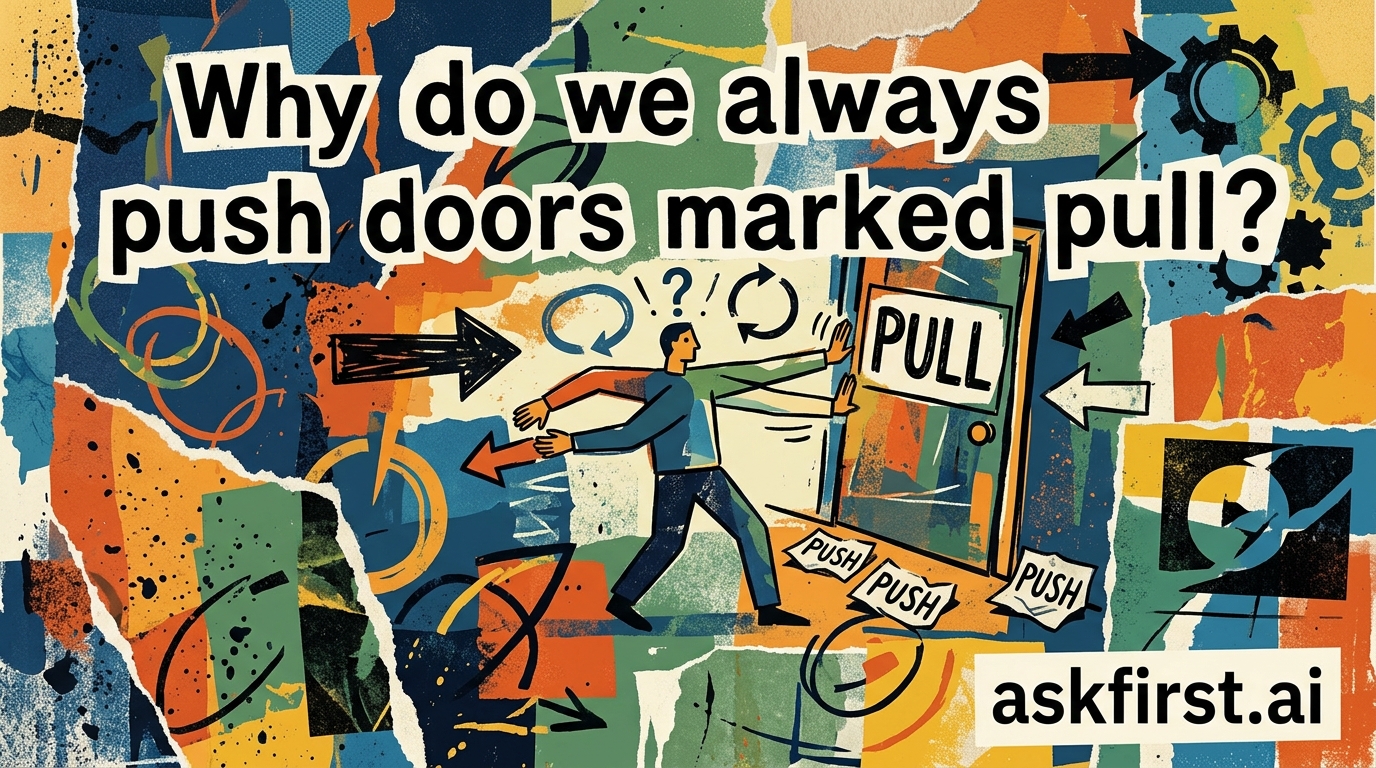
The Psychology of Design Failure
The phenomenon where individuals instinctively push doors marked 'pull' is primarily a failure of Affordance. In cognitive psychology, an affordance is a visual clue that suggests how an object should be used. When a handle is shaped like a vertical bar or a flat plate, the brain subconsciously interprets it as something to be pushed, regardless of the text instructions present.
Key Contributing Factors
- Cognitive Load: The human brain prioritizes speed over detailed reading. When walking, the brain operates in an 'autopilot' mode.
- Design Mismatch: If a door requires pulling but features a flat push-plate, the physical form contradicts the intellectual instruction.
- Heuristic Thinking: Humans rely on mental shortcuts based on past experiences. Most doors encountered throughout life can be pushed open, leading to a generalized assumption about door mechanics.
The Norman Door Principle
Coined by design expert Don Norman, the 'Norman Door' refers to a poorly designed entry that confuses users. Truly intuitive design eliminates the need for signs entirely; if a door must be pulled, it should be equipped with a hardware style that physically prevents pushing, such as a cup-shaped handle or a rounded knob, ensuring the mechanism matches the intended action perfectly.