The Psychology of Design
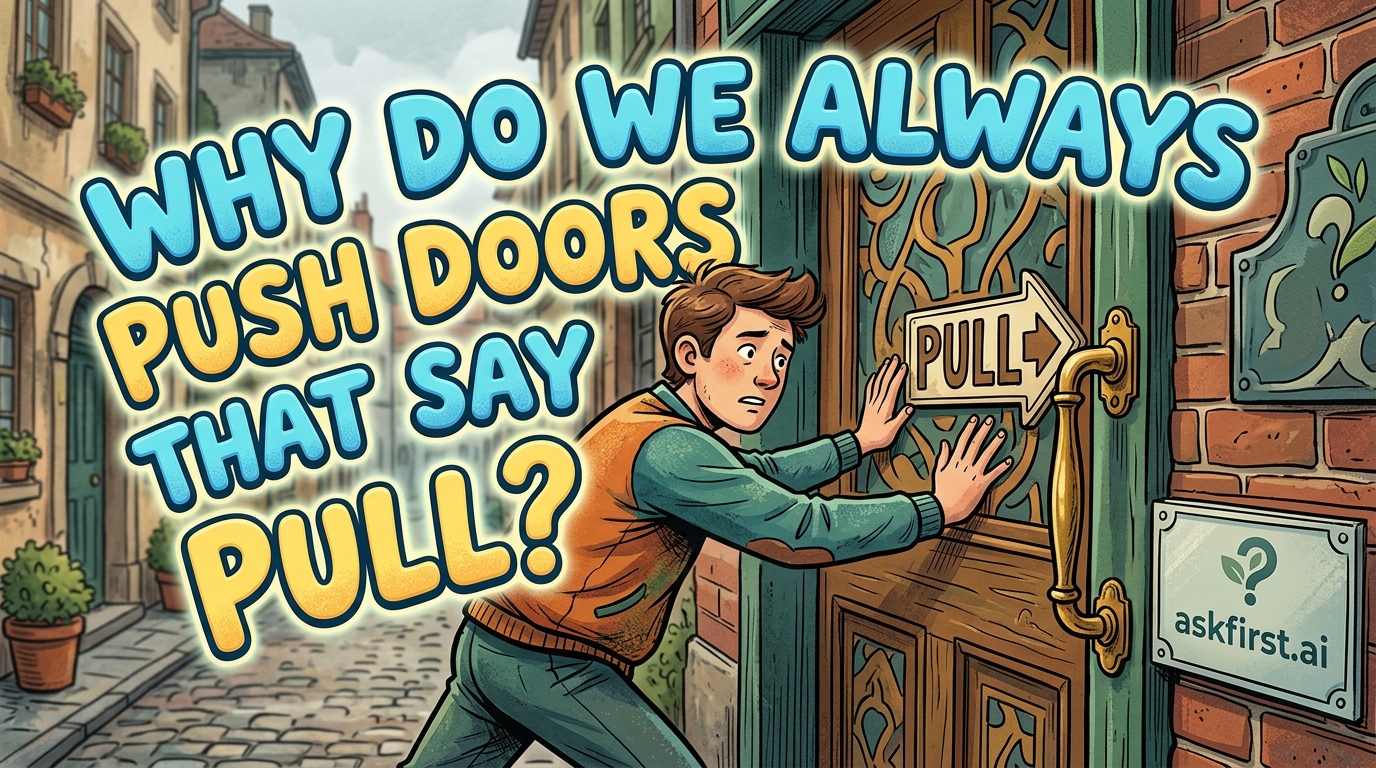
This common struggle, often called a 'Norman Door', highlights a breakdown in communication between the user and the environment. When an object's physical design conflicts with its intended use, human intuition fails because we prioritize the shape and handle style over reading text labels.
Why Intuition Fails
- Affordance Overload: If a door has a flat plate or a handle meant for grabbing, the brain unconsciously interprets it as a 'push' action, overriding the sign.
- Visual Dominance: Humans process visual environmental cues much faster than written symbols. We perceive the shape of the hardware, and our motor systems prepare for a specific motion before the eyes actually read the 'Pull' sign.
The Engineering Perspective
Good design relies on intuitive mapping. A door that requires a pull should feature a vertical handle that physically forces a pulling motion, while a door requiring a push should only feature a flat plate. When the hardware matches the required movement, the confusion vanishes instantly. Therefore, the issue is not a lapse in human intelligence, but rather a classic failure of ergonomic design standards in public spaces.