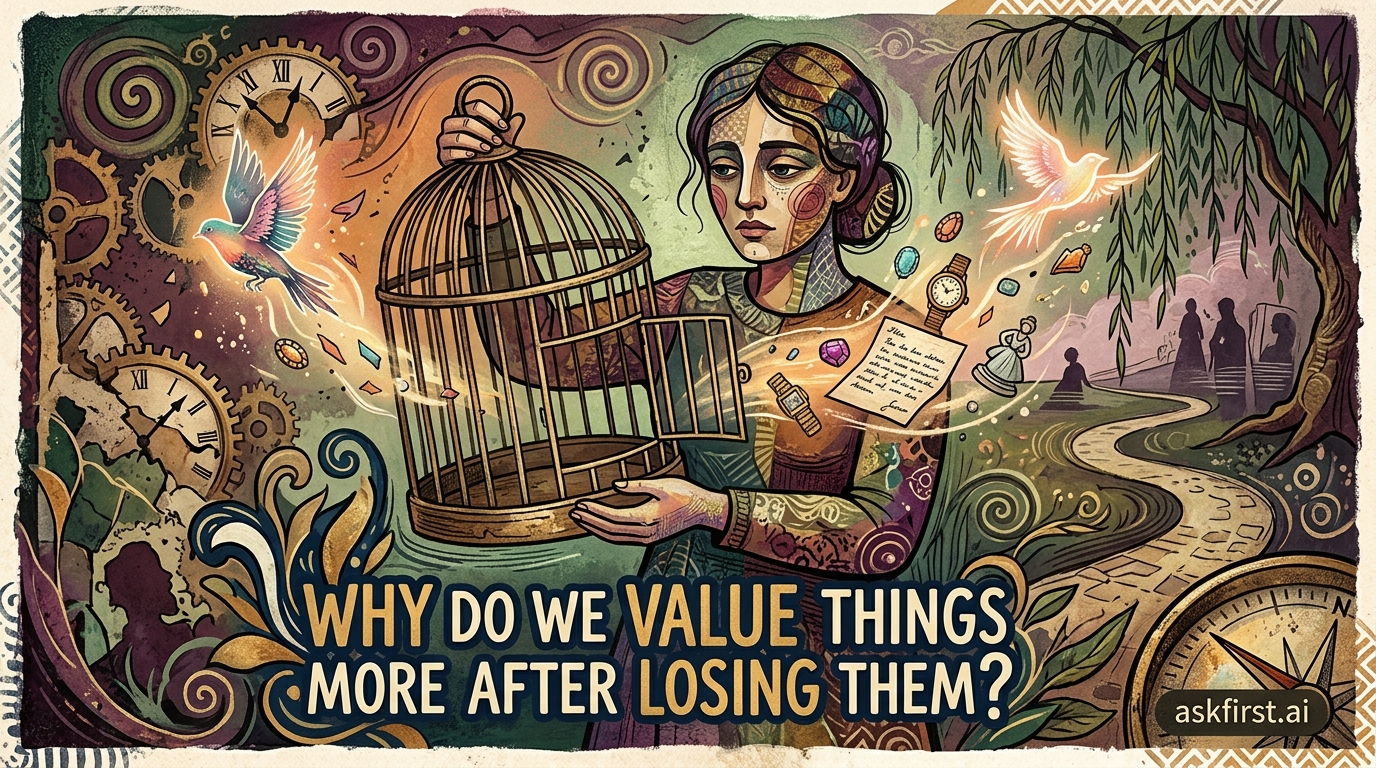
The Psychology of Scarcity and Loss
The phenomenon where objects or opportunities gain value once they are no longer attainable is driven by Loss Aversion and the Scarcity Principle. Human brains are evolutionarily hardwired to prioritize avoiding losses over acquiring gains, a concept central to behavioral economics.
Key Psychological Drivers
- Loss Aversion: The psychological pain of losing something is emotionally twice as powerful as the joy of gaining the same item.
- The Endowment Effect: People inflate the value of items simply because they possess them; once ownership is severed, the perceived value often spikes due to the sudden void.
- Cognitive Dissonance: When an item is lost, the mind struggles to reconcile the previous attachment with the new reality, often leading to an idealized memory of the object.
Practical Applications
Understanding these biases allows for better decision-making in personal and professional spheres. By recognizing that value is often a projection of possession rather than intrinsic quality, one can avoid the trap of irrational attachment. Emotional regulation helps maintain perspective, ensuring that items or situations are judged by their objective utility rather than the artificial inflation caused by the fear of missing out.