The Psychology of Design
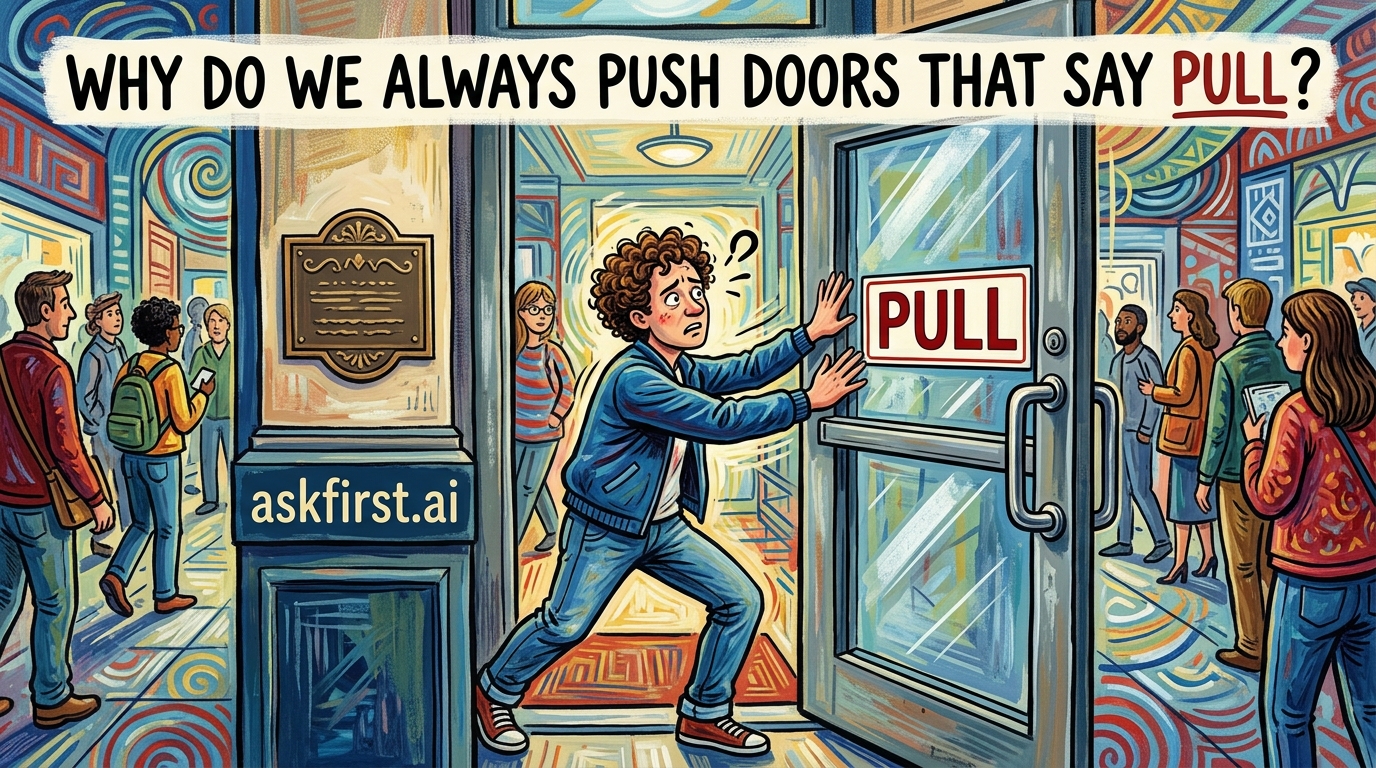
Human behavior is governed by affordance, a concept popularized by Don Norman. When a door features a flat metal plate, the brain intuitively perceives it as a surface meant to be pushed, regardless of any instructional signage. This is known as a Norman Door, where the physical design contradicts the intended operation.
Why This Phenomenon Persists:
- Intuitive Logic: Humans prioritize visual cues over text because processing icons or shapes is faster for the brain than reading instructions.
- Cognitive Load: In high-traffic environments, individuals rely on muscle memory rather than active reading.
- Design Consistency: Standard push-plates are visually inviting, creating a psychological reflex that overrides written commands.
Overcoming the Mystery
To resolve this conflict, architects use mapping. By placing handles on sides that require pulling and flat plates only on sides that require pushing, design aligns with natural human intuition. When objects behave according to their appearance, error rates drop significantly, proving that great design speaks louder than any warning label ever could.