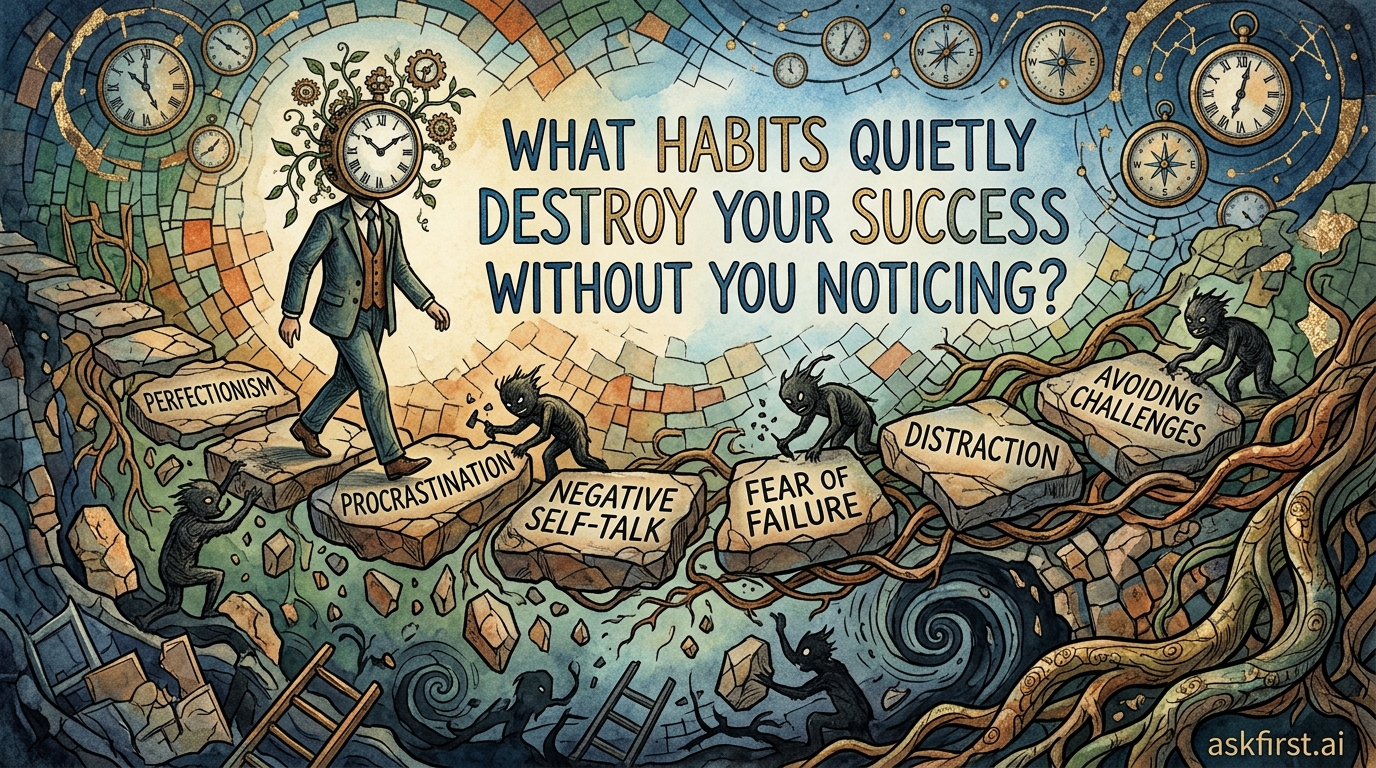
Success is often undermined not by catastrophic failures, but by the gradual accumulation of subtle, maladaptive habits. These behaviors operate in the background, eroding productivity and potential over time.
1. The Trap of "Productive Procrastination"
This occurs when you prioritize low-value, easy tasks—such as organizing your email inbox or color-coding files—to avoid the high-stakes, difficult work that actually drives progress. It provides a false sense of accomplishment while the most critical projects remain stagnant.
2. Chronic Decision Fatigue
Many individuals exhaust their mental energy on trivial choices, such as what to wear or what to eat, leaving little cognitive bandwidth for complex problem-solving. Decision fatigue leads to impulsive choices and the tendency to defer important judgments until your willpower is depleted.
3. The Perfectionism Paralysis
Perfectionism is frequently a mask for fear. By obsessing over minor details, you create a barrier to completion. This habit ensures that projects are never finished, or if they are, they arrive far too late to be relevant. "Done is better than perfect" is the antidote to this self-sabotaging cycle.
4. Lack of Intellectual Maintenance
Success requires continuous learning. When you stop consuming new information or challenging your existing mental models, your skill set becomes obsolete. Complacency—the belief that your current knowledge is sufficient—is the precursor to professional decline.
5. Neglecting Sleep and Physiological Baseline
Operating on chronic sleep deprivation impairs executive function, emotional regulation, and memory. Many high achievers treat sleep as a luxury rather than a biological necessity. Over time, this degradation of physical health manifests as reduced focus, irritability, and poor long-term decision-making.
6. The "Yes" Habit
Agreeing to every request, meeting, or social obligation out of a desire to be helpful or liked results in the dilution of your focus. Every time you say "yes" to something that does not align with your core goals, you are implicitly saying "no" to your own success.
7. Consumption Over Creation
In the digital age, it is easy to spend hours consuming content—news, social media, or entertainment—without producing anything of value. This habit shifts your brain into a passive state, making it increasingly difficult to engage in the deep work required for innovation and high-level execution.
8. Avoiding Discomfort
Growth occurs exclusively outside of your comfort zone. If you consistently choose the path of least resistance, you deny yourself the resilience and adaptability necessary to navigate the complexities of success. Avoiding difficult conversations, challenging tasks, or feedback keeps you tethered to your current level of performance.