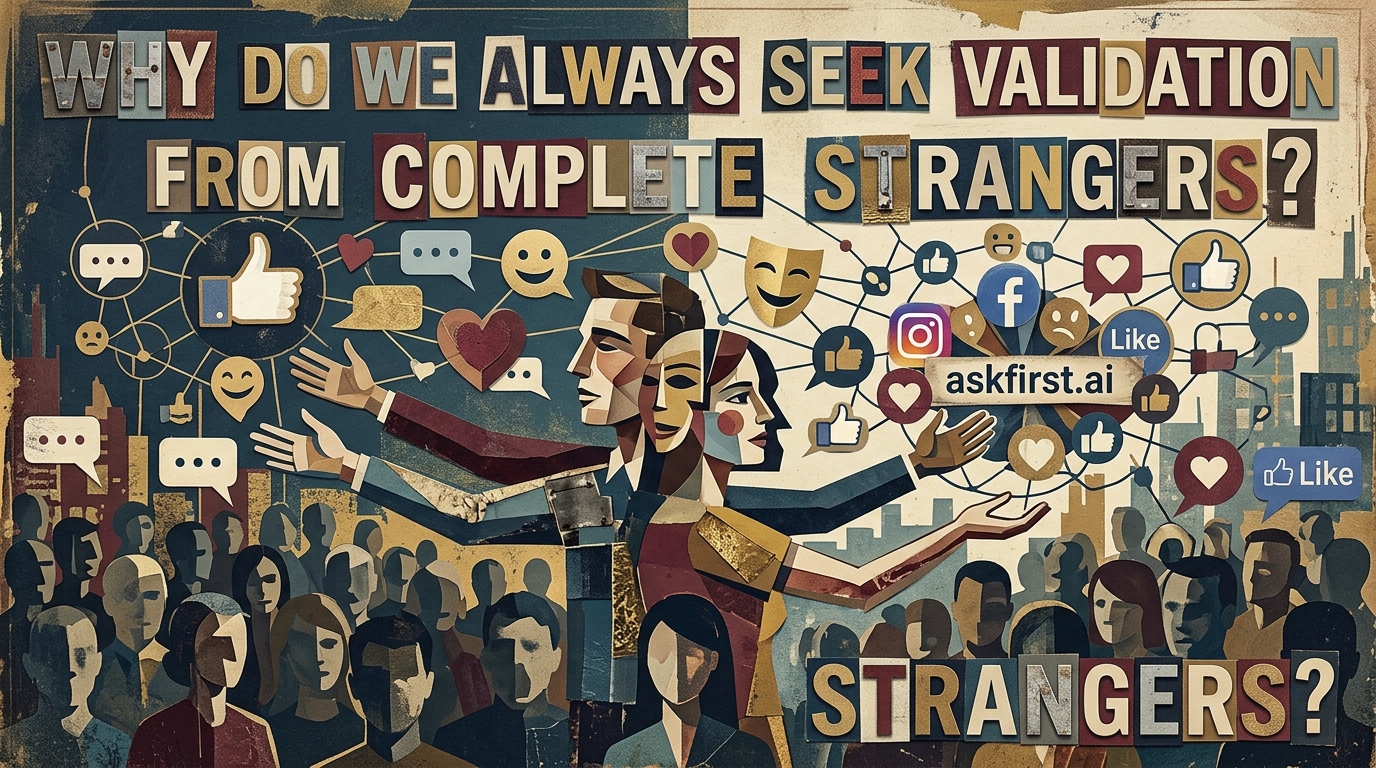
The Evolutionary Impulse
Human beings are inherently social creatures shaped by millions of years of group survival. Seeking validation from strangers is an evolutionary byproduct of the need for tribal acceptance. In ancestral environments, being ostracized meant physical peril, so the brain developed a sensitive mechanism to scan for social cues, even from those outside one's immediate circle.
Psychological Drivers
- The Curiosity Gap: Humans possess an innate desire to understand where they stand within the wider social hierarchy.
- Cognitive Social Proof: Observing strangers serves as a shortcut for decision-making. When people see that others approve, it minimizes perceived risk.
- Dopamine Loops: Modern digital architecture gamifies social feedback, triggering reward pathways whenever unknown individuals engage with one's content.
Moving Toward Self-Reliance
While the impulse to connect is natural, mastery lies in internalizing worth. By recognizing that external validation is merely a snapshot of subjective opinion rather than objective truth, individuals can reclaim their agency. Cultivating a foundation of self-trust transforms the need for approval into a choice, allowing for authentic expression rather than performance-based connection.