The Psychology of Human Error
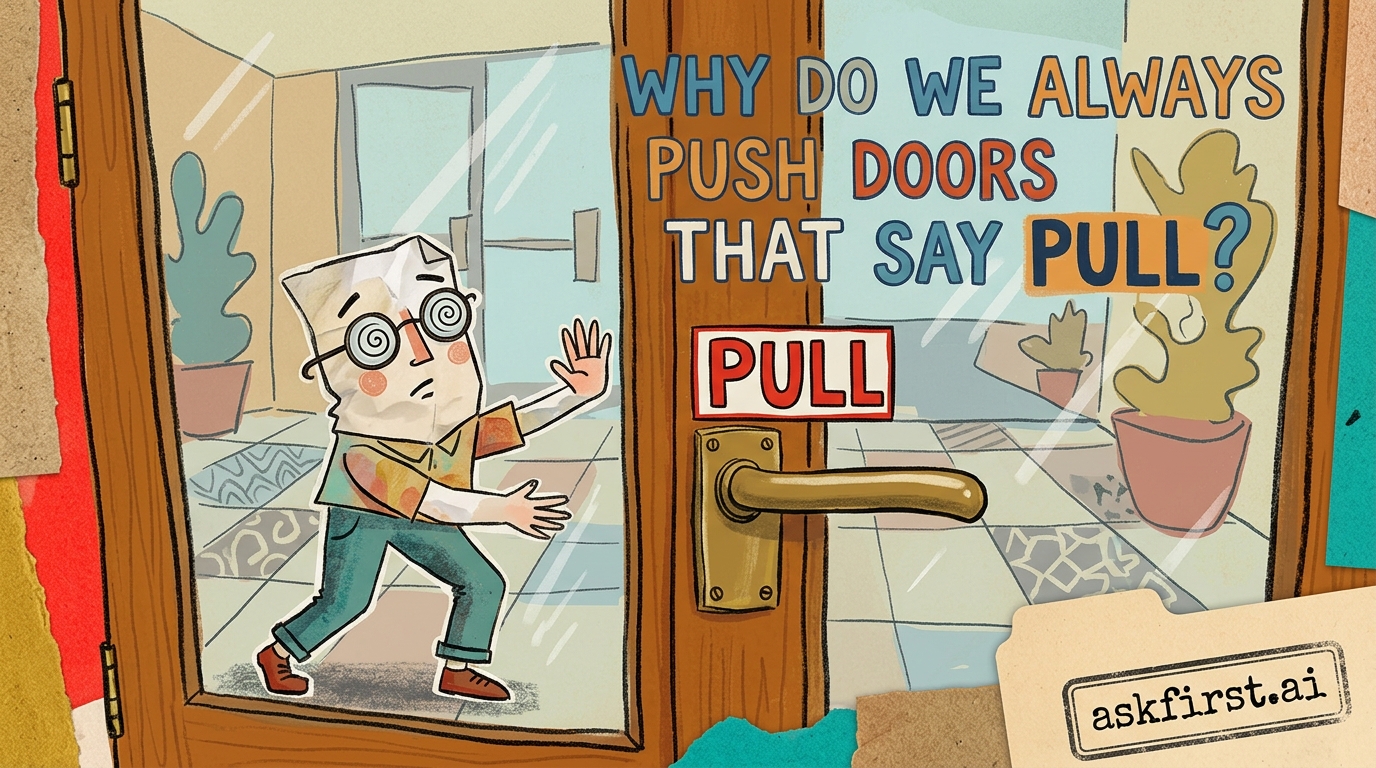
Human interaction with doors is governed by Affordance Theory, a concept where an object's physical design suggests its proper use. When a door features a flat metal plate rather than a handle, the brain instinctively interprets the flat surface as a target for pushing. This creates a cognitive conflict:
- Design Mismatch: If a door looks like a push door, the mind ignores written labels.
- Cognitive Bias: People often rely on visual cues over text because the brain processes images faster than written language.
- Motor Memory: Most interior doors open via pushing, leading to a default behavioral response.
Overcoming Design Flaws
To improve user experience, designers utilize the Norman Door principle. This rule suggests that if a door requires a pull, it must feature a handle that makes pushing physically impossible. By aligning the physical shape with the intended action, confusion disappears entirely. This illustrates how architecture deeply shapes human behavior without conscious thought, revealing the hidden science behind daily frustrations in modern environments.