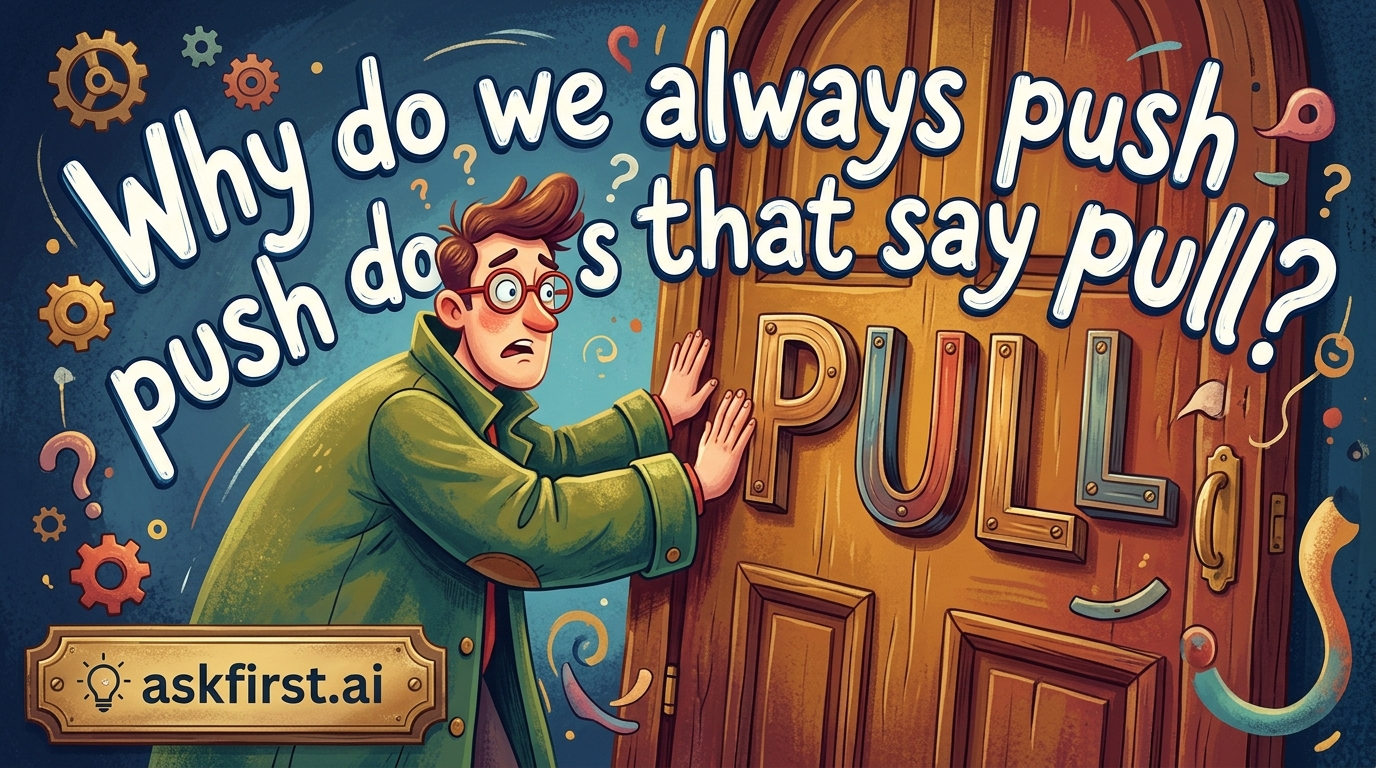
The Psychology of Design
The phenomenon where individuals instinctively push doors labeled 'pull' is primarily rooted in Affordance Theory. Developed by psychologist James Gibson, this concept explains how objects suggest their own use through physical cues. A flat metal plate on a door acts as a strong visual prompt for pushing, regardless of the text written upon it.
Why Our Brains Fail
- Cognitive Load: Human brains prioritize visual geometry over linguistic processing when moving through spaces.
- Design Bias: If a door lacks a handle and features a flat panel, the human motor system defaults to a pushing motion to maximize leverage.
- The Norm of Pushing: In modern architecture, the vast majority of doors open by pushing. We build muscle memory based on frequency rather than explicit signage.
The Solution for Architects
To bridge this gap, high-quality design removes ambiguity entirely. By using vertical handle bars for pulling and flat plates only for pushing, designers can align human intuition with functionality. This creates an intuitive environment where users no longer need to read instructions to interact with their physical world seamlessly.