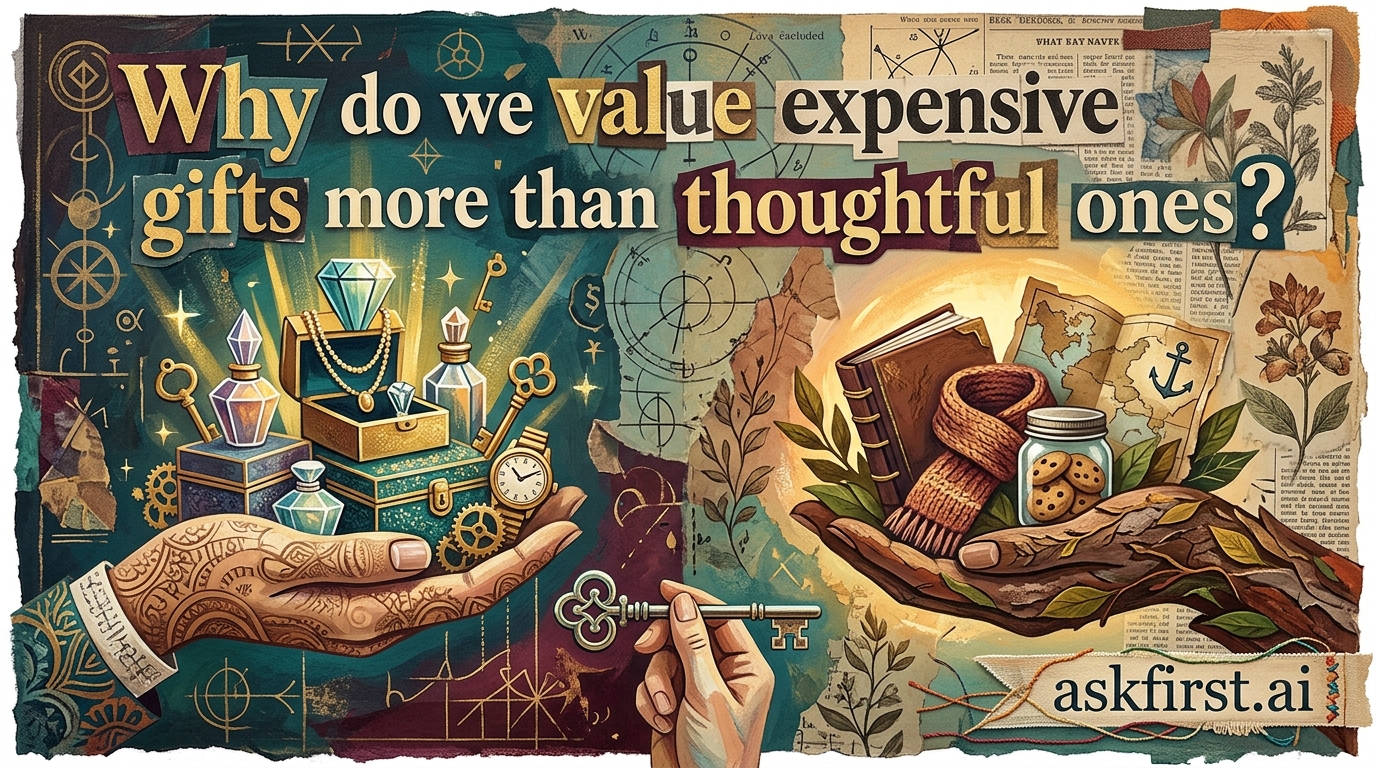
The Psychology of Value Perception
Humans are biologically hardwired to associate high costs with high value, a cognitive shortcut known as the price-quality heuristic. When an object carries a significant financial burden, the brain instinctively assumes it represents superior effort, status, and social signaling. This creates a powerful, albeit often inaccurate, baseline for measuring affection.
Why High-Ticket Items Captivate Us
- Social Signaling: Expensive gifts provide clear evidence of the giver's status and commitment, which is easily broadcast to peers.
- Risk Reduction: High prices act as a signal that the gift is not 'cheap' or disposable, effectively lowering the receiver's fear of receiving something of low utility.
- Tangible Investment: We equate financial sacrifice with the intensity of an emotional bond.
The Hidden Truth
While high-value items trigger an immediate chemical rush of dopamine, thoughtful gifts create lasting psychological resonance. Studies suggest that thoughtful gestures often trigger deeper neural pathways related to intimacy and understanding. The perceived value of an expensive gift often fades as the object becomes mundane, whereas a deeply thoughtful gift reinforces a sense of being 'seen' and understood, which fosters long-term relationship satisfaction and personal well-being.