The Psychology of Design
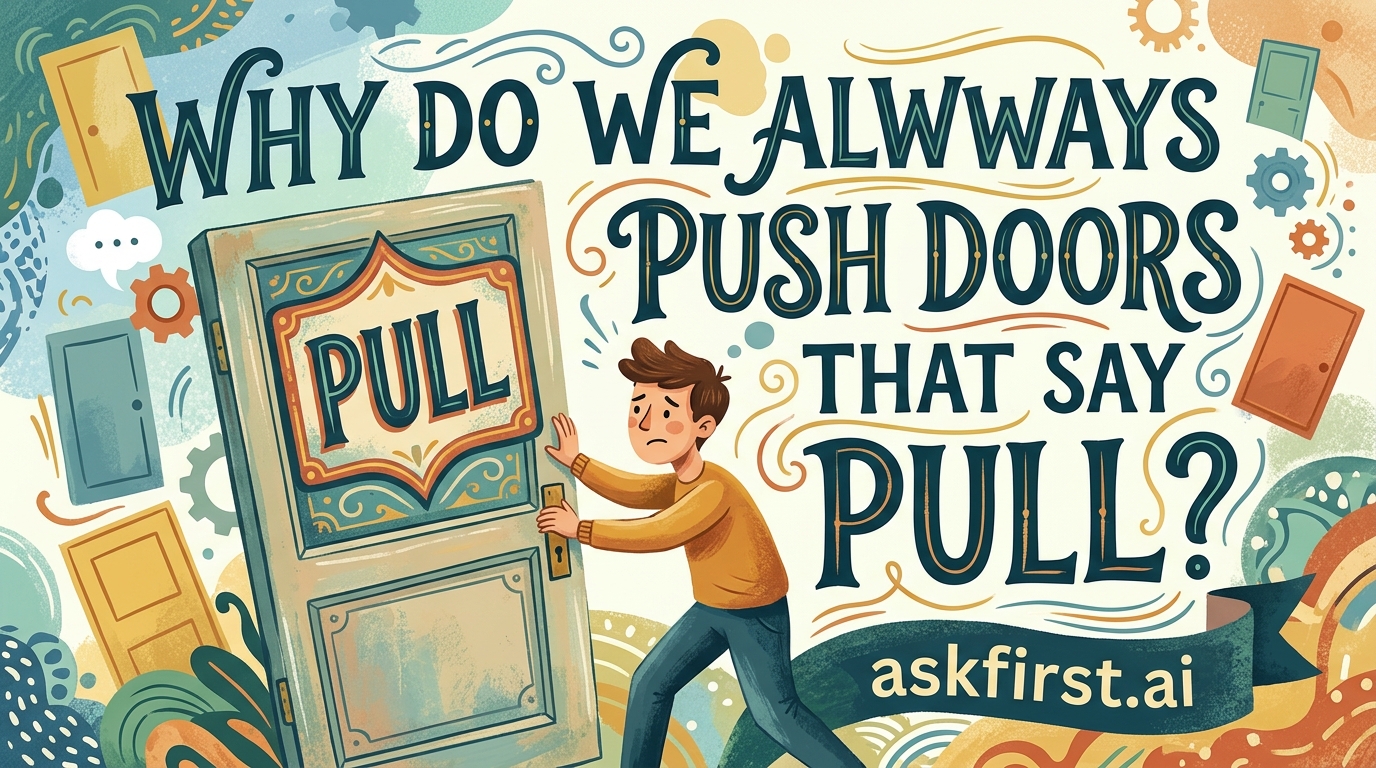
Human intuition often clashes with industrial design. The phenomenon where individuals push doors marked 'pull' is famously known as a Norman Door. This occurs when the physical affordances of an object—like a large flat plate—strongly signal 'push' to the human brain, completely overriding the written instruction.
Why This Happens:
- The Power of Affordance: Our brains rely on visual cues rather than text. If a door has a handle, we grasp it; if it has a flat plate, we naturally push.
- Cognitive Shortcuts: The brain prioritizes fast, automatic reactions over reading signs to save energy. When the design conflicts with the label, the brain defaults to the physical cue.
- Architectural Miscommunication: Designers often fail to map physical interaction to the desired action, creating a permanent gap between user intent and object functionality.
The Takeaway
This behavior highlights a fascinating flaw in human-centered design. When objects are designed correctly, they require zero instructions to operate. The persistent struggle with doors is not a human failure, but a classic lesson in how intuitive interface design must align with our instinctive physical responses to the environment.