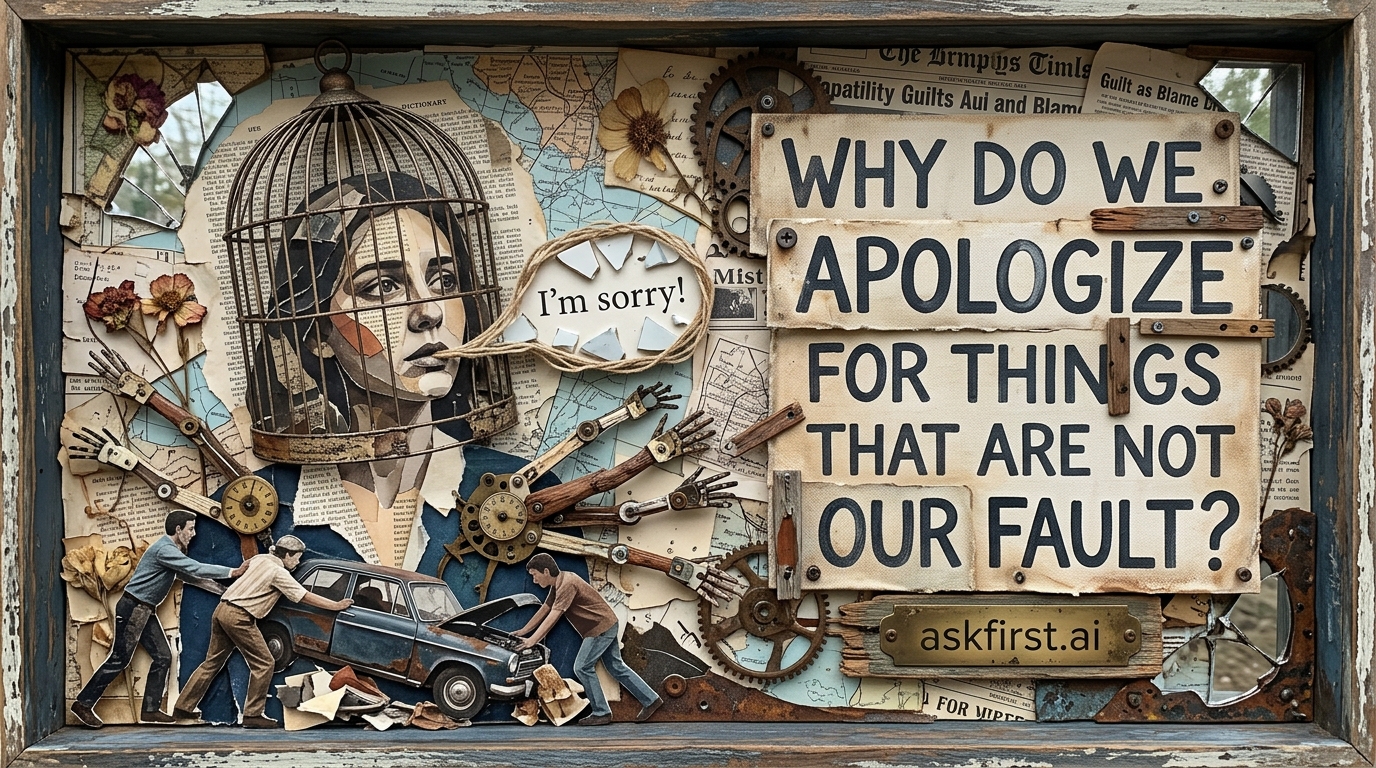
The Psychology of Unnecessary Apologies
Apologizing for events outside of personal control is a fascinating psychological phenomenon rooted in social preservation. When individuals express regret for situations they did not cause, they are often employing a strategy known as super-apologizing. This behavior serves several distinct evolutionary and social functions:
- Empathy Projection: Offering an apology acts as a bridge for emotional connection, signaling that one values the feelings of others more than the technicality of blame.
- Conflict De-escalation: By lowering one's defenses, an individual de-escalates potential tension, fostering an environment of safety rather than defensiveness.
- Relationship Maintenance: Often, the goal is not to accept responsibility but to validate the pain or inconvenience the other party is experiencing, which strengthens social bonds.
Why It Matters
While excessive apologizing can sometimes erode personal authority, understanding that these social gestures are attempts to harmonize human interaction shifts the perspective. It reveals a deep-seated human desire to keep the peace and acknowledge that while we cannot control every circumstance, we can control how we show up for the people around us. Mastering this balance is essential for emotional intelligence and effective communication in every area of human life.