The Psychology of Design
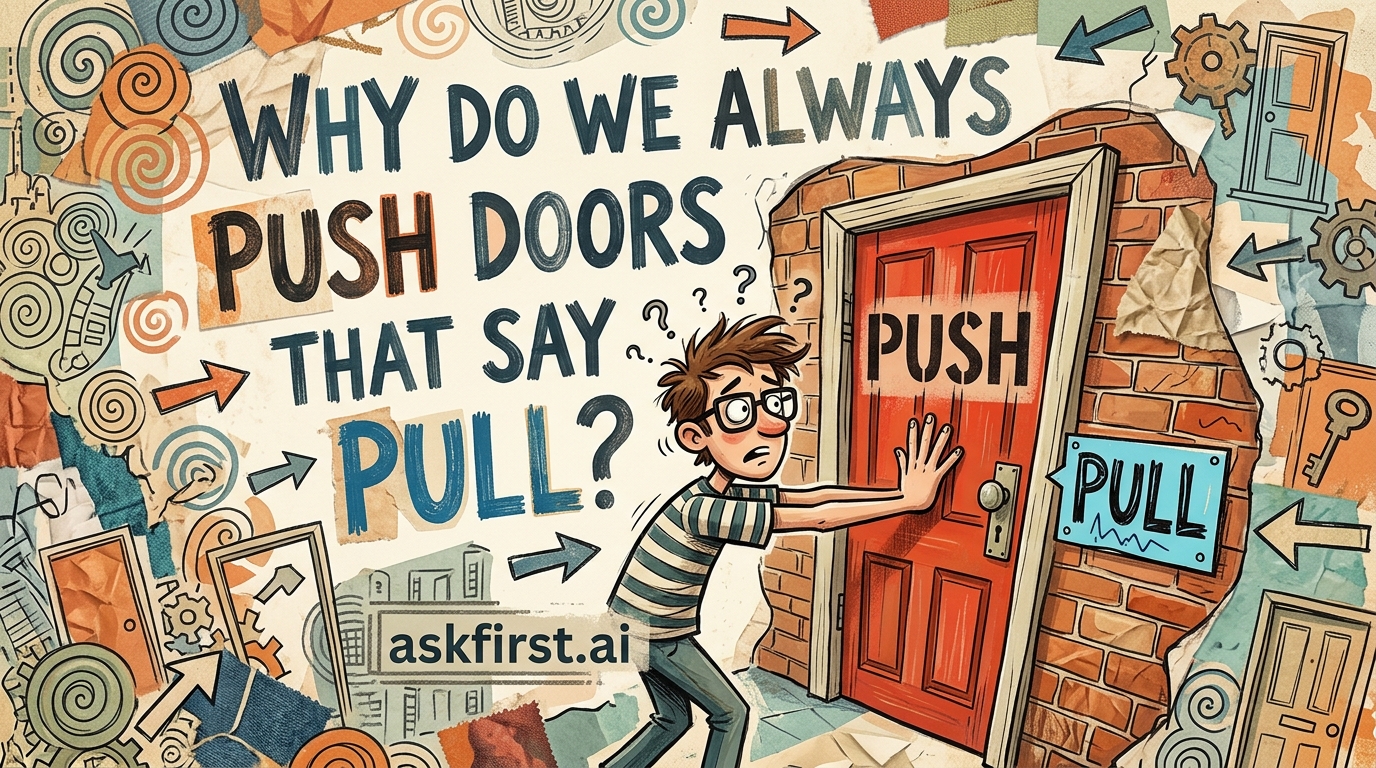
This common struggle, often called a Norman Door, occurs because our brains rely on affordances—visual clues that suggest how an object should be used. When a door has a flat plate or a handle shaped for grasping, the brain automatically expects a specific movement. If the design language contradicts the label, the subconscious impulse to push often overrides the written instruction.
Key Factors Influencing This Behavior:
- Cognitive Load: In busy environments, the brain uses heuristics to process information quickly, leading to snap judgments based on appearance rather than text.
- Design Mismatch: Poor architecture often places push-plates on pull-doors, creating a visual lie that confuses human perception.
- Habitual Patterns: Humans naturally prioritize tactile cues over linguistic symbols, meaning if a door looks pushable, the hand will initiate that action before the eyes can process the word 'pull'.
Understanding these Human-Computer Interaction (HCI) principles reveals that this is not a personal failure, but a classic example of flawed industrial design. Objects should ideally be intuitive enough that labels become completely unnecessary for their operation.