The Psychology of Design
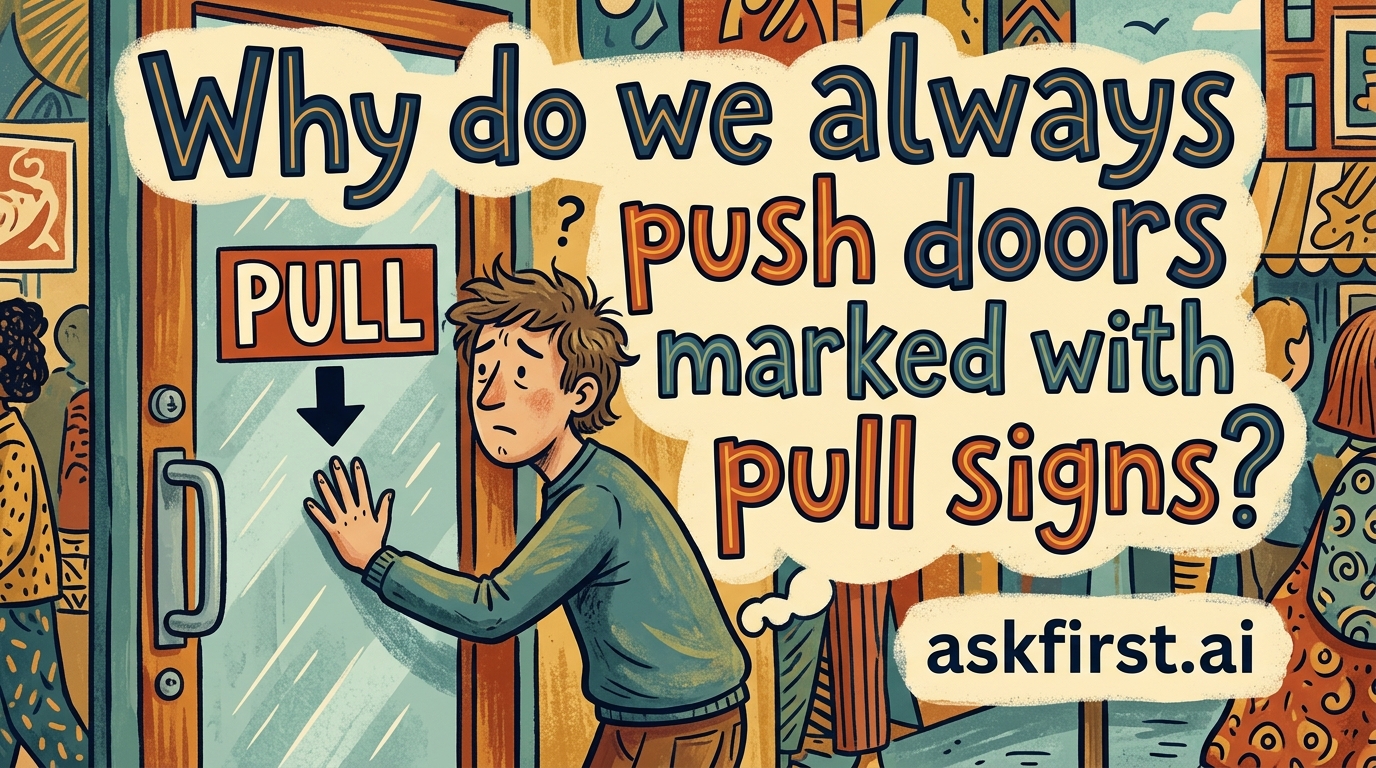
Human behavior is governed by affordances, a term coined by psychologist James Gibson. When a handle is shaped like a vertical bar or a flat plate, it unconsciously signals 'push' to the human brain, regardless of the text printed on it. This creates a cognitive conflict known as a Norman Door.
Why This Happens
- Visual Cues Over Text: Our eyes prioritize the shape and physical geometry of objects over linguistic information. If a door features a handle that suggests pushing, the brain bypasses the instruction 'Pull' entirely.
- Experience-Based Learning: Society is conditioned by repeated interaction with common architecture. Because many doors operate via pushing, people often rely on muscle memory rather than reading instructions.
- Cognitive Load: In busy environments, the mind seeks the path of least resistance. Processing the word 'Pull' requires active attention, whereas pushing is an automatic, low-energy response.
Designing for Success
To eliminate this confusion, architects now emphasize perceptual transparency. By removing handle bars from 'pull' doors and replacing them with simple, flat plates, the need for instructional signage disappears. Good design should be intuitive enough that no user ever has to stop and think about how to exit or enter a space.