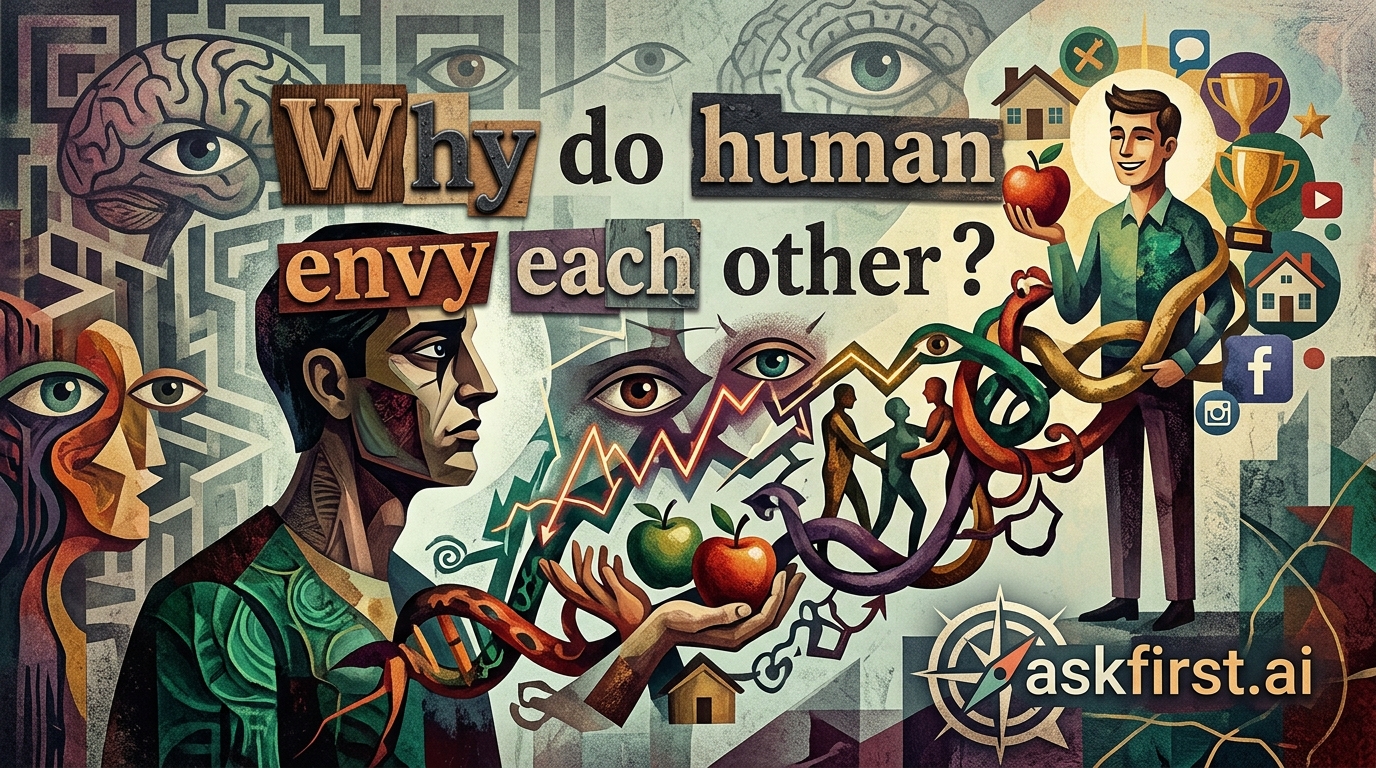
The phenomenon of human envy is a complex psychological and evolutionary trait. It is rarely just about "wanting things"; rather, it is deeply rooted in how we perceive our place within a social hierarchy.
Here are the primary reasons why humans experience envy:
- Evolutionary Survival: In our ancestral past, resources (food, shelter, mates) were scarce. Being aware of what others had—and wanting it for oneself—was often a mechanism to ensure personal survival and reproductive success.
- Social Comparison Theory: Humans are social creatures who constantly evaluate themselves by comparing their achievements, status, and possessions to their peers. When we perceive a "gap" between our reality and someone else’s, envy often fills that space.
- Status and Hierarchy: Envy is frequently tied to social standing. Because humans live in groups, we are wired to be sensitive to where we rank. If someone else ascends in status, it can trigger an internal alarm that our own position is diminishing, leading to feelings of resentment.
- Perceived Injustice: Sometimes, envy is not just about the object itself, but about the fairness of the situation. When we feel that someone else has gained an advantage that they did not "earn," or that we were unfairly denied a reward, envy manifests as a sense of indignation.
- The "Zero-Sum" Fallacy: Many people subconsciously view life as a zero-sum game—the belief that for someone else to win, someone else must lose. This mindset makes the success of others feel like a direct threat to our own potential happiness or success.
Is envy always negative?
Psychologists distinguish between two types of envy:
- Malicious Envy: This is the destructive kind, where one wishes for the other person to lose what they have. It is often linked to bitterness and low self-esteem.
- Benign Envy: This is a more constructive form. It occurs when you see someone else’s success and feel motivated to work harder to achieve a similar outcome for yourself.
In short, envy is an internal signal. It acts as a mirror, highlighting the things we value but feel we are currently lacking. By understanding why we feel envious, we can often turn that energy into self-improvement rather than resentment.