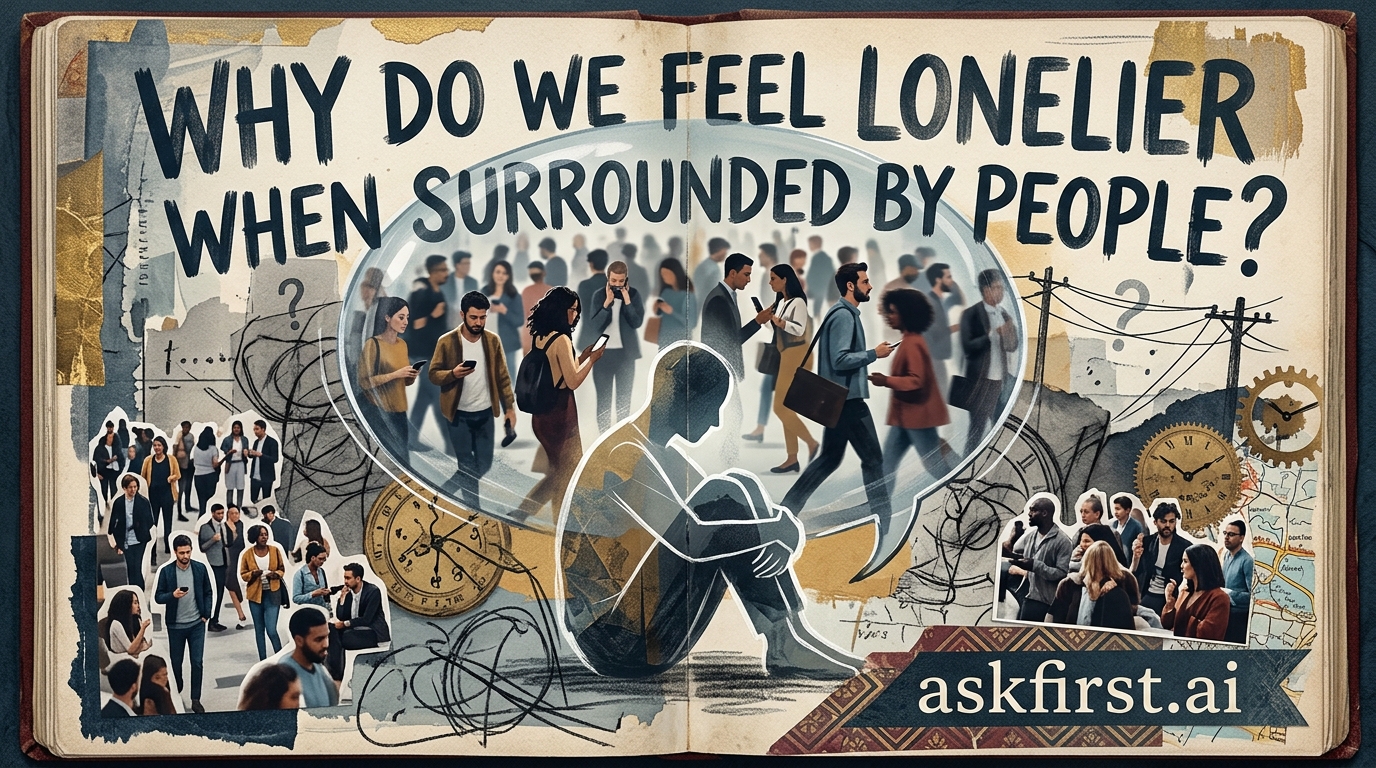
The Paradox of Social Isolation
Feeling alone in a crowded room is a profound psychological phenomenon rooted in the discrepancy between social presence and emotional connection. When human interactions lack depth or authenticity, the brain perceives a 'social hunger' similar to physical hunger, signaling that basic biological needs for belonging remain unmet.
Core Psychological Drivers
- Lack of Resonance: Loneliness is defined by the quality of interactions rather than the quantity. If one cannot share their true self, the gap between internal reality and external performance creates alienation.
- The Comparison Trap: Being around others often triggers social comparison. Observing others appearing 'connected' while feeling internally detached amplifies the perception of personal inadequacy.
- Overstimulation and Withdrawal: In large groups, the brain may enter a defensive state. If an individual feels misunderstood or judged, they may psychologically withdraw, creating a self-imposed barrier that intensifies feelings of isolation.
Bridging the Emotional Gap
To overcome this, experts suggest shifting focus from social presence to meaningful engagement. Genuine vulnerability and active listening act as catalysts for true connection, effectively silencing the feeling of loneliness by transforming a crowd into a network of potential allies.