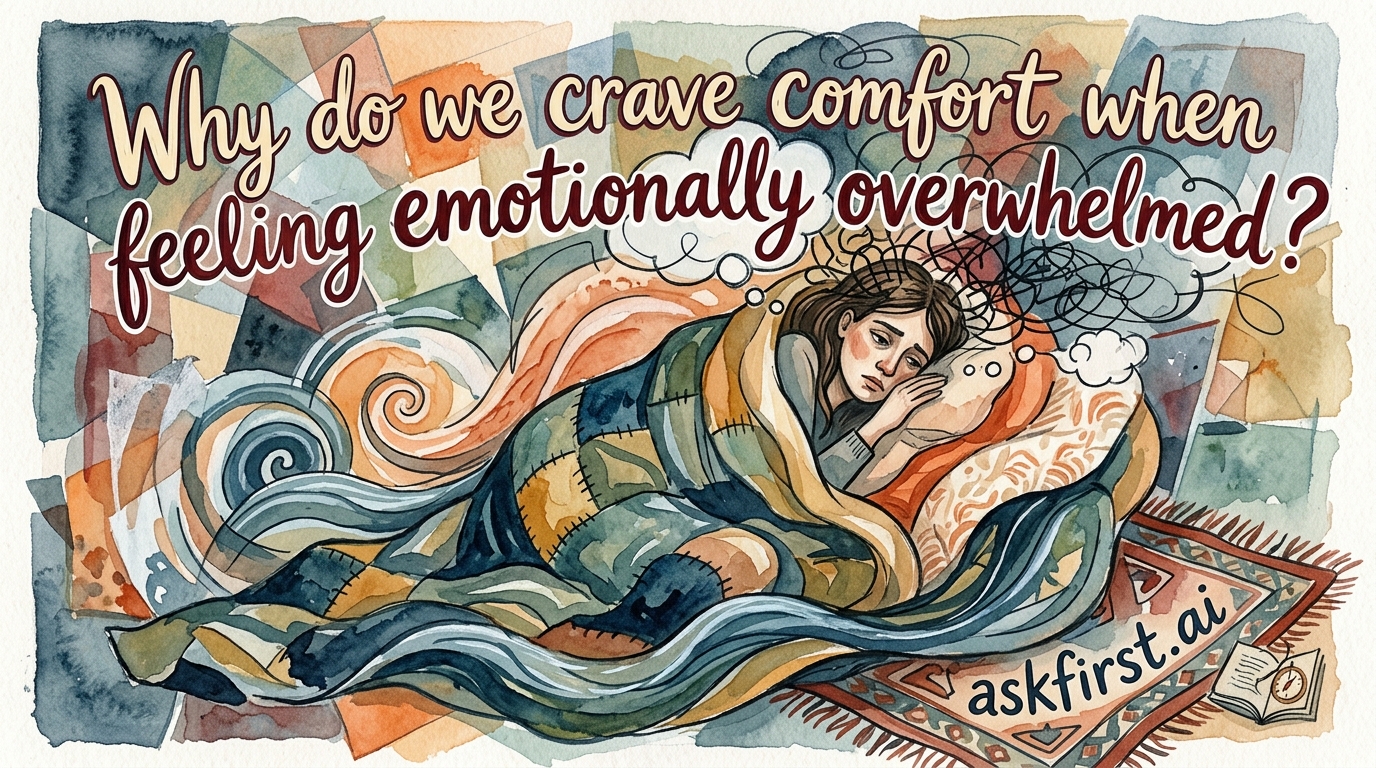
The Science of Emotional Regulation
When the brain perceives intense emotional stress, it triggers a survival mechanism rooted in the nervous system. The craving for comfort acts as a self-soothing strategy to regain equilibrium.
Why This Happens
- Biological Safety: Comfort—whether through food, soft textures, or familiar environments—activates the parasympathetic nervous system, which lowers heart rate and reduces cortisol levels.
- Cognitive Load Reduction: Seeking familiar comforts simplifies the environment, allowing the prefrontal cortex to rest from the effort of complex emotional processing.
- Dopamine Rewards: Small comforts trigger the release of dopamine, providing a temporary but powerful psychological bridge back to feelings of safety and stability.
Conclusion
This behavior is an evolutionary adaptation. By instinctively reaching for comforting stimuli, the mind effectively hits the 'reset' button, protecting itself from prolonged internal distress. Recognizing this cycle allows for healthier, more conscious ways to find peace during high-stress periods.