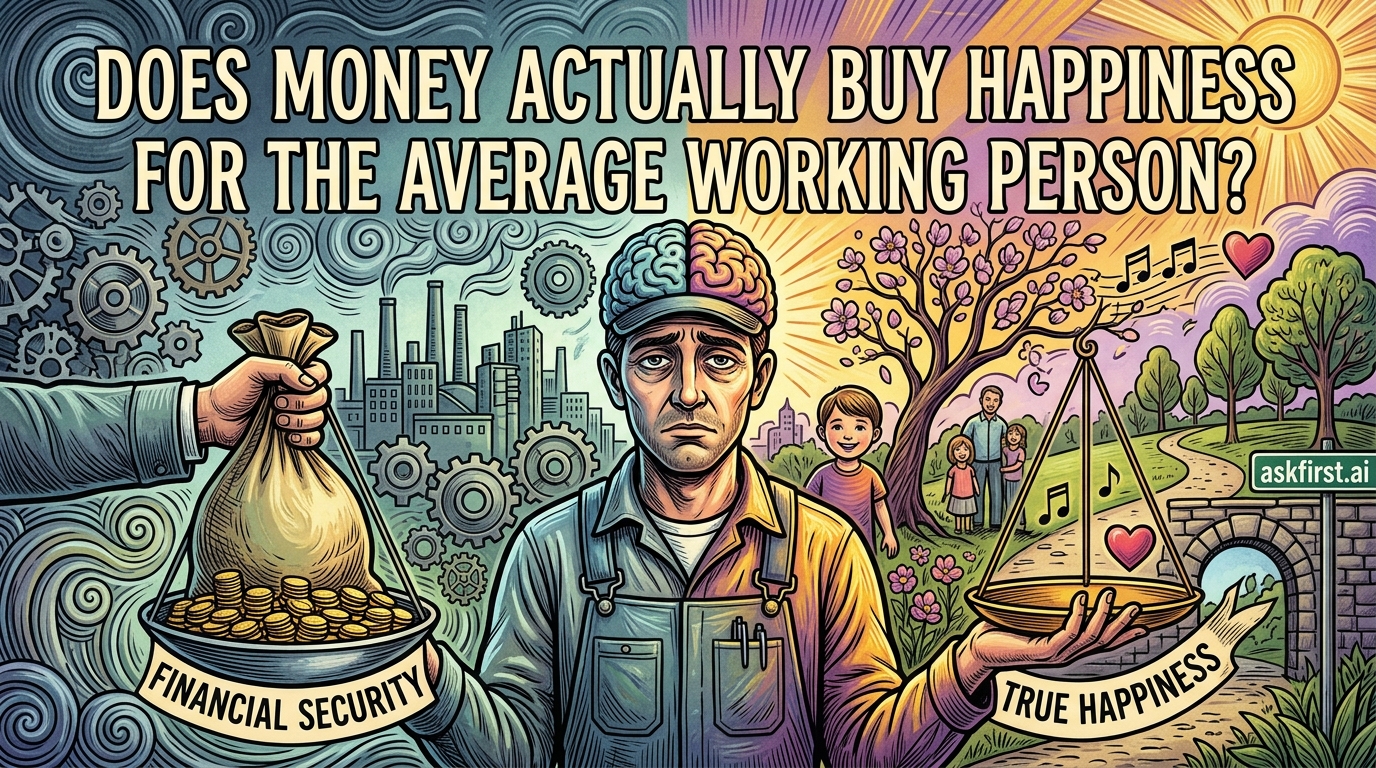
The Financial-Happiness Paradox
Research suggests that money influences well-being, but the relationship follows a diminishing returns curve. For the average working person, wealth functions as a tool rather than a destination.
Key Psychological Milestones
- Security Threshold: Increased income significantly boosts happiness when it covers basic needs, reducing chronic stress and providing a safety net.
- The Plateau Effect: Once comfort is achieved, additional wealth yields smaller increments of emotional satisfaction, shifting the focus toward experiences and relationships.
Strategic Insights for Well-Being
To maximize the positive impact of finances, consider these professional guidelines:
- Invest in Experiences: Spending on shared memories or learning opportunities generates deeper, longer-lasting satisfaction than material possessions.
- Buy Back Time: Utilizing funds to outsource tedious or overwhelming tasks allows for increased focus on hobbies, family, or personal growth.
- Practice Generosity: Allocating resources toward meaningful causes or helping others consistently triggers positive psychological rewards, fostering a sense of purpose and community connection.
Ultimately, money serves as a vital component for stability, but emotional prosperity is crafted through intentional choices and meaningful engagement with life beyond the paycheck.