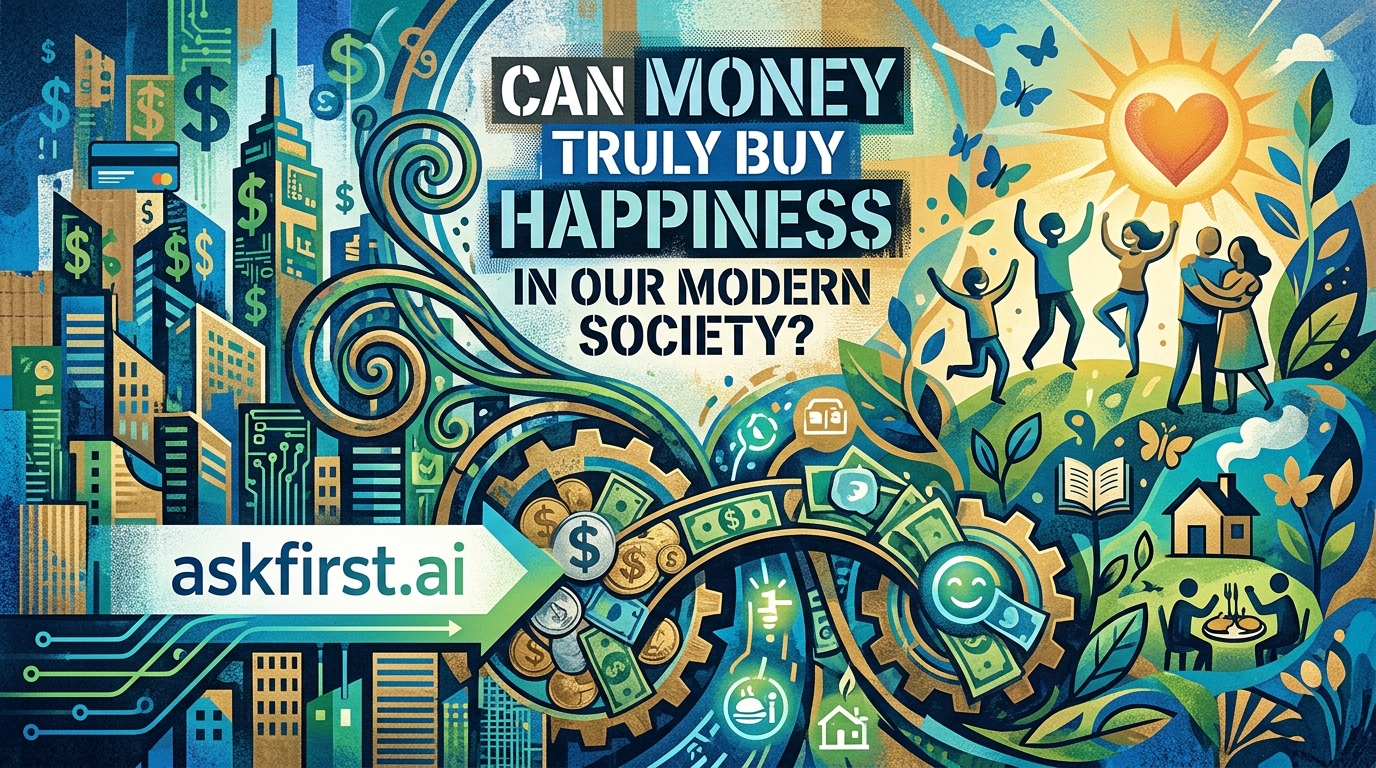
The Financial-Happiness Paradox
Research indicates that money acts as a foundation for well-being rather than the sole architect of joy. While financial stability eliminates common stressors, the relationship follows a point of diminishing returns.
The Hierarchy of Value
- Basic Needs: Wealth significantly improves life satisfaction by providing security, quality healthcare, and autonomy.
- Experiences Over Objects: Scientific studies demonstrate that investing in experiences—such as travel or learning—creates lasting neural pathways of happiness, unlike physical possessions that lead to hedonic adaptation.
- Generosity Factor: Sharing resources has been shown to activate reward centers in the brain, suggesting that altruism is a high-yield investment in personal emotional health.
Key Takeaways
True happiness is often found when capital is leveraged to buy time—the most finite resource. By outsourcing repetitive tasks or seeking meaningful work, individuals reclaim their capacity to engage with family, personal development, and community building. Ultimately, wealth functions best as a tool to facilitate a life filled with purpose, connection, and meaningful growth rather than a direct substitute for emotional fulfillment.