The Psychology of Design
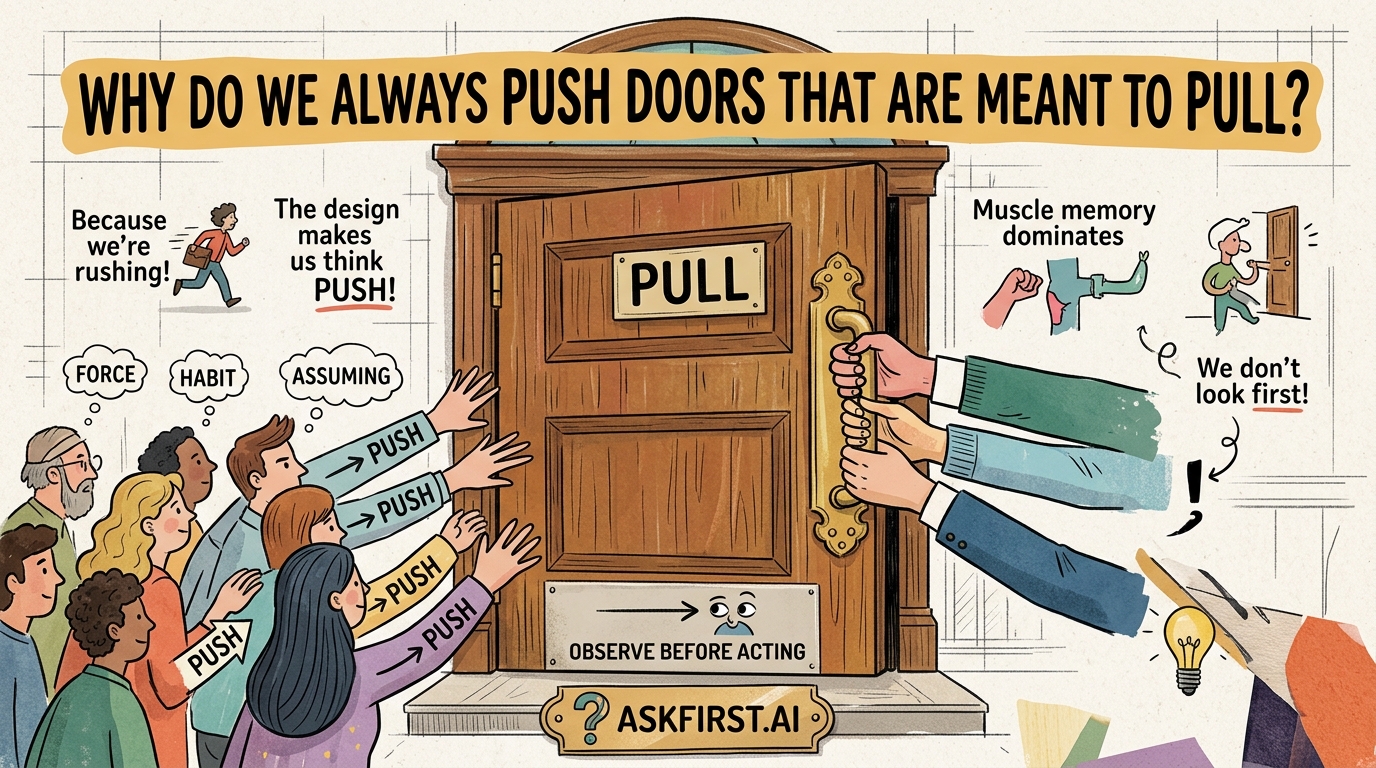
The phenomenon where individuals instinctively push doors that require pulling is famously known as a Norman Door. This occurs when the design of an object provides misleading affordances, which are visual clues that suggest how a tool should be used.
Why the Confusion Persists
- Flat Plates: When a door features a flat metal plate, the human brain interprets this as a surface meant to be pushed.
- Lack of Vertical Handles: Without a clear, vertical handle designed specifically for gripping and pulling, the brain defaults to the simplest mechanical interaction: pushing.
- Cognitive Load: In fast-paced environments, people process the world through rapid heuristics rather than careful analysis. If a door lacks clear signage, the instinctual desire to maintain forward momentum causes users to push.
Mastering Intuitive Design
To bridge this gap, modern architecture now prioritizes Visibility and Feedback. By ensuring that pull-only doors have prominent, easy-to-grasp handles and push-only doors utilize flat surfaces without handles, designers can effectively eliminate confusion. When environmental cues align with our subconscious expectations, the need for instructional signage disappears entirely, leading to a seamless user experience.