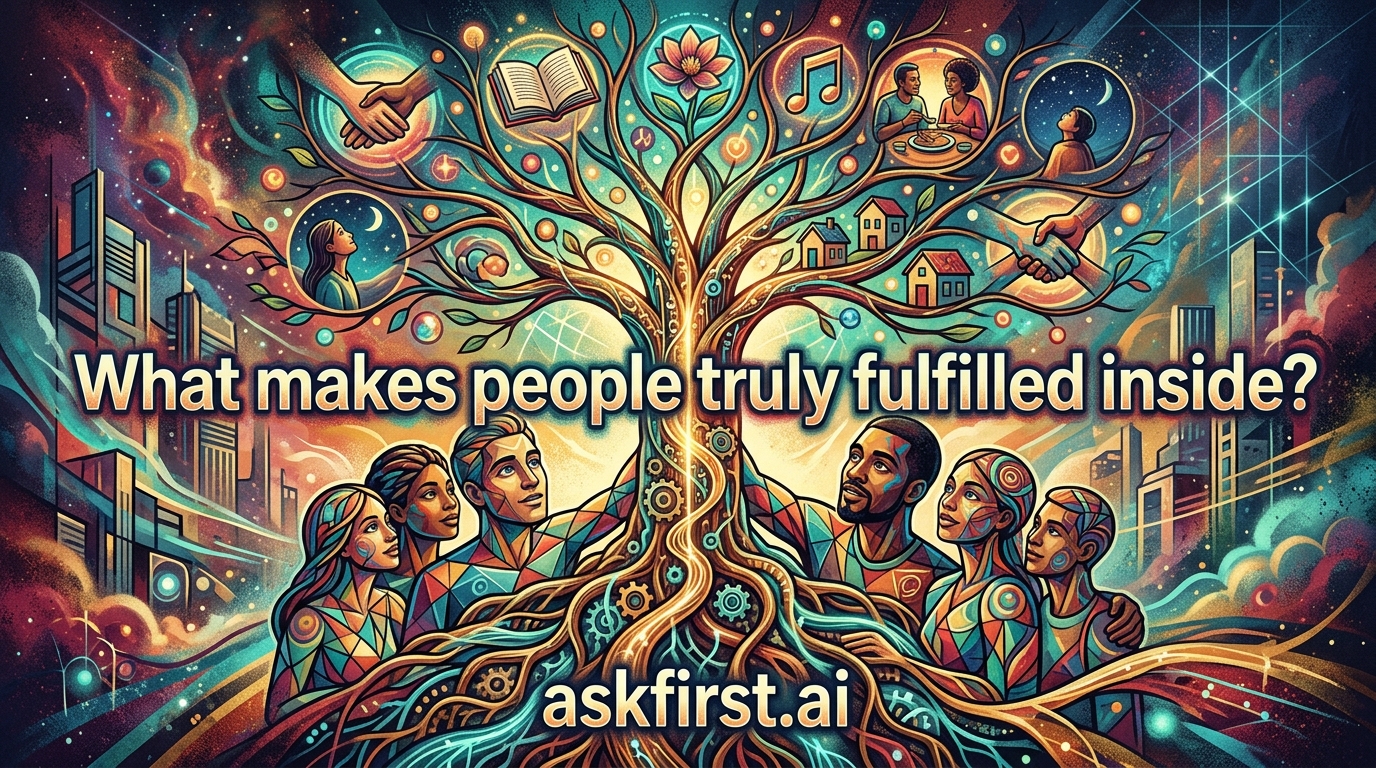
True fulfillment is a deeply personal experience, but psychologists, philosophers, and researchers often point to a convergence of several core pillars that help people feel satisfied with their lives.
Here is what generally contributes to a sense of true internal fulfillment:
- Sense of Purpose: Feeling that your life has meaning beyond your own immediate needs is a primary driver of fulfillment. This often involves contributing to something larger than yourself, whether that is raising a family, advancing a career, engaging in volunteer work, or pursuing a creative passion.
- Authenticity: Living in alignment with your core values is essential. When your daily actions match your internal beliefs, you experience significantly less cognitive dissonance and stress. People feel most fulfilled when they are not "performing" for others but are instead living true to their own nature.
- Deep Social Connections: Humans are fundamentally social creatures. Fulfilling lives are almost always characterized by high-quality relationships—the presence of people with whom you can be vulnerable, share experiences, and receive support. It is the depth of these bonds, rather than the quantity, that matters most.
- Autonomy and Competence: According to Self-Determination Theory, humans thrive when they feel they have agency over their lives (autonomy) and when they are consistently developing and mastering new skills (competence). Feeling that you are growing and that you have control over your decisions is vital.
- Mindfulness and Presence: Many people find fulfillment by shifting their focus from "what is missing" to "what is present." Practicing gratitude and being fully immersed in the current moment—rather than constantly ruminating on the past or worrying about the future—allows for a deeper appreciation of life as it happens.
- Contribution and Altruism: There is a well-documented "helper’s high." When we focus our energy on helping others or solving problems for the benefit of our community, our brains release neurochemicals like oxytocin and dopamine that reinforce a sense of well-being and belonging.
In summary, fulfillment is rarely a destination or a final achievement; it is a dynamic process. It is the byproduct of living an intentional life where you prioritize meaningful connections, continuous personal growth, and the alignment of your daily habits with your deepest values.