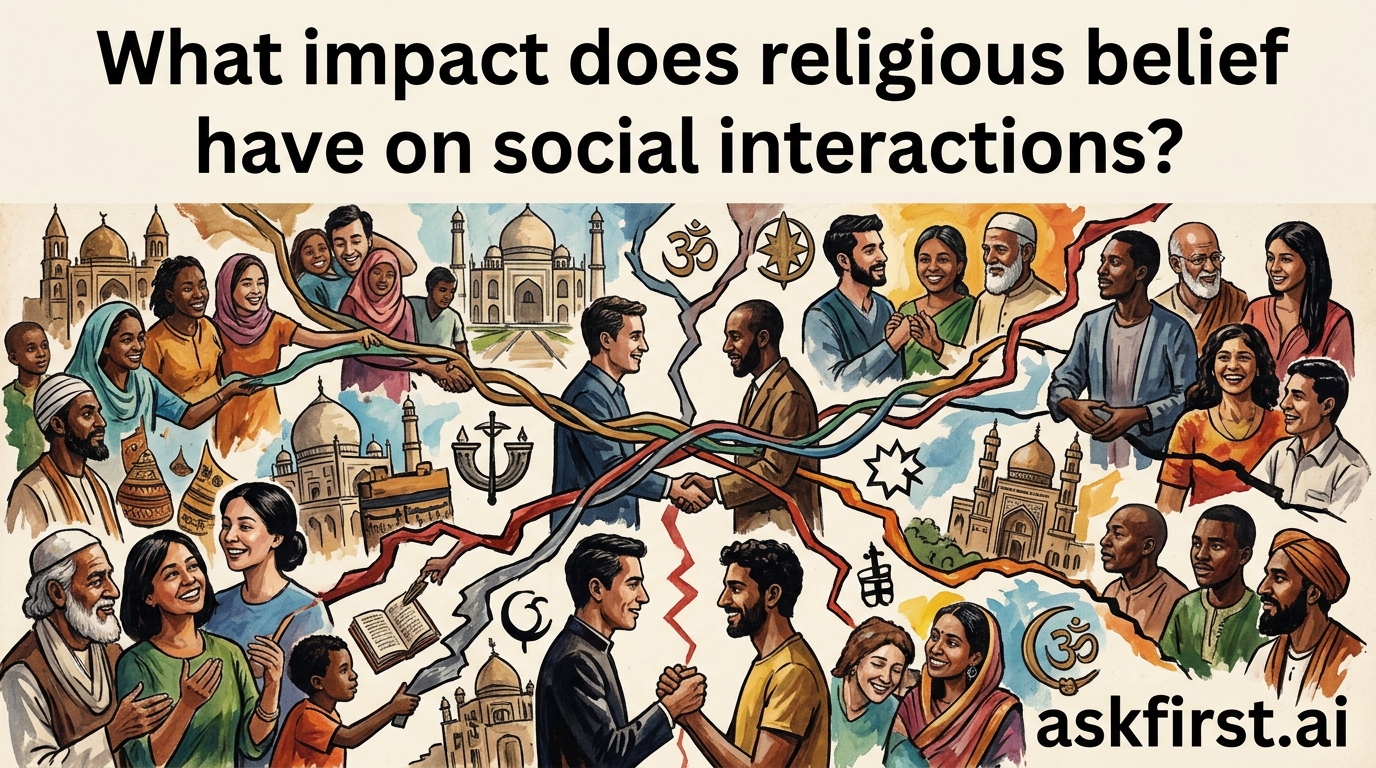
Religious belief plays a profound and multifaceted role in shaping social interactions. It acts as both a cohesive force that binds communities together and, at times, a source of distinction between different groups.
Here are the primary ways religious belief impacts social interactions:
Community Building and Social Capital: Religious institutions often function as hubs for social networking. They provide a sense of belonging, foster mutual support systems, and encourage altruism. Participating in shared rituals and congregations creates strong social bonds and trust among members.
Moral Frameworks and Behavioral Norms: Religion often provides a codified set of ethics that dictates how individuals interact with others. Concepts such as compassion, forgiveness, and honesty—prevalent in many faiths—influence how people treat their peers, resolve conflicts, and conduct business.
Cultural Identity and In-group/Out-group Dynamics: Belief systems can create a strong sense of collective identity. While this strengthens the "in-group," it can occasionally lead to tension with those who hold different beliefs (the "out-group"). This dynamic can influence everything from political discourse to interpersonal relationships.
Rituals and Life Transitions: Religion provides a structured way to navigate significant life events, such as births, marriages, and deaths. These shared experiences provide a common language and set of expectations for social interactions, helping individuals navigate emotional milestones within a supportive framework.
Influence on Social Advocacy: Many religious groups are drivers of social change. Whether through charitable work, humanitarian aid, or advocacy for social justice, religious beliefs often motivate individuals to engage with broader society to address inequality or suffering.
In summary, religious belief serves as a social catalyst. It structures daily routines, shapes personal values, and provides a framework through which individuals interpret and respond to the people around them.