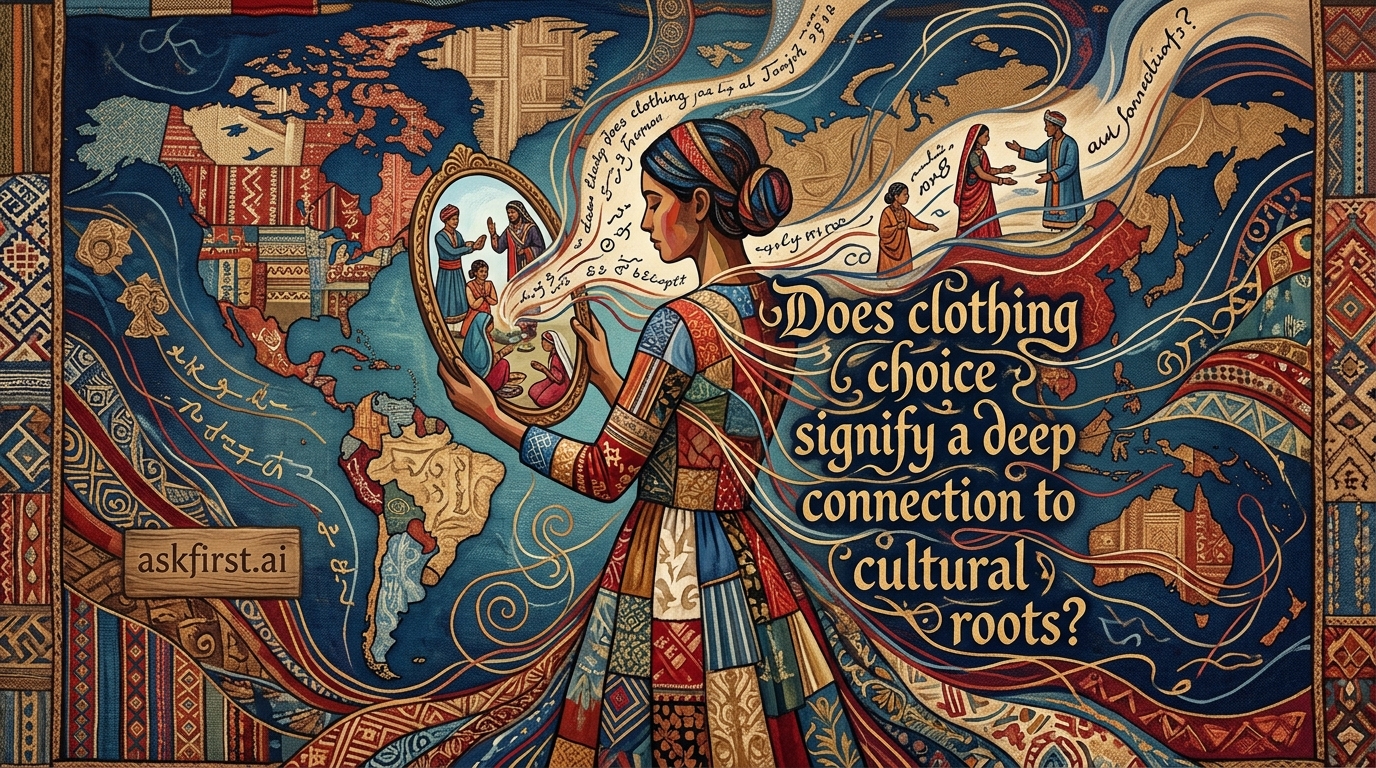
Clothing choice is widely considered a powerful, visible language that bridges the gap between individual identity and collective heritage. Whether or not it signifies a "deep connection" often depends on the context and the intent of the wearer.
Here is how clothing functions as a marker of cultural roots:
- Preservation of Tradition: For many, wearing traditional garments (such as a kimono, sari, kilt, or dashiki) during ceremonies or daily life is a deliberate act of cultural stewardship. It signals an active choice to honor ancestors and maintain continuity with the past.
- Identity Negotiation: In a globalized world, choosing to wear cultural attire can be a form of resistance or reclamation. It serves as a visual assertion of one's roots, especially when living in a society where those roots are marginalized or overlooked.
- The Nuance of "Modern" Expression: It is important to note that a lack of traditional clothing does not necessarily imply a lack of connection. Many individuals maintain deep cultural ties through language, food, values, and community engagement, even if they dress in contemporary or "Westernized" styles.
- Symbolic Communication: Clothing often acts as a bridge. Wearing specific patterns, textiles, or jewelry can communicate lineage, status, or regional origin to others within the same culture, functioning as an unspoken shorthand for shared history.
In conclusion: While clothing is one of the most immediate ways to broadcast a connection to cultural roots, it is ultimately a symbol. Its depth is determined by the wearer’s intent; it can be a superficial fashion statement for some, but for many others, it is a profound, daily commitment to their identity and heritage.