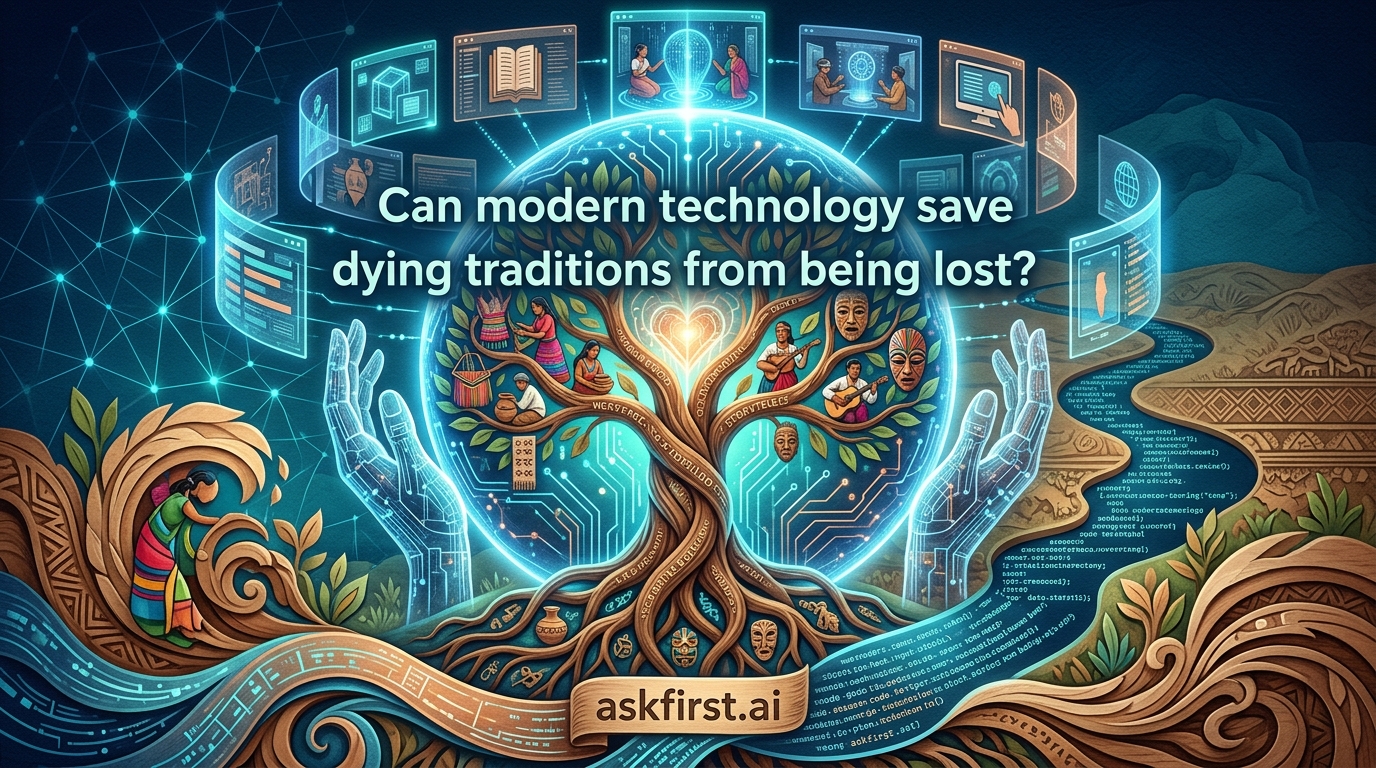
Modern technology acts as a double-edged sword for dying traditions. While globalization and digital distraction often accelerate the erosion of local customs, technology also provides unprecedented tools for preservation and revitalization.
Here is how modern technology is actively saving traditions today:
1. Digital Documentation and Archiving
- High-Fidelity Recording: Oral histories, endangered languages, and rare musical performances can be recorded in high definition, ensuring they are not lost when the last elders pass away.
- Virtual Museums: Cloud storage and digital platforms allow communities to create global repositories for artifacts, traditional clothing, and religious scripts that were previously hidden in physical locations.
2. Global Connectivity and Community Building
- Diaspora Engagement: Technology allows dispersed communities to stay connected to their roots. Members of the diaspora can participate in rituals, learn traditional crafts via video calls, or contribute to crowdfunding campaigns to support cultural festivals.
- Niche Interest Groups: Social media platforms allow enthusiasts of obscure traditions—such as specific weaving techniques or ancient culinary methods—to find each other, share knowledge, and form global communities of practice.
3. Education and Accessibility
- Language Apps: Platforms like Duolingo or specialized software are being used to teach endangered languages, gamifying the process to make it more accessible to younger generations.
- Virtual Reality (VR) and Augmented Reality (AR): VR can transport students into historical recreations of traditional ceremonies, providing an immersive experience that textbooks simply cannot replicate.
4. Economic Revitalization
- E-commerce: Artisans who practice dying crafts (such as traditional pottery or hand-loomed textiles) can bypass local markets and sell their goods directly to a global audience via websites like Etsy or Instagram, making these traditions economically viable as a career path.
- Tourism Promotion: Digital marketing helps promote "cultural tourism," which can provide the necessary funding to maintain traditional sites and incentivize younger generations to keep cultural practices alive for visitors.
The Risks to Consider
Despite these benefits, there are significant challenges:
- Homogenization: The internet tends to promote a "global culture," which can make local traditions seem irrelevant or outdated by comparison.
- Loss of Context: When a ritual is filmed and posted online, it risks becoming a "performance" for an audience rather than a lived, sacred experience.
- The "Digital Divide": Communities that lack reliable internet access or technological literacy remain excluded from these preservation efforts.
In conclusion, technology cannot force a tradition to survive if the community no longer values it. However, it provides the infrastructure necessary to ensure that knowledge is accessible, economically sustainable, and capable of reaching a new, digitally-native generation.