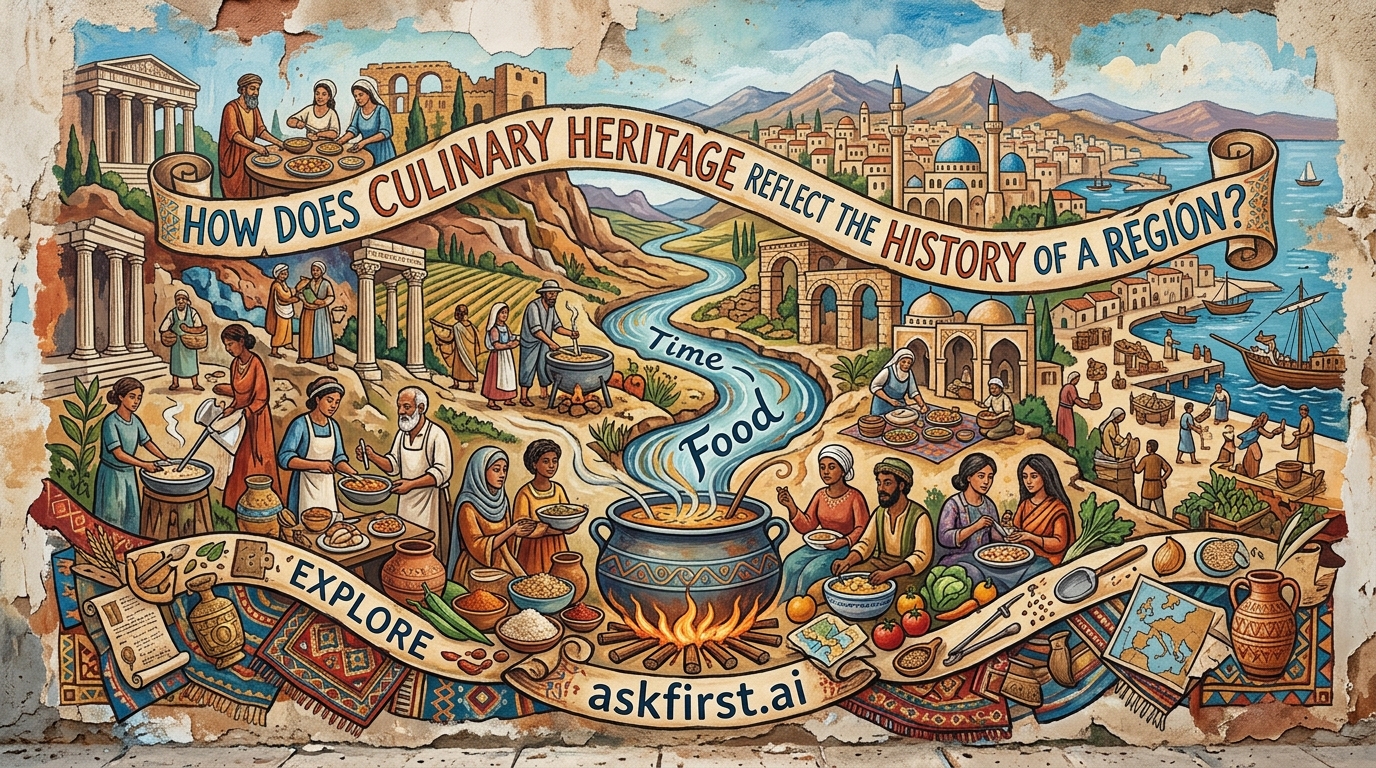
Culinary heritage acts as a living archive of a region’s history. Every dish, ingredient, and cooking technique tells a story that has been shaped by centuries of human movement, environmental adaptation, and cultural exchange.
Here is how culinary heritage reflects the history of a region:
Migration and Diaspora: When people move, they bring their foodways with them. The presence of specific spices, grains, or cooking methods often maps the historical routes of immigrants and refugees. For example, the influence of Indian spices in British cuisine or the blending of West African, European, and Indigenous ingredients in Caribbean cooking directly reflects histories of trade, colonization, and forced migration.
Trade Routes and Globalization: Historically, access to exotic ingredients was a marker of a region’s participation in global trade. The presence of black pepper in European medieval dishes or the integration of tomatoes and chilies into Asian and European diets after the Columbian Exchange highlights how historical trade networks permanently altered local palettes.
Geopolitical Conflict and Colonization: Culinary heritage often bears the scars and influences of occupation. Colonizers frequently introduced new crops or livestock to satisfy their own needs, which then became staples of the indigenous diet. Conversely, local populations often "indigenized" foreign foods, creating fusion cuisines that serve as a testament to historical power dynamics and cultural resilience.
Environmental Adaptation and Resourcefulness: A region’s history of survival is written in its traditional recipes. Scarcity often drove innovation—such as the development of fermentation to preserve food through harsh winters or the use of "peasant" cuts of meat and wild foraging to survive during times of famine or economic hardship. These dishes reflect the economic struggles and environmental realities faced by ancestors.
Social and Religious Traditions: Food is the centerpiece of cultural identity. The historical observance of religious fasts or festivals dictates the development of specific culinary traditions, such as the intricate preparation of holiday breads or the strict dietary laws that define a community’s social cohesion over centuries.
In essence, a plate of food is never just a meal. It is a complex narrative of how a society has interacted with its neighbors, its land, and its own past. By studying what a region eats, we are essentially reading its unwritten history.