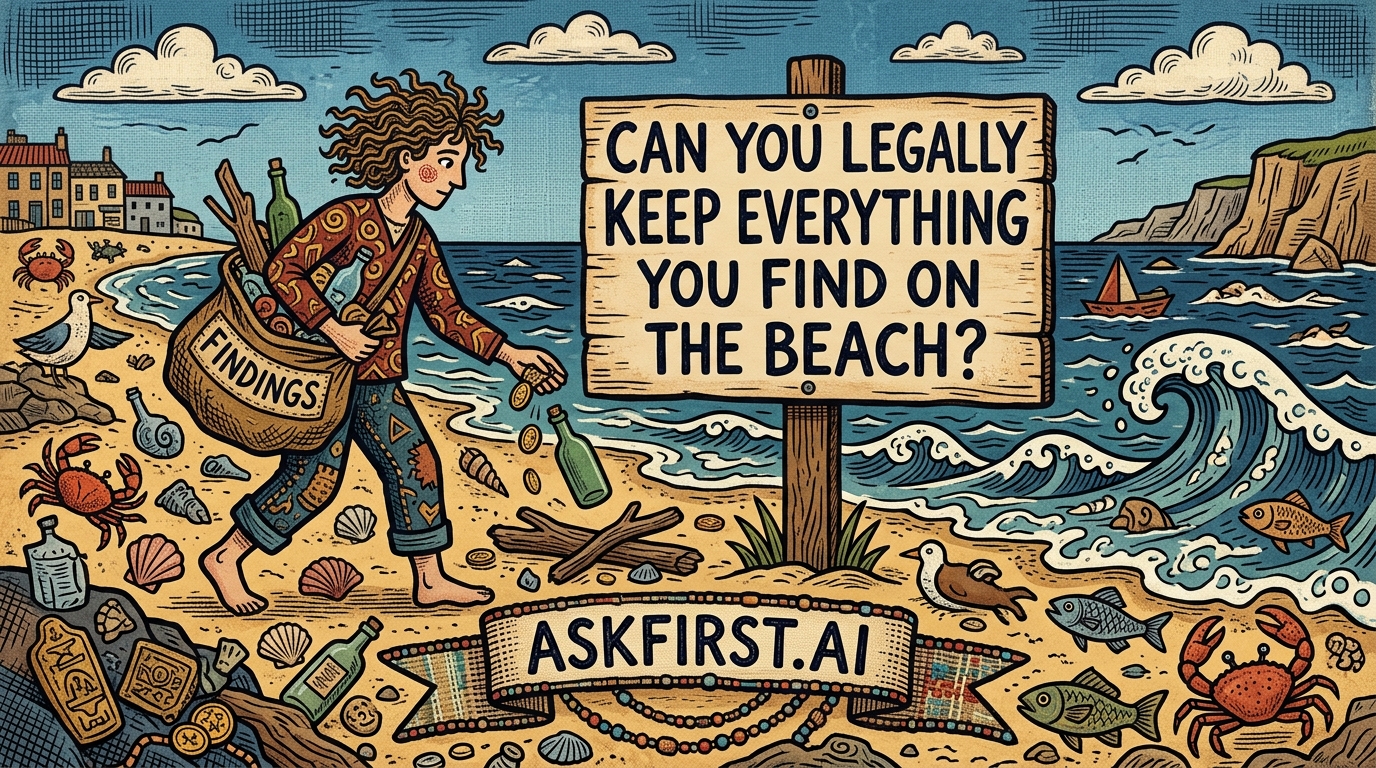
The Legal Reality of Beachcombing: Beyond 'Finders Keepers'
The allure of walking along the tide line, eyes cast downward in search of hidden treasures, is a universal pastime. From colorful sea glass and smoothed driftwood to the occasional fossil or strange marine artifact, the beach acts as a natural repository of history. However, the age-old playground rule of 'finders keepers' often collides sharply with national, regional, and international law. Whether one can legally retain these treasures depends on a complex interplay of environmental regulations, maritime law, and cultural heritage protection.
The Doctrine of Maritime Law and Admiralty
At a fundamental level, anything found in the ocean or on the shore can theoretically be subject to maritime law. When a shipwreck or cargo is discovered, it is often classified as 'salvage.' In many jurisdictions, the Crown or the State maintains a claim over shipwrecks, especially those of historical significance. If a beachcomber discovers remnants of a wreck, simply removing items can constitute the crime of looting an archaeological site. National agencies often require such findings to be reported immediately to maritime authorities rather than pocketed.
Environmental Conservation and Protected Species
One of the most significant barriers to collecting on the beach is the environmental protection status of the items themselves. Many countries enforce strict 'leave no trace' policies to maintain the integrity of coastal ecosystems.
- Shells and Coral: In numerous regions, the collection of living shells or those inhabited by organisms is illegal. Even empty shells are often protected because they serve as vital micro-habitats for hermit crabs and provide calcium carbonate back into the ecosystem as they decompose.
- Driftwood: While often considered benign, removing large quantities of driftwood can negatively impact the nesting sites of shorebirds and the stabilization of sand dunes. Some parks and protected shoreline areas prohibit the removal of any 'natural materials' regardless of how small.
Cultural Heritage and Archaeological Artifacts
Perhaps the most restrictive area of beachcombing involves items of historical value. This falls under the umbrella of 'Cultural Property Law.'
- Fossils and Antiquities: In nations with robust heritage laws, such as the United Kingdom or Greece, finding a fossil or a shard of pottery is not a private windfall. It is a discovery that potentially belongs to the State or the scientific community. Collectors may be required to register their finds with a local museum or historical board.
- Human Remains: If a discovery appears to be of human origin, it triggers an immediate legal chain reaction. Disturbing a grave or historical burial site is a serious criminal offense globally. Authorities must be contacted to investigate and secure the area, overriding any personal desire to retain the item.
The 'Public Trust' Doctrine and Regional Variations
Most beaches are governed by the 'Public Trust Doctrine,' which holds that the government maintains the shoreline in trust for the public. However, 'public' access does not equate to the right to extract resources. Some beaches are private property where the owner holds the rights to the sand and its contents. Conversely, state-run parks often have explicit signage prohibiting the collection of rocks, shells, or plants. Ignoring these specific park bylaws can result in significant fines.
Summary: Best Practices for the Responsible Beachcomber
To navigate the law while enjoying the hobby of beachcombing, adhere to these guiding principles:
- Check Local Regulations: Always consult the specific laws for the stretch of coast being visited. Parks and local councils often have dedicated websites clarifying what is permitted.
- Prioritize Sustainability: If an item is small and abundant, like a single piece of sea glass, it is usually acceptable to collect it. If an item looks like part of a larger ecosystem or an archaeological feature, photograph it, record its location, and leave it undisturbed.
- Report Significant Finds: If something truly extraordinary is found—such as a piece of a vessel, a rare historical artifact, or a large fossil—contact local historical or geological societies. This contributes to scientific knowledge rather than depleting it.
In conclusion, while the dream of finding a "lost treasure" on the beach is a powerful human motivator, the law favors the preservation of natural and cultural heritage. The beach is a shared space, not a private warehouse. By acting as stewards of the coast rather than exploiters, beachcombers can ensure these environments remain vibrant for generations to come, ensuring the mystery and excitement of the next tide remains intact for everyone.