The Intersection of Astrology and Human Connection
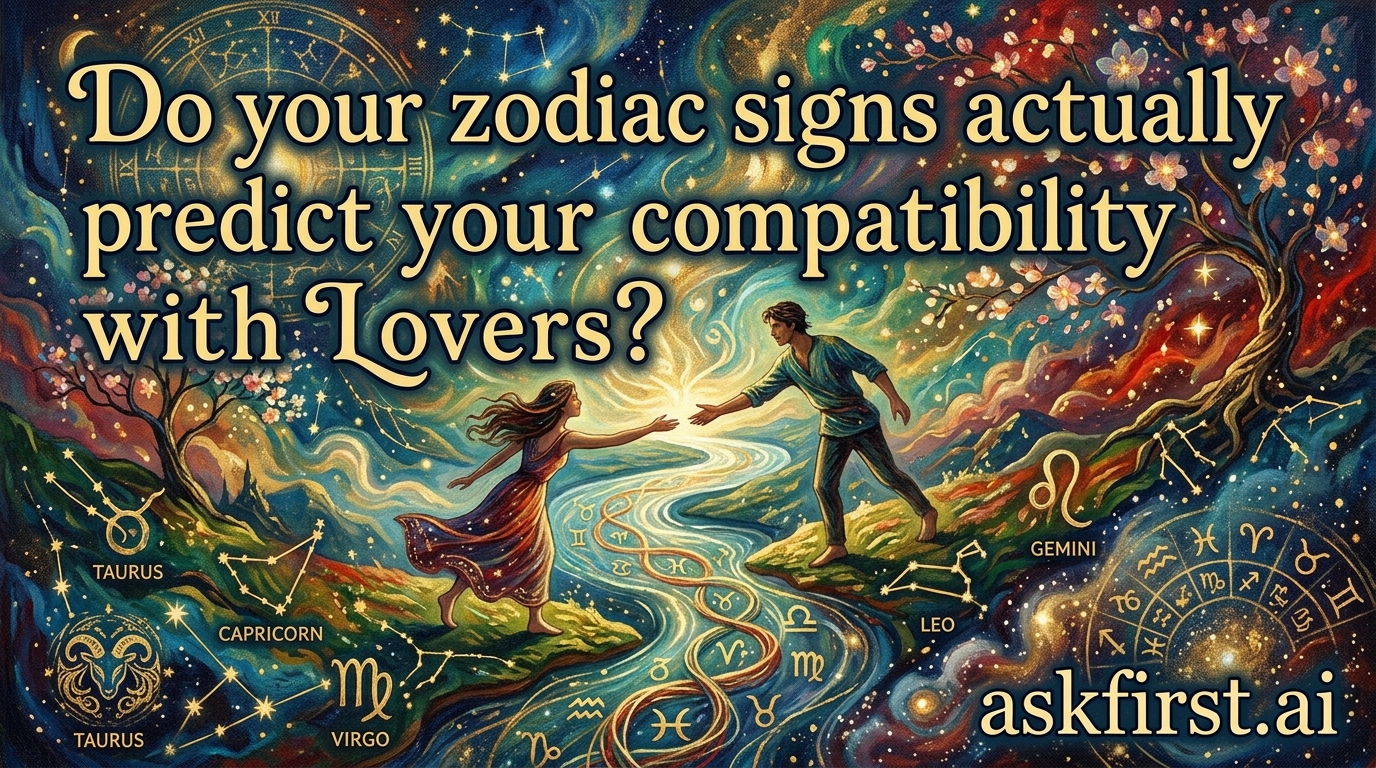
For centuries, individuals have turned to the celestial map of the zodiac to decode the complexities of romantic chemistry. While astrology is often categorized as a pseudoscience, its influence on human belief systems remains profound. At its core, the practice of synastry—the study of relationship compatibility through astrology—suggests that the position of planets at the exact moment of birth influences personality, communication styles, and emotional needs. However, the scientific consensus maintains that there is no empirical evidence linking planetary alignment to human romantic outcomes. Instead, the perceived accuracy of these predictions often relies on psychological phenomena such as the Barnum effect and confirmation bias.
The Psychology Behind Zodiac Compatibility
The popularity of zodiac-based compatibility persists largely due to the Barnum Effect. This psychological phenomenon occurs when individuals believe that vague, generalized personality descriptions apply specifically to them. When a horoscope suggests that a 'Scorpio' and a 'Taurus' have natural friction but high physical attraction, a reader is likely to search for confirming instances in their relationship history. If a conflict arises, the believer attributes it to the zodiac signs; if they agree, they confirm the validity of the chart. This subconscious filtering reinforces the belief that astrology is a predictive tool rather than a cultural archetype system.
Scientific Perspectives: The Lack of Empirical Evidence
From a scientific standpoint, astrology fails the test of falsifiability. The seminal study conducted by physicist Shawn Carlson in 1985 remains a cornerstone of this argument. Carlson tasked professional astrologers with matching birth charts to psychological profiles generated by the California Psychological Inventory (CPI). The results demonstrated that the astrologers performed no better than random chance. The fundamental issue is that astrology does not account for the causal mechanism. There is no known physical force, whether electromagnetic or gravitational, that could exert such precise influence over human behavior at the moment of birth. Furthermore, the precession of the equinoxes means that the constellations have shifted significantly since the zodiac system was first mapped, effectively detaching signs from the actual positions of the stars they were named after.
Why Astrology Feels So Accurate
Despite the lack of scientific backing, astrology functions as a powerful tool for self-reflection and relationship navigation. The system serves as a metaphorical language that encourages couples to discuss their needs. For example, a discussion triggered by astrological differences—such as one partner being an 'Air' sign focusing on logic and the other a 'Water' sign focusing on emotion—can actually facilitate better communication. By assigning a 'sign' to a behavior, individuals may feel less personal resentment toward their partner. The compatibility guide becomes a mirror, prompting partners to examine their own flaws and strengths, which in turn fosters deeper intimacy and awareness.
Key Components of Relationship Analysis
Astrologers often move beyond the 'Sun sign'—the date of birth—to provide a more nuanced look at compatibility. A comprehensive analysis typically includes:
- The Moon Sign: Represents the emotional inner world and how a person processes vulnerability.
- The Venus Placement: Dictates how an individual expresses love, beauty, and their specific 'love language.'
- The Rising Sign (Ascendant): Represents the 'mask' or the initial energy projected in social situations.
When these components are examined in tandem through a process called 'synastry,' the complexity of the reading increases. This complexity can make the predictions feel more personalized and convincing, even though they remain rooted in human archetypes rather than celestial mechanics.
The Role of Cultural and Social Conditioning
Societal expectations also play a significant role in how zodiac signs 'predict' outcomes. If a culture heavily emphasizes that an 'Aries' and a 'Cancer' are incompatible, individuals may subconsciously sabotage those relationships before they truly begin. This creates a self-fulfilling prophecy. By labeling a partnership as doomed from the start, partners may lack the patience or empathy required to work through standard developmental hurdles in a relationship. Conversely, believing in high compatibility can motivate individuals to invest more energy into resolving conflicts, thereby strengthening the bond. In this sense, the 'prediction' is not a decree from the stars, but a psychological frame that influences how much effort a person is willing to dedicate to their partner.
Conclusion: A Tool for Introspection
Whether zodiac signs actually predict compatibility depends entirely on one's perspective. If one seeks scientific evidence, the answer is a definitive no. However, if one views astrology as a narrative tool—a way to map human tendencies and prompt meaningful conversations—it holds significant value for many people. Ultimately, the success of any relationship rests on conscious choice, mutual respect, shared values, and consistent communication. No planetary alignment can substitute for the genuine work that two human beings must undertake to build a sustainable, loving partnership. When used as a lighthearted guide for self-discovery rather than a rigid rulebook, astrology can be a fascinating, albeit non-scientific, lens through which to explore the complexities of human connection.