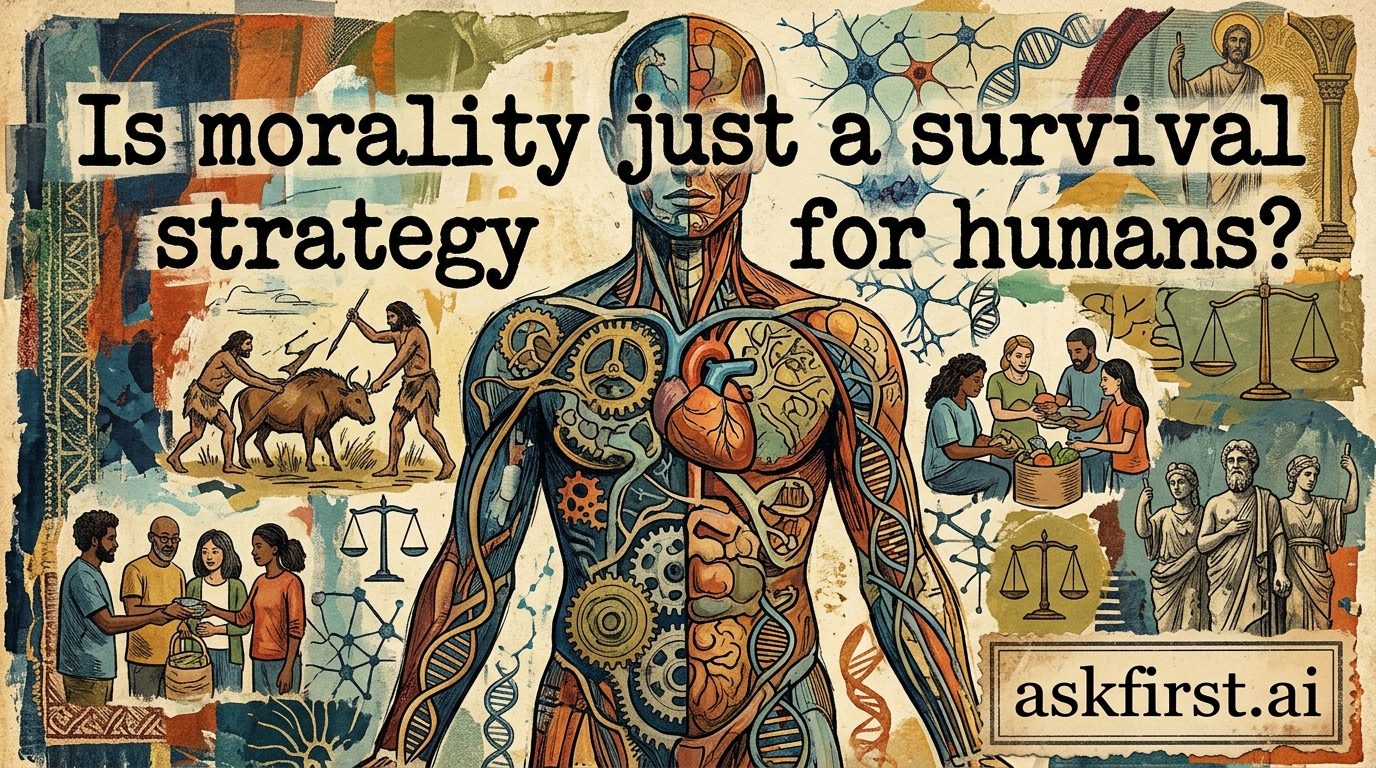
The Evolutionary Origins of Morality
Morality is often viewed as a divine mandate or a product of high-level reasoning, yet many thinkers argue it acts as a biological adaptation. Cooperation, fairness, and empathy were essential for the survival of early human tribes, meaning those who worked together thrived.
Key Philosophical Perspectives
- Evolutionary Ethics: This perspective posits that altruism is a mechanism to ensure the survival of genetic relatives.
- Social Contract Theory: Morality functions as a collective agreement to trade some personal freedom for the safety of a stable society.
- Reciprocal Altruism: The simple, powerful concept that helping others increases the probability of receiving help in return.
Why This Remains Relevant
By understanding ethics as a tool for cooperation rather than just a set of abstract rules, humanity can better navigate complex modern dilemmas. Whether morality originated from biology or conscious intent, its ability to bridge the gap between individuals and society remains the foundation of all human progress. Recognizing this connection helps cultivate more inclusive and supportive global communities.