The Phenomenon of Post-Series Melancholy
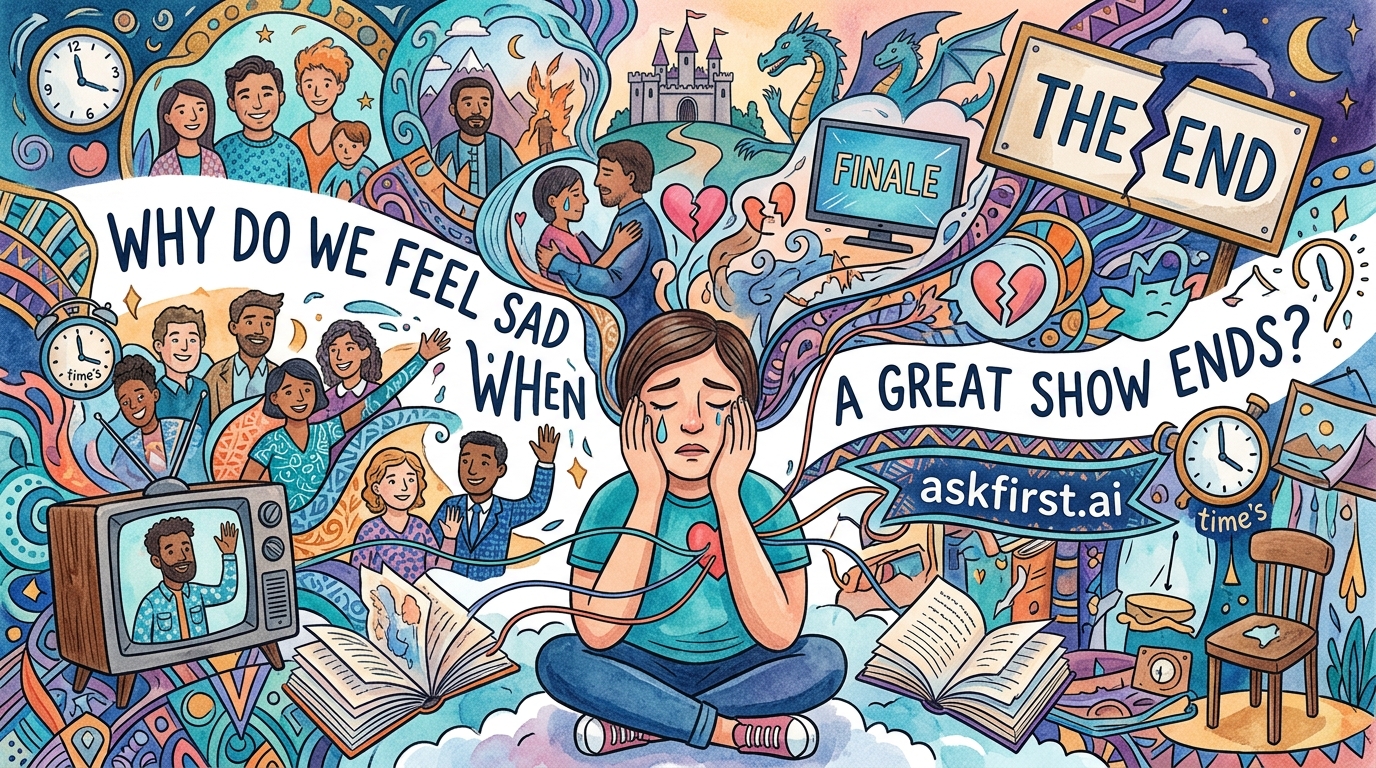
Experiencing a profound sense of emptiness or 'post-series depression' after finishing a beloved television show is a psychological phenomenon grounded in the intricate ways the human brain processes social connection and narrative immersion. When viewers invest hundreds of hours into a story, they are not merely watching pixels; they are forming complex para-social relationships with characters and integrating the show's world into their own sense of identity.
The Psychology of Para-social Interaction
Para-social relationships represent one-sided bonds where individuals expend emotional energy, interest, and time, and the other party—the fictional character—is completely unaware of the other's existence. Despite this asymmetry, the human brain often struggles to distinguish between real-life social connections and deep fictional engagement. Research in neurobiology suggests that when we observe characters interact, the same mirror neurons fire as if we were experiencing those interactions ourselves. Consequently, when a show ends, the brain interprets the loss of that fictional 'social circle' as a genuine loss of a community or a peer group.
Narrative Immersion and Escapism
Television provides a structured, predictable, and often safer environment than the chaotic reality of everyday life. This is known as narrative transport. When a viewer is 'transported' into a story, the real world fades into the background. A long-running series creates a reliable routine, effectively becoming a psychological home. The conclusion of such a show ruptures this routine, leading to a sudden shift in the viewer's psychological landscape.
- Identity Integration: Fans often project their values onto characters, adopting their mannerisms or finding comfort in the show’s moral framework. Ending a show feels like losing a mirror that helped define the self.
- The Predictability Factor: Our brains crave patterns and certainty. A show provides a reliable timeline and outcome, whereas life is inherently uncertain. The end of a show removes a source of low-stakes cognitive comfort.
Neurochemical Responses to Storytelling
Engaging narratives trigger the release of specific neurochemicals that govern bonding and pleasure, most notably oxytocin and dopamine.
- Oxytocin: Known as the 'cuddle hormone,' it is released during social bonding. High levels are recorded when viewers watch characters navigate intense emotional struggles or celebrate victories. The 'withdrawal' of this stimulation upon the show's finale mimics the feeling of social isolation.
- Dopamine: The anticipation of an episode or the reward of a satisfying plot twist keeps the brain in a cycle of craving. When the source of that dopamine surge is cut off, the brain experiences a temporary dip in motivation and mood.
Why the Brain Fails to Adjust
The brain functions on continuity. Evolutionarily, human beings were wired to be part of small, consistent social groups. Modern media consumption mimics the sensation of being part of a 'tribe.' When the series concludes, the brain expects the social stimuli to return, but it does not. This discrepancy between expectation and reality causes the lingering feeling of grief.
Strategies for Managing Post-Series Transitions
While the feeling is entirely natural, there are scientific ways to mitigate the 'withdrawal' period:
- Diversify Engagement: Engage in active, rather than passive, hobbies. Writing, painting, or exercising helps move the brain out of the passive 'spectator' mode.
- Community Interaction: Discussing the show on forums or with friends provides a 'social container' that allows for the processing of the experience, validating the emotions rather than suppressing them.
- The 'Palate Cleanser' Effect: Sometimes, jumping into a show of a completely different genre (e.g., a short documentary or a lighthearted sitcom after a high-stakes drama) helps break the cycle of attachment by signaling to the brain that a new phase of consumption has begun.
Conclusion: A Testament to Human Empathy
Feeling sad when a show ends is not a sign of poor mental health; it is a testament to the immense capacity of the human heart for empathy and imagination. It proves that the human mind is capable of deep, meaningful connections even with constructs that exist solely in the realm of stories. By understanding that this emotion is simply the brain's response to the end of a long-term simulation of reality, viewers can better appreciate the joy they felt throughout the journey rather than focusing solely on the pain of the conclusion.