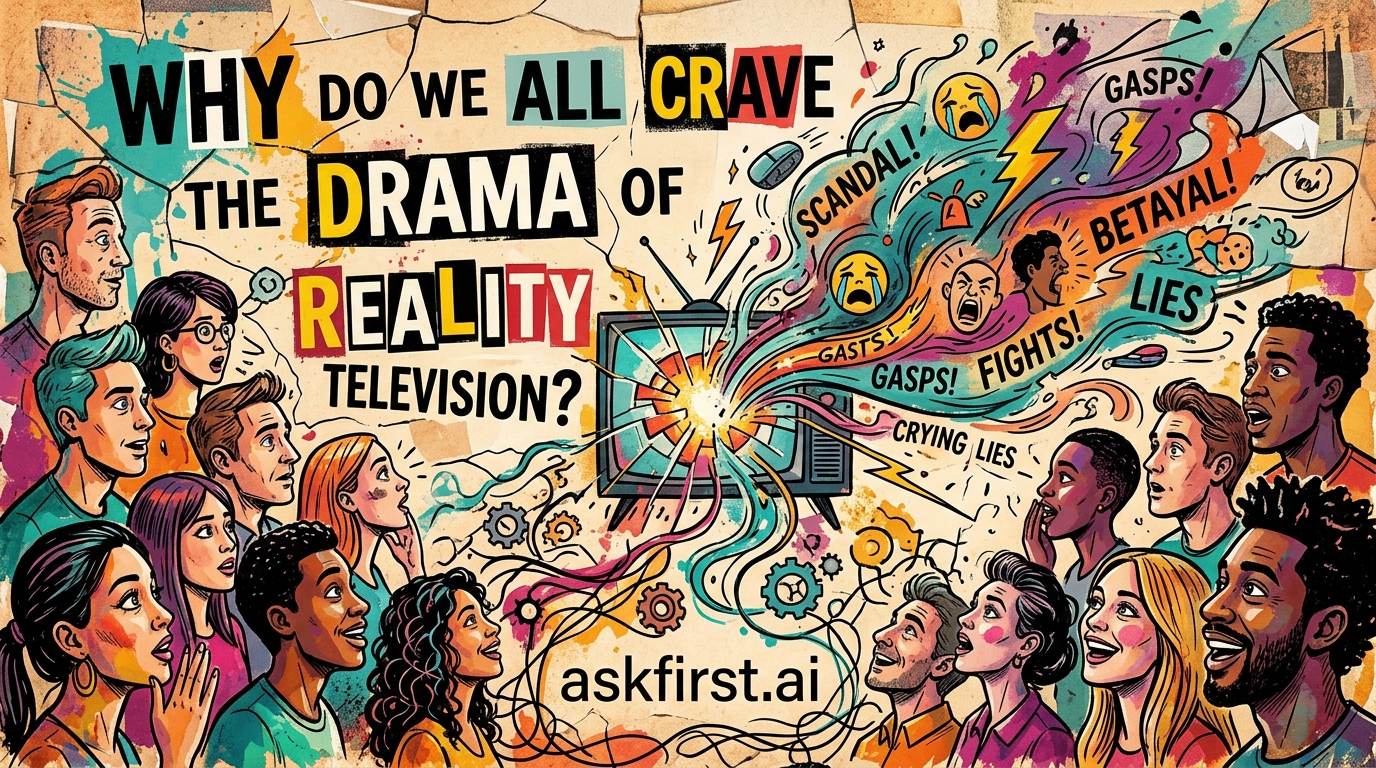
The Psychology of Reality Television: Unpacking the Drama Habit
Reality television has cemented its status as a permanent fixture in global media consumption. From high-stakes competitions to lifestyle voyeurism, the genre thrives on interpersonal conflict, emotional vulnerability, and structured chaos. Understanding why audiences feel an insatiable craving for this drama requires a deep dive into evolutionary psychology, social cognition, and the fundamental human need for connection.
1. Social Comparison and Self-Evaluation
One primary psychological driver is Social Comparison Theory, proposed by Leon Festinger in 1954. Individuals possess an innate drive to evaluate their own abilities and opinions by comparing themselves to others. Reality television provides a controlled environment for this comparison. When viewers watch someone navigate relationship failures, workplace disputes, or competitive stressors, they perform an internal evaluation: "How would I handle that situation?" or "At least my life is not that chaotic."
- Downward Comparison: By observing others in problematic situations, viewers often experience a boost in self-esteem and gratitude for their own stable circumstances.
- Upward Comparison: Conversely, witnessing success or extreme talent inspires viewers to set their own goals, even if the "success" on screen is manufactured.
2. The Voyeuristic Appeal: The "Fly on the Wall" Effect
Human beings are naturally curious about the private lives of others. This is an evolutionary trait linked to group survival; knowing the social hierarchy, character traits, and secrets of one’s peers was historically vital for navigating community dynamics. Reality TV satisfies this voyeuristic instinct by providing a sanctioned look into the intimate lives of others.
- Relatability vs. Escapism: Unlike scripted dramas, which feature professional actors and polished dialogue, reality TV presents "real" people in unscripted (though often produced) environments. This perceived authenticity makes the drama feel more personal and impactful.
3. The Role of Parasocial Interaction
Parasocial interaction (PSI) refers to the one-sided relationships viewers develop with media figures. Because reality TV personalities are often marketed as "relatable" or "authentic," the bond formed between the viewer and the cast member can be remarkably strong. When conflict arises within the show, viewers feel as though they are witnessing the struggles of friends or rivals, eliciting genuine emotional responses such as anxiety, anger, or elation.
4. Cognitive Stimulation and Moral Judgment
Reality television acts as a playground for moral cognition. Viewers engage in constant assessment of the participants' choices: "Was that apology sincere?" "Is that person being manipulated?" This engagement serves as a low-stakes exercise in ethical reasoning. It allows individuals to practice identifying social cues and character flaws without risking their own real-world reputations. The drama is rarely about the topic at hand but rather about the social performance surrounding it.
5. Escapism and Cognitive Load Management
Modern life is characterized by complex problems and high cognitive demands. Reality television offers a unique form of escapism. The conflicts are highly contained, dramatic, and ultimately resolvable within the framework of a television episode. This provides a sense of narrative closure that is often missing from the ambiguous challenges of day-to-day life. It is "brain candy"—easy to consume, highly engaging, and emotionally cathartic without requiring significant mental labor.
6. The Evolutionary Basis of Gossip
Anthropologists have long noted that gossip serves a critical role in human societies: it helps define social norms and reinforces group cohesion. Reality TV functions as a form of global, televised gossip. By analyzing the behavior of cast members, viewers participate in the evaluation of social standards, shared values, and "what is acceptable" versus "what is taboo." The craving for drama is, at its core, a craving for understanding human behavior in a social context.
Summary of Key Factors
- Emotional Regulation: Provides an outlet for experiencing intense emotions safely.
- Narrative Complexity: Offers predictable arcs of conflict, resolution, and redemption.
- Social Training: Serves as a digital sandbox for learning social dynamics and moral evaluation.
In conclusion, the craving for reality TV drama is not a symptom of low intellect or a shallow nature. Instead, it is a natural manifestation of the human need to observe, analyze, and relate to the complexities of human social behavior. As long as humans remain fundamentally social creatures, the allure of the high-stakes, unscripted drama will remain a powerful force in global entertainment.