The Dawn of Digital Play: Unmasking the Origins of Arcade Gaming
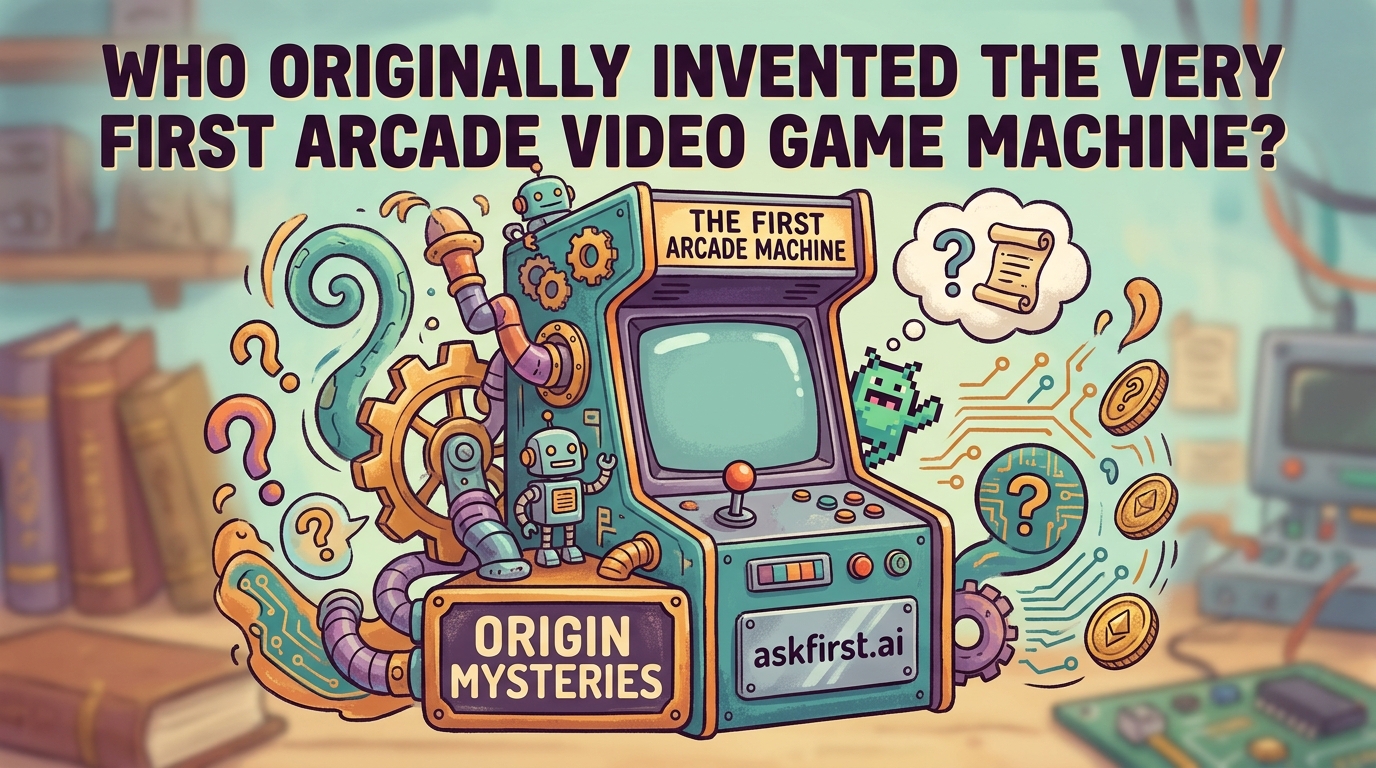
When tracing the lineage of electronic entertainment, the conversation often begins and ends with Pong, the 1972 sensation that catapulted video games into the mainstream. However, the true origin of the arcade video game machine lies in a complex intersection of academic curiosity, engineering prowess, and the commercial desire to capture the imagination of the public. The invention of the first arcade video game machine is officially credited to Nolan Bushnell and Ted Dabney, who co-founded Atari, but the historical reality involves a fascinating bridge between early computer labs and the gritty, neon-soaked environments of 1970s bar culture.
The Precursor: Computer Space (1971)
Before the commercial explosion of Pong, Nolan Bushnell and Ted Dabney created Computer Space. Often cited as the first commercially sold, coin-operated video game, Computer Space was a derivative of the mainframe game Spacewar!. Bushnell, inspired by the high-level computing power he witnessed at the University of Utah, sought to shrink that experience into a cabinet that could be operated by the masses.
- The Hardware: Because microprocessors were not yet affordable or fast enough to render real-time graphics, the game was built using discrete logic circuits. This was a monumental achievement in engineering; it was essentially a custom-built computer designed solely for the purpose of moving a spaceship across a screen.
- The Reaction: While it was a technical marvel, the game was deemed too complex for the casual public. Players were accustomed to pinball machines and mechanical arcade games; a machine that required reading an instruction manual was initially met with hesitation.
Dispelling the Myths: Spacewar! and Nutting Associates
It is vital to distinguish between the first arcade machine and the first video game. The game Spacewar!, developed by Steve Russell and his colleagues at MIT in 1962, is the spiritual ancestor of all arcade gaming. However, Spacewar! ran on the DEC PDP-1 computer—a machine that cost roughly $120,000 at the time. It was never intended for a pizza parlor or a bowling alley. Bushnell and Dabney’s brilliance lay not in the invention of the game mechanics themselves, but in the commercialization of the medium through the formation of Syzygy Engineering and their partnership with Nutting Associates.
The Shift to Atari and the Pong Revolution
Following the lukewarm reception of Computer Space, the duo shifted their focus to simplicity. They founded Atari in 1972 and hired Allan Alcorn, an engineer tasked with creating a simple tennis simulation. Alcorn’s creation, Pong, was the first arcade game to achieve massive, undeniable commercial success.
- The Hook: Pong was intuitive. It required no instruction. Two paddles and a ball were universally understood, transcending age, education, and language barriers.
- The Legacy: Atari’s approach set the blueprint for the entire industry. By moving away from complex, space-simulation hardware to simple, logic-gated ball-and-paddle games, they turned arcade gaming into a social phenomenon.
Why the Invention Matters for the Future
Understanding the origins of these machines serves as a masterclass in product design and user experience. The transition from massive, expensive, and complex mainframe experiments to the accessible, coin-operated cabinet represents a shift in how humanity interacts with computers.
- Innovation Through Constraints: Bushnell and Dabney were forced to innovate because high-level processors didn't exist in the consumer market. They built the logic gate by gate, demonstrating that profound results can come from hardware limitations.
- Universal Accessibility: By removing the barrier of entry through simple interfaces, they bridged the gap between tech-enthusiasts and the general public.
Conclusion: A Legacy of Digital Interaction
While Computer Space technically holds the title for the first coin-operated arcade video game, the invention of the industry is a collective feat of visionary engineering. Nolan Bushnell, Ted Dabney, and Allan Alcorn transformed a niche academic exercise into a global culture of interactivity. Their work did not just create a machine; it laid the foundation for the billion-dollar gaming industry that now influences every aspect of modern entertainment. From the first cabinet placed in Andy Capp's Tavern in Sunnyvale, California, to the hyper-realistic virtual reality systems of today, the principles of engagement and play remain unchanged.