The Psychology of Cinematic Consumption: Solitude Versus Social Viewing
Determining the ideal environment for film consumption involves a complex intersection of social psychology, neurobiology, and personal cognitive processing. While the choice between viewing alone or with companions may seem trivial, it fundamentally alters the encoding, retention, and emotional resonance of the cinematic experience. This guide explores the multifaceted dimensions of both settings to determine the optimal approach for different narrative types.
The Case for Solo Viewing: Cognitive Immersion and Narrative Depth
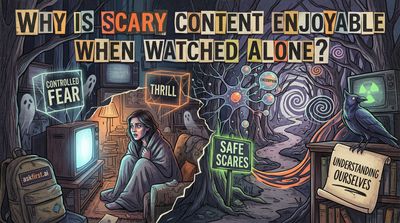
Watching a film in solitude is often categorized by psychologists as a state of 'focused immersion.' When the social pressure of interaction is removed, the brain is free to dedicate maximum cognitive resources to the film's narrative structure, subtext, and aesthetic choices.
- Uninterrupted Flow State: Solitude eliminates the necessity for 'social mediation'—the mental effort required to decode the reactions of others. This allows the viewer to enter a 'flow state,' where time perception dilates and identification with characters becomes more profound.
- Emotional Authenticity: Without the 'audience effect'—a phenomenon where individuals unconsciously adjust their emotional responses to mirror or contrast with those around them—a viewer is more likely to experience raw, unvarnished reactions. This leads to higher levels of emotional catharsis.
- Narrative Complexity: For films that demand high cognitive load, such as intricate mysteries, experimental cinema, or non-linear storytelling, solitude is statistically superior. The absence of external distractions enables the brain to track complex motifs, leitmotifs, and symbolic foreshadowing that might be missed during casual conversation.
The Case for Social Viewing: Shared Reality and Collective Meaning-Making
Viewing cinema with others is a social ritual that serves as a cornerstone of human bonding. From an evolutionary perspective, storytelling was originally a communal activity, intended to align the emotional states of the group.
- The Mirror Neuron System: Research suggests that humans possess a sophisticated system of mirror neurons. When watching a powerful cinematic moment with friends, these neurons fire in synchronized patterns, creating a 'shared reality.' This synchronization fosters interpersonal empathy and deepens the social bond between participants.
- The Discussion Catalyst: Engaging in post-film dialogue serves to 'process' the narrative. Verbalizing thoughts immediately after viewing a film helps to consolidate memories and integrate the themes into one’s own life perspective. This social scaffolding can turn a mediocre movie into an engaging intellectual exercise.
- Lighthearted Escapism: For comedies, horror films, or high-octane blockbusters, the presence of others acts as a mood amplifier. Collective laughter or shared tension increases the dopamine and oxytocin response, making the experience objectively more stimulating than solitary observation.
Strategic Selection: A Framework for Choosing the Environment
To optimize the cinematic experience, one should match the environment to the nature of the content:
- For High-Concept and Arthouse Cinema: Choose solitude. These films often rely on introspection, silence, and subtle visual storytelling that can be easily shattered by a companion's presence.
- For Genre Fiction and Blockbusters: Choose social viewing. These films often rely on pacing and external spectacles; the shared energy of a group enhances the intended visceral experience.
- For Documentaries and Educational Content: Choose the environment that facilitates the most engagement. If the topic requires intense focus, watch alone. If the topic is intended to spark debate and cultural exchange, a group setting is optimal.
The Evolutionary Significance of Ritualized Viewing
Historically, the 'cinema' was designed to be a public, communal space. The evolution of home media has created a tension between this public heritage and the desire for private consumption. Studies in environmental psychology indicate that human beings have a biological drive to both seek the silence of isolation to process internal data and the noise of the group to validate identity.
Ultimately, neither modality is objectively 'better.' Instead, they fulfill distinct psychological needs. Solitude provides the space for internal growth and critical analysis, while social viewing provides the infrastructure for community and empathy. By consciously selecting the mode that suits the film at hand, viewers can maximize the benefits of the cinematic medium, transforming passive consumption into a deliberate and fulfilling cognitive event.