The Technicolor Revolution: A Cinematic Paradigm Shift
Contrary to a pervasive urban legend that suggests the first color film was invented as a spontaneous Hollywood creative spark, the history of color in cinema is a complex tapestry of scientific necessity, entrepreneurial risk, and technological refinement. The reality is that Hollywood did not 'invent' color film in a laboratory sense; rather, Hollywood provided the massive capital, high-stakes competition, and artistic ecosystem required to scale complex, finicky, and prohibitively expensive additive and subtractive color processes into a viable global industry standard.
The Scientific Origins Beyond Hollywood
Before Technicolor became a household name, the quest for color began in the late 19th century with pioneers like Edward Raymond Turner and George Albert Smith. These innovators were not based in Hollywood but were experimenting with Kinemacolor, a primitive additive process that used spinning filters. These early systems were flawed: they were physically exhausting for viewers, caused 'color fringing' on moving objects, and required projectors to operate at speeds that made the machinery prone to catastrophic failure. Hollywood served as the commercial crucible where these scientific dreams were finally tempered into a reliable business model.
The Hollywood Necessity: Differentiation and Value
By the mid-1920s, the silent film era was reaching its artistic zenith, and the introduction of sound (the 'talkies') had shifted the industry landscape. Studio executives faced a dilemma: how to keep audiences coming to theaters during a time of intense competition and economic instability? Color was viewed as the ultimate 'added value' proposition. Hollywood studios like Metro-Goldwyn-Mayer (MGM) and United Artists recognized that color could justify higher ticket prices and turn routine productions into 'event cinema.' This market demand is why Hollywood became the focal point for color development—not because the engineers were there, but because the financing for the massive infrastructure shift was concentrated in the studio system.
Technicolor: The Three-Strip Breakthrough
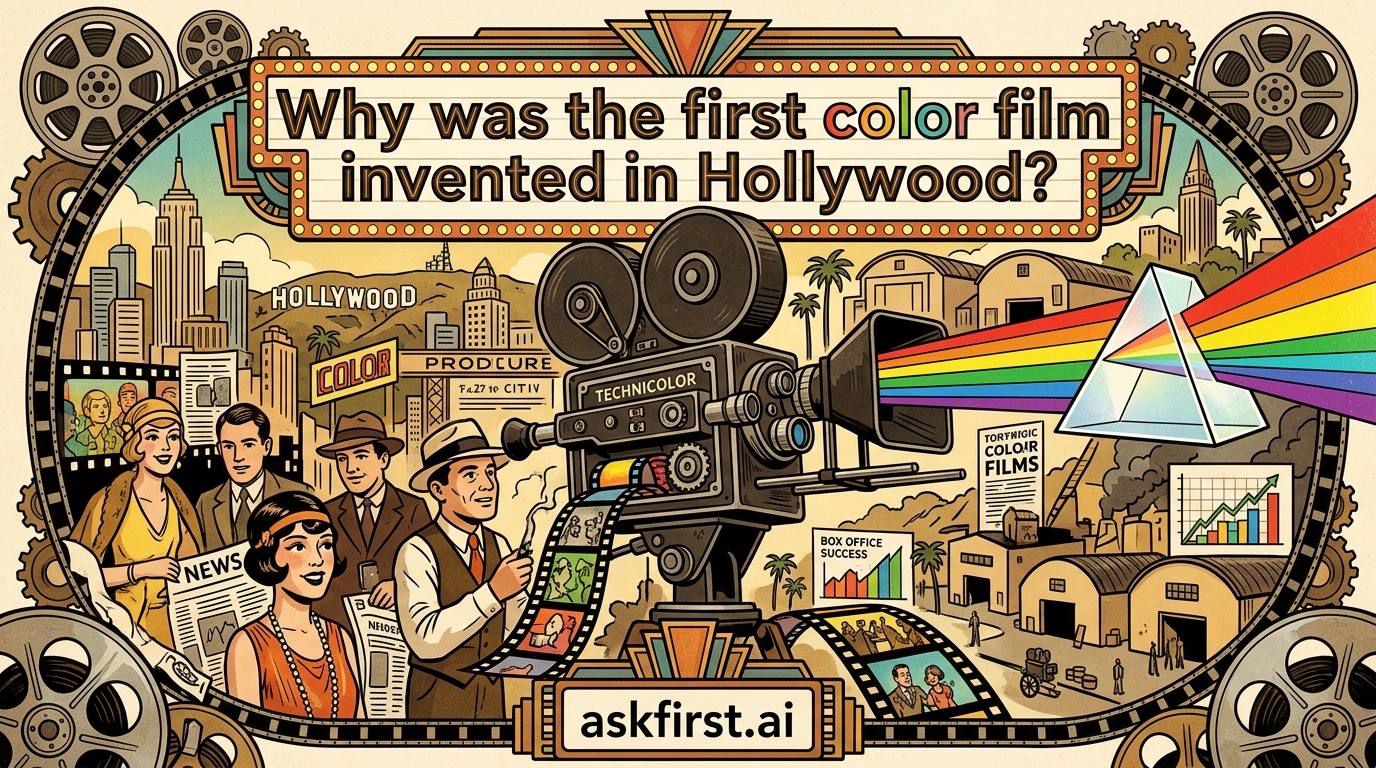
The true turning point was the development of the Three-Strip Technicolor process in the early 1930s by Herbert Kalmus and his team at Technicolor Motion Picture Corporation. This was not a simple film stock change; it was a radical overhaul of the entire production chain:
- The Cameras: The cameras were gargantuan, weighing hundreds of pounds and requiring dedicated Technicolor technicians on set at all times.
- The Lighting: Because the film sensitivity was so low, sets had to be illuminated at levels of intensity that were physically uncomfortable, often referred to as 'the oven' by actors and crew members.
- The Workflow: Developing three distinct film strips (red, green, and blue) and using a dye-transfer process to combine them onto a single print required precision that had never been seen in a factory setting, let alone a film lab.
Why Hollywood Won the Race
Hollywood was the only place on Earth capable of absorbing these extreme production requirements. The studio system operated with a vertically integrated business model—meaning the same companies owned the production studios, the labs, and the theater chains. This allowed studios like Disney to test the technology with Flowers and Trees (1932) and eventually produce landmarks like Snow White and the Seven Dwarfs (1937) and The Wizard of Oz (1939).
- Risk Mitigation: The studios had the deep pockets to subsidize the failure rate of early color prints.
- Artistic Control: Hollywood directors and cinematographers, such as Natalie Kalmus (the color consultant), established the 'Technicolor Look'—vibrant, saturated, and hyper-real—which audiences came to associate with high-quality, big-budget entertainment.
Legacy and Everlasting Impact
Today, we view the transition to color as inevitable, but in the 1930s, it was a massive gamble that almost bankrupt many studios. The 'invention' of successful color film was a triumph of applied industrial science. It required the convergence of chemistry, optics, and the unique economic engine of Hollywood. By forcing the hand of innovation, Hollywood changed how humanity perceives storytelling. We no longer watch films as mere shadow-plays; we watch them as immersive, psychological experiences. The color revolution cemented the dominance of the Hollywood model, ensuring that for the next century, the visual language of the world would be dictated by the color palettes and technological standards forged on those iconic California backlots. In essence, Hollywood did not invent the science of color; it invented the language of color that the entire world now speaks.