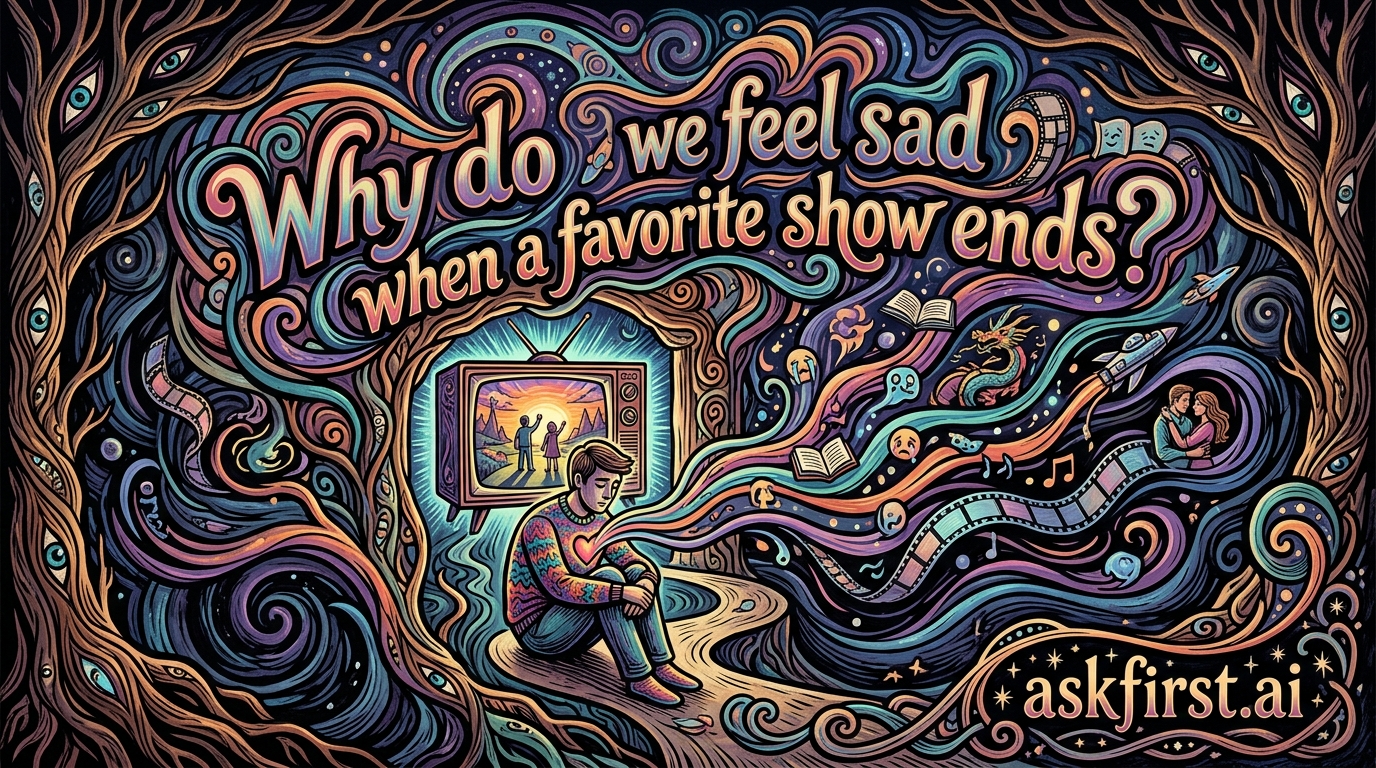
The Phenomenon of Post-Series Melancholy
When the credits roll for the final time on a beloved television series, many individuals experience a profound, unexpected sense of loss. This reaction, often colloquially referred to as 'post-series depression,' is a documented psychological phenomenon. It is not merely the absence of entertainment; it represents the severance of a simulated social bond that has been cultivated over hours, days, or even years of dedicated viewership. The human brain is evolutionarily hardwired for social connection, and our cognitive mechanisms often fail to distinguish between the meaningful relationships formed with real-life companions and the parasocial relationships developed with fictional characters.
The Psychology of Parasocial Interaction
Parasocial relationships are one-sided psychological bonds where media users develop a sense of intimacy and familiarity with fictional characters or public figures. Research suggests that when viewers engage with a narrative, their brains activate neural pathways similar to those used in actual social interactions. As one watches a character face obstacles, grow, or succeed, the brain releases oxytocin and dopamine, reinforcing the social attachment. When a show concludes, the sudden disruption of this 'relationship' triggers a grief-like response. The viewer is essentially experiencing a form of social bereavement because the source of these consistent, dopamine-triggering emotional experiences is no longer accessible.
The 'Transportation' Effect and Cognitive Load
Psychologists identify a concept known as Narrative Transportation. This occurs when an individual becomes so immersed in a story that they lose track of their surroundings and enter an alternate reality created by the show’s writers. This state of 'flow' serves as a psychological refuge, a predictable environment where the viewer understands the rules, the stakes, and the outcomes. When the show ends, the 'transportation' is forcefully revoked, and the individual must return to the complexity and unpredictability of their own reality. This jarring transition can cause feelings of emptiness, irritability, or nostalgia.
Why the Brain Craves Predictability
Human cognition inherently prefers patterns and predictability. Long-running series offer a structured environment where even the most chaotic plot twists are contained within the framework of a story. By following a show for months or years, viewers invest significant cognitive energy into understanding the internal logic and character trajectories. When this framework vanishes, the brain perceives a loss of the 'safety net' provided by that regular appointment. The absence of a weekly narrative goal leaves an intellectual and emotional void that the brain struggles to fill immediately.
Mitigation Strategies and Resilience
While the sadness associated with a show's finale is natural, it serves as a testament to the power of storytelling. To manage these feelings, several strategies are effective:
- Engage in Critical Reflection: Analyzing the themes, character arcs, and technical production of the show can shift the experience from an emotional one to an intellectual one, providing a sense of closure.
- Community Interaction: Participating in online forums or fan discussions allows for communal processing, transforming the individual loss into a shared celebration of the narrative.
- The 'Palate Cleanser' Approach: Immersing oneself in a completely different genre or a medium with a different pacing can help reset cognitive patterns, effectively easing the transition away from the concluded narrative.
- Recognizing the Value: Acknowledging that the sadness exists because the experience was genuinely high-quality and impactful can convert melancholy into gratitude.
The Enduring Impact of Storytelling
Ultimately, the sadness felt after a show concludes is a reflection of the human capacity for empathy. Our ability to connect with narratives is a fundamental component of emotional intelligence. By investing in fictional worlds, we sharpen our understanding of human motivations and emotions. The loss we feel is simply the byproduct of a meaningful connection, proving that art has the capacity to influence our internal landscape long after the screen goes dark. Embracing this sadness allows us to appreciate the craft that enabled us to care so deeply in the first place, ensuring that while the series may end, the emotional wisdom gained from it remains.