The Wilhelm Scream: Hollywood's Most Famous Secret
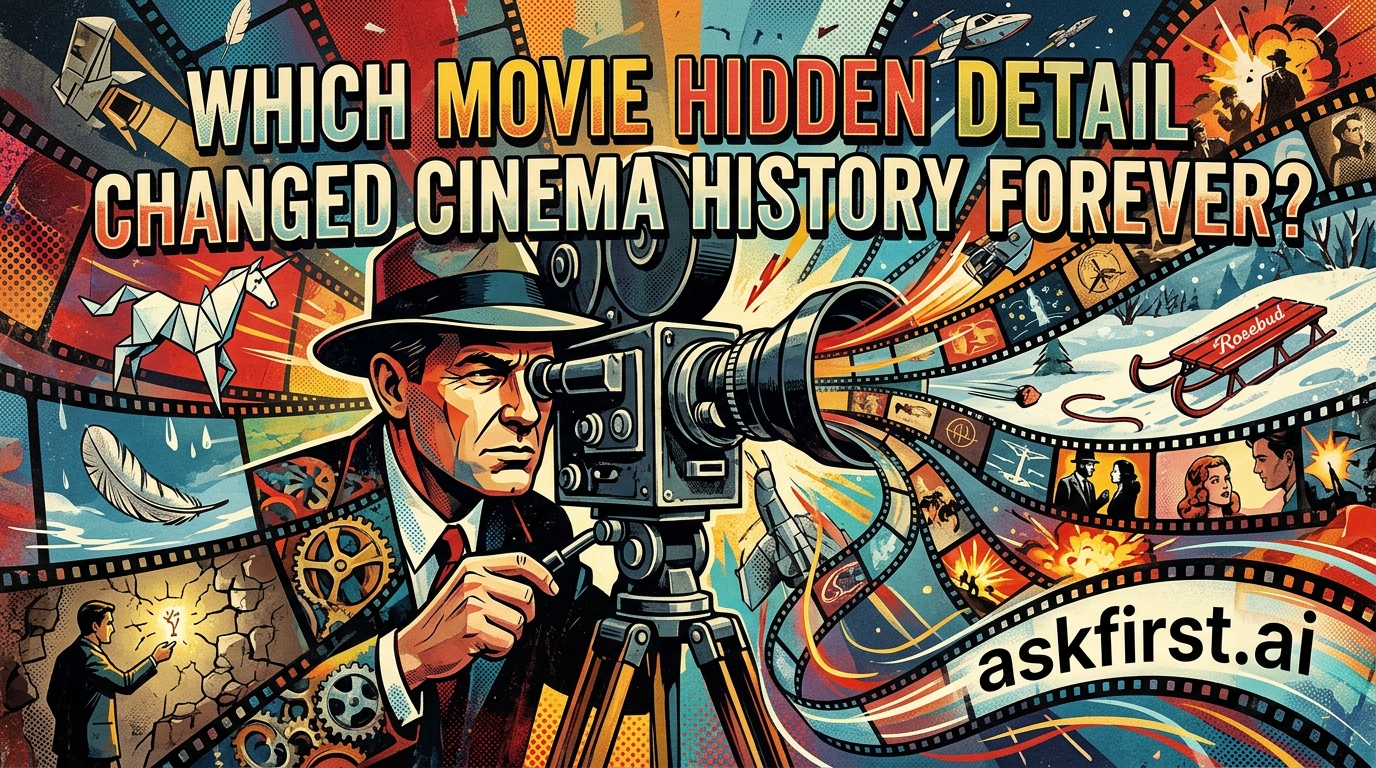
When film historians discuss technical innovations that revolutionized the industry, they often point to high-profile inventions like the Steadicam or digital cinematography. However, one of the most significant and persistent 'hidden' details in cinema history is not a visual effect, but an audio element known as the Wilhelm Scream. This iconic sound effect, a high-pitched, warbling yelp, has permeated over 400 films, television shows, and video games since its debut in 1951. It represents a unique case study in how a single production detail can transition from a functional necessity to an intentional, meta-narrative wink between filmmakers and audiences.
The Origins of an Audio Legend
The scream originated from the sound library archives of Warner Bros. in 1951 during the production of the film Distant Drums. The context was mundane: a soldier is dragged underwater by an alligator. The actor who recorded the scream, Sheb Wooley, unknowingly provided a sonic footprint that would define the archetype of 'death by monster or falling' for decades to come. The sound was later dubbed 'Wilhelm' in 1953 for the movie The Charge at Feather River, where a character named Private Wilhelm lets out the screech after being struck by an arrow.
The Ben Burtt Effect
The Wilhelm Scream might have remained a piece of obscure archival detritus if not for sound designer Ben Burtt. While working on the original Star Wars (1977), Burtt discovered the original recording in the Warner Bros. archives. As a fan of golden-era Hollywood, Burtt inserted the sound as an 'inside joke' during the scene where a Stormtrooper falls into an abyss. This moment acted as the spark that turned a standard audio asset into a badge of honor for sound editors across the globe.
Why This Detail Changed Cinema History
The impact of this hidden detail on the entertainment industry is profound for three main reasons:
- The Cult of Audio Continuity: It established a shared, recognizable sonic language that spans decades. The scream acts as a subtle 'Easter egg' that provides instant connectivity for fans of genre cinema.
- The Standardization of Sound Design: It demonstrated that high-quality sound design does not always mean recording something fresh. It championed the concept of a 'foley library,' proving that recycling and refining audio assets can be more powerful than reinventing the wheel.
- The Rise of the Meta-Commentary: Its inclusion in films like Indiana Jones, Reservoir Dogs, and Toy Story turned the act of watching a movie into an interactive, game-like experience. Audiences began listening for the scream, creating a sub-culture of moviegoers who engage with films on a deeper, more analytical level.
Examining the Legacy and the Future
The Wilhelm Scream signifies a turning point where cinema began to openly acknowledge its own artificial nature. By repeating a recognizable sound, directors are essentially telling the audience: 'We know this is a movie, you know this is a movie, and we are sharing this moment of recognition.' It bridged the gap between the illusion of reality and the reality of production.
As digital technology advances, the use of the scream has become more sophisticated, often being layered, pitched, or distorted to fit the mood of a scene while remaining distinctly identifiable to the trained ear. It has become a watermark of quality—an unspoken confirmation that a film production team possesses a deep reverence for the lineage of the medium.
Conclusion: The Power of Detail
Ultimately, the story of the Wilhelm Scream is a testament to the fact that the smallest details often leave the deepest scars on history. It teaches us that cinema is not just a collection of performances, but a layered tapestry of technical choices, creative jokes, and archival respect. Whether one hears it as a disruption of immersion or as a charming nod to film history, its presence is undeniable. The next time you find yourself watching a blockbuster and hearing that familiar, high-pitched yelp during a chaotic action sequence, realize that you are participating in a legacy that has spanned generations, linking the celluloid era of the 1950s to the digital landscapes of the future.