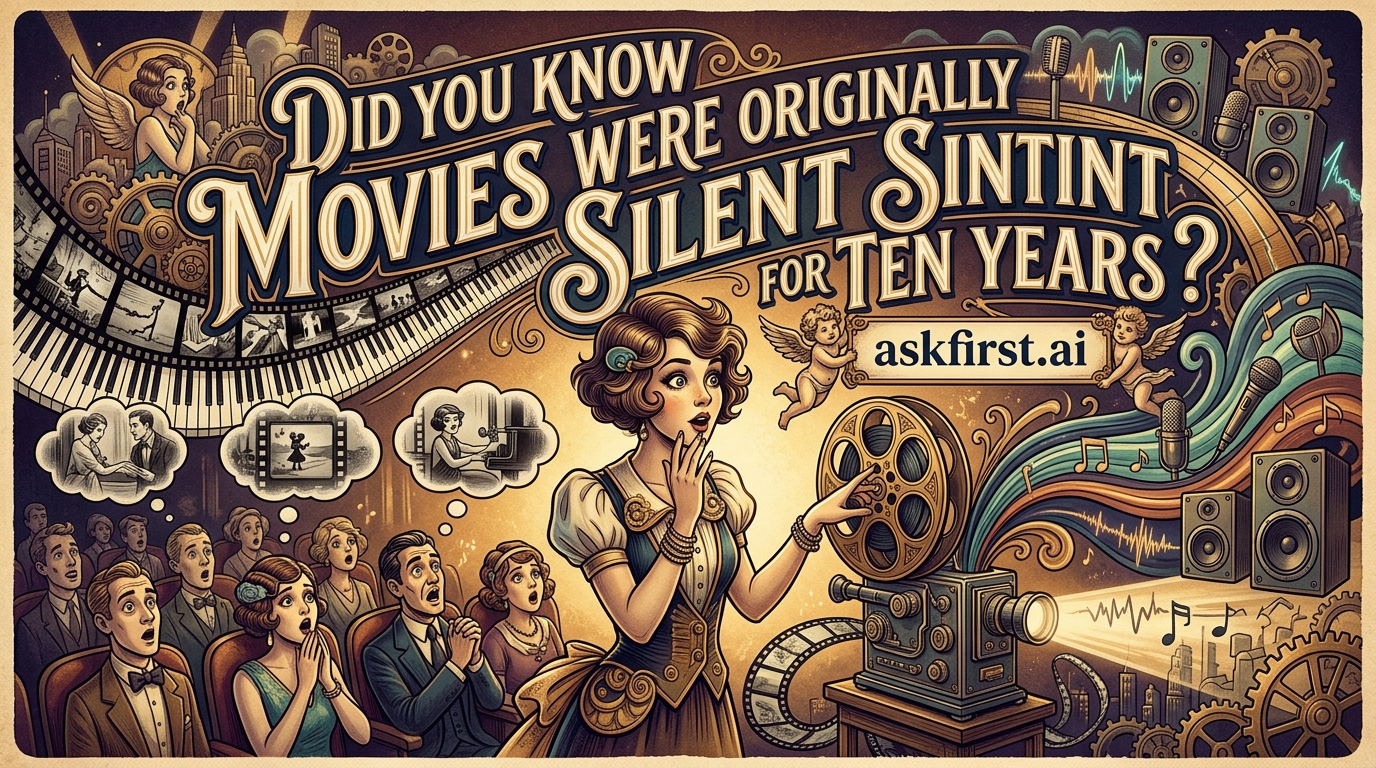
The Dawn of Silent Cinema: A Misconception of Silence
While the popular perception of early cinema suggests a decade-long period of total silence, historical reality presents a far more vibrant and auditory landscape. The era often referred to as the 'Silent Film Era' spanning roughly from the 1890s to the late 1920s was never truly silent. Instead, it was an era of profound experimentation where the absence of synchronized dialogue forced creators to invent a new visual language while relying on live musical accompaniment.
The Illusion of Silence
The notion that early movies were 'silent' is a technical misnomer based on the absence of a recorded soundtrack married to the film strip. In truth, silent films were almost always accompanied by live sound. Depending on the venue and the budget, this ranged from a solo pianist or organist in a small-town nickelodeon to a full symphony orchestra in a metropolitan grand palace. These musicians performed improvisational scores, thematic compositions, and sound effects—such as crashing glass or gunshots—to bridge the gap between the image and the audience’s sensory expectations. Consequently, the ten-year period after the invention of cinematography in 1895 was a decade of auditory ingenuity, not quietude.
Why Silence Lasted for Decades
Contrary to the implication that cinema was 'only' silent for a short ten-year window, silent cinema actually persisted for over three decades. The transition to 'Talkies' did not occur until the release of 'The Jazz Singer' in 1927. This delay was not due to a lack of ambition or desire for sound, but rather the immense technical hurdles associated with synchronization. Engineers faced monumental challenges in aligning phonograph discs or, later, optical sound-on-film technology with the intermittent motion of the film projector. The primary concern was fidelity; early sound systems were bulky, difficult to amplify, and prone to catastrophic failure. It took until the late 1920s for the Vitaphone and Movietone systems to offer a reliable, synchronized experience that studios deemed profitable for widespread adoption.
The Artistic Evolution of Visual Narrative
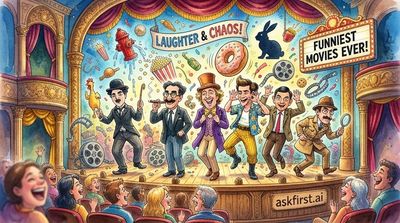
Because directors could not rely on dialogue to carry a plot, the silent era forced a level of cinematic discipline that remains the cornerstone of modern filmmaking. Artists like Charlie Chaplin, Buster Keaton, and Fritz Lang developed a sophisticated 'visual syntax.' They mastered the use of:
- Expressive Lighting: High-contrast cinematography to convey internal emotion (Expressionism).
- Pacing and Editing: Mastering the rhythm of cuts to build tension without a single spoken word.
- Title Cards: Using brief, well-placed text to provide essential context without interrupting the visual flow.
- Physicality: Using body language and facial expressions as primary narrative tools, which transcended language barriers and fueled the global explosion of early cinema.
Breaking the Silence: The Revolution of 1927
When sound finally arrived, it was not merely an additive process; it was an artistic earthquake. Many early sound films actually suffered in quality because microphones were hidden in flower pots and actors were forced to remain stationary near the sound source, ending the fluid, mobile camera work that had defined the late silent period. However, this transition paved the way for the golden age of studio filmmaking, introducing dialogue-driven genres like the screwball comedy and the hard-boiled detective noir. The 'silent' decade and its subsequent extensions provided the foundational structure for everything we watch today.
The Legacy of the Silent Era
Today, we see the echoes of the silent era in the way contemporary filmmakers utilize music and visual storytelling. Even in the age of high-fidelity surround sound, the most powerful moments in cinema are often those where the dialogue falls away, leaving the audience to process the visual weight of the scene. The fact that the industry operated without synchronized speech for over thirty years is a testament to the fact that cinema is, at its heart, a medium of light and movement. Understanding this history reframes how we view modern movies—not as a culmination of technology, but as a continuation of a visual tradition that captivated the world long before the first word was ever recorded onto film. It serves as a reminder that the most compelling stories are often told in the spaces between words.